Are We Remembering a Tragedy—or Monetizing It?

THIS IS WHERE I THINK THE MEDIA NEEDS TO BE CAREFUL.
Christa Pike is scheduled to be executed in Tennessee today, September 30, 2026, for a murder committed when she was 18. If the execution goes forward, she would be the first woman executed by Tennessee in more than 200 years. Governor Bill Lee has declined to intervene.
And yes, what happened to Colleen Slemmer was horrific. There is no need to romanticize or minimize the suffering of the victim and her family.
But look at what happens with cases like this.
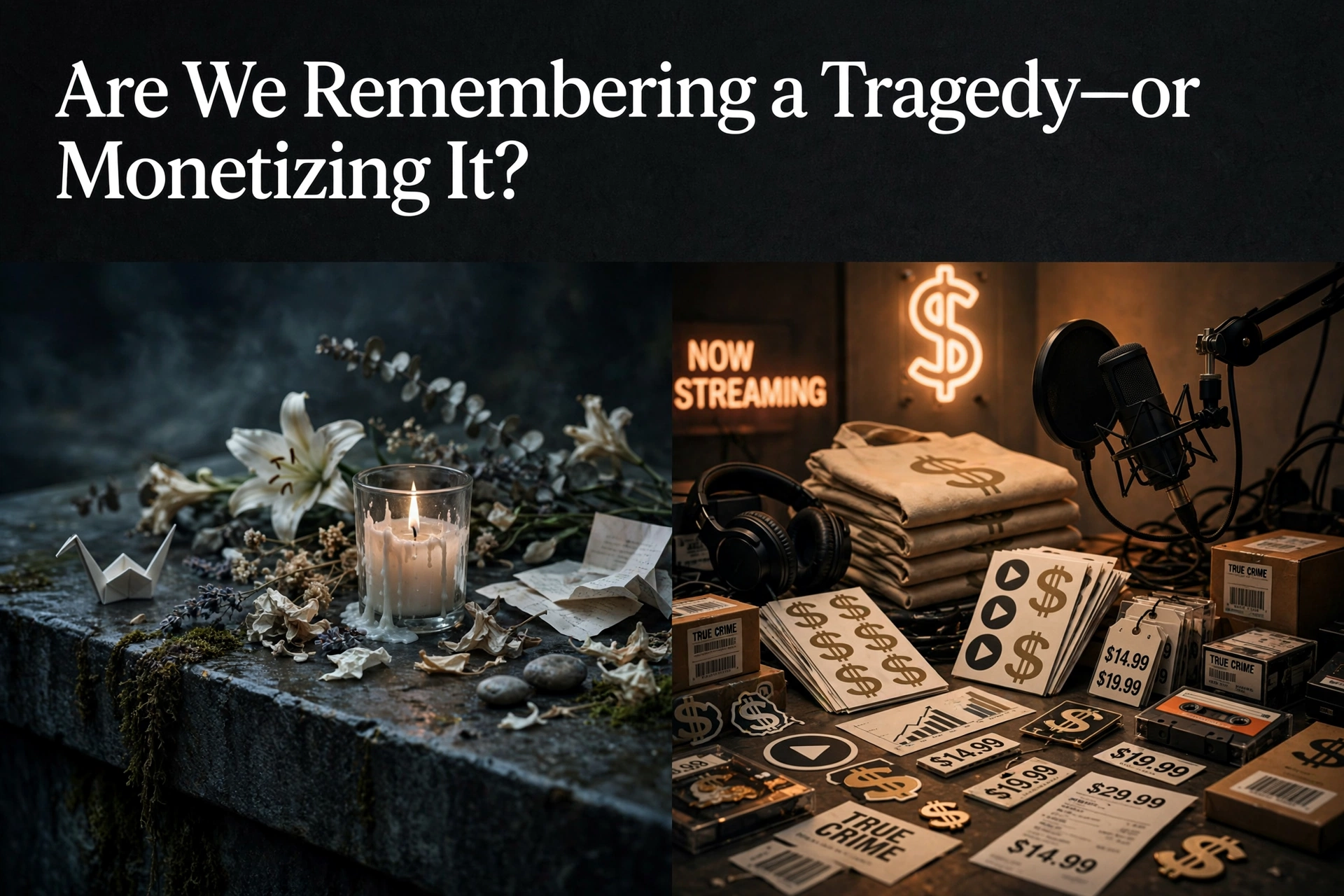
The media takes an absolutely devastating human tragedy and turns it into a headline, then a documentary, then a podcast, then a series, and eventually somebody is going to pitch a movie.
Thirty years from now, somebody could be sitting on a couch watching an actor portray these events while dramatic music plays in the background.
AT WHAT POINT DOES TELLING THE STORY STOP BEING ABOUT REMEMBERING THE VICTIM AND START BECOMING ENTERTAINMENT?
That's the part that bothers me.
We constantly say, "Don't glorify violence."
Then we take some of the most horrific crimes imaginable and package them into binge-worthy content with dramatic reenactments, thumbnails, trailers, celebrity casting and cliffhangers.
The person who committed the crime becomes the central character.
The victim becomes a name in the description.
And millions of people consume the story without ever knowing who that victim actually was as a person.
THAT'S A STRANGE CONTRADICTION.
We can document a crime without turning the person who committed it into a cultural character.
We can discuss the justice system without making the violence itself the spectacle.
We can talk about childhood abuse, mental health, youth, accountability and the death penalty without repeatedly replaying the most disturbing details simply because those details generate clicks.
THERE'S A DIFFERENCE BETWEEN EDUCATING PEOPLE ABOUT VIOLENCE AND MAKING VIOLENCE WATCHABLE.
That's where the conversation gets uncomfortable.
True crime can educate people about criminal justice, victim advocacy, investigative failures, sentencing, trauma and the consequences of violence.
But there is also an enormous commercial industry built around making those stories compelling enough for people to keep watching.
And compelling doesn't always mean respectful.
Sometimes the most disturbing details become the hook.
The shocking photograph becomes the thumbnail.
The prison interview becomes the trailer.
The killer's childhood becomes the character development.
The victim's suffering becomes the plot point.
AND SOMETIMES THE PERSON WHO COMMITTED THE CRIME ENDS UP WITH MORE CULTURAL RECOGNITION THAN THE PERSON THEY KILLED.
That's difficult to ignore.
Because we can spend hours learning about the person who committed the crime while barely learning anything about the person who lost their life.
We know the killer's name.
We know their childhood.
We know their relationships.
We know what they said.
We know what they looked like.
We know the details of the crime.
But who was the victim before the crime happened?
What did they love?
What made them laugh?
What were they planning to do with their life?
Who was waiting for them to come home?
THE PERSON WHO DIED HAD A WHOLE LIFE BEFORE THEY BECAME A TRUE-CRIME STORY.
That's something the entertainment format can easily erase.
The victim becomes part of the crime instead of remaining a complete human being.
And once a tragedy becomes entertainment, there is always another incentive involved:
attention.
Clicks.
Views.
Streams.
Subscribers.
Ad revenue.
Content libraries.
Eventually, the tragedy itself becomes a product.
AND THAT'S WHERE THE LINE GETS BLURRED.
Because I understand the argument for telling these stories.
Some stories need to be told.
Some cases expose problems in the justice system.
Some victims deserve national attention.
Some investigations reveal failures that society should understand.
Some stories can genuinely teach people something.
But education doesn't require turning every horrific detail into entertainment.
There is a difference between explaining what happened and recreating it for an audience.
There is a difference between remembering someone and commercializing their death.
BECAUSE WHAT ARE WE ACTUALLY TEACHING?
Are we teaching people that horrific behavior has consequences?
Are we teaching people about the justice system?
Are we educating people about violence and its consequences?
Or are we quietly teaching another lesson?
Commit something horrible enough, and decades later your name might become entertainment.
That may not be the intention of filmmakers, podcasters or media companies.
But it's worth asking whether the attention economy creates that incentive anyway.
THE VICTIM DESERVES TO BE REMEMBERED. THE CRIME CAN BE STUDIED. THE JUSTICE SYSTEM CAN BE QUESTIONED.Related Posts
New Topics

🧪 TRUST COLLAPSE
- When Confidence in Systems Disappears
- Trust Collapse: When Systems Erode Reliability
- How Everything Is Getting Smaller Without You Noticing
- When Trust Breaks, Everything Gets More Expensive
- When Belief in Systems Breaks Faster Than Reality
- Why People Trust Less Even When More Information Exists
- When Trust Breaks, Everything Slows

👨👧 FATHERHOOD
- Fatherhood: Building Influence, Presence, and Legacy
- Why Being a Father Is More Than Providing Money
- The Hidden Power and Responsibility of Being a Dad
- Your Children Don't Need a Perfect Father—They Need to See You Keep Building
- Why Being a Dad Changes How You See Everything
- The Strategic Role of a Modern Dad
- The Modern Challenges and Realities of Being a Father





Comments
No comments yet, be the first submit yours below.