Amazon Wants the Future of Automation—But What Happens to the Workers Who Built Its Empire?

A community welcomes Amazon because it promises jobs. Years later, the same company is investing in technology that could mean it needs fewer people to do the work. At what point does progress become a problem for the people who helped make that progress profitable?
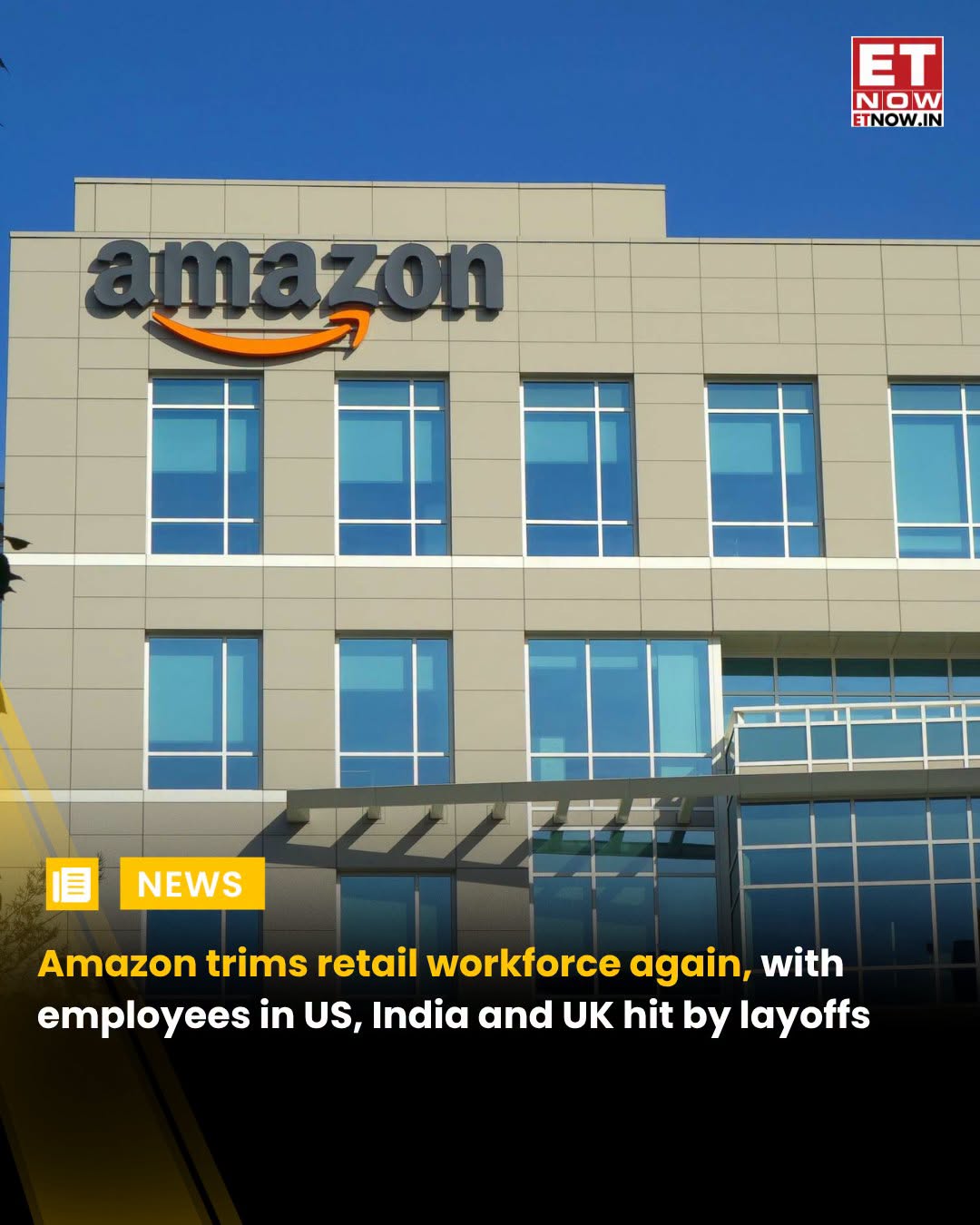
Amazon is cutting jobs again. On October 8, 2026, Reuters reported a new round of reductions affecting fewer than 1,000 white-collar employees, primarily in its Stores division. These cuts follow a much larger restructuring that began the previous year.
For the people receiving those notifications, this is not simply a corporate strategy adjustment. It is a paycheck disappearing, a family's budget being disrupted, and another reminder that working for a major company does not guarantee long-term security. Reuters reported on the latest cuts.
THE COMMUNITY WELCOMED THE WAREHOUSE FOR A REASON
When a massive fulfillment center comes to town, the announcement usually sounds like an economic victory. New jobs. More spending at local businesses. More opportunities for people who need steady income. More activity for restaurants, gas stations, apartment complexes, and nearby stores.
Local leaders have reasons to welcome that investment. Residents need employment, and a major employer can change the economic outlook of an entire area.
Amazon itself has promoted its role in creating jobs and supporting communities through its fulfillment centers and logistics network.
But what happens when the technology inside those buildings changes the number and type of workers the company needs?
The community cannot simply rewind the clock. People may have chosen where to live, what training to pursue, and how to support their families based partly on the opportunities those facilities represented.
A company should not be judged only by how many jobs it brings into a community. We should also pay attention to what happens to those jobs as its business model evolves.
THE ROBOTS ARE GETTING BETTER AT DOING THE WORK
Amazon has invested heavily in robotics and automation throughout its fulfillment network. Robots can move inventory, transport containers, assist with sorting, and perform repetitive physical tasks. Artificial intelligence can also help coordinate inventory and improve operational efficiency.
Amazon argues that these technologies can improve workplace safety, reduce repetitive work, and create new opportunities for employees to develop technical skills. The company has also promoted training programs intended to help workers move into new career paths.
Those benefits deserve consideration. Nobody should have to risk a serious injury performing a task that technology can safely handle.
But there is another side to the equation.
If a machine can perform work that once required several people, the company may eventually need fewer people for that particular task. Some workers might receive training for new positions. Others might not qualify, might not want to relocate, or might find that the new positions are limited compared with the work being eliminated.
And a warehouse employee who needs a paycheck today cannot necessarily wait years to become a robotics technician.
The promise of new jobs in technology does not automatically replace the income lost by workers whose existing jobs disappear.
DRONE DELIVERY ADDS ANOTHER QUESTION
Automation is not limited to the warehouse floor. Amazon has also pursued drone delivery, developing technology intended to deliver certain packages through the air.
Drone delivery is not a replacement for every delivery driver, and its practical use depends on factors such as geography, package eligibility, regulations, weather, and the economics of operating the service. But it represents another way technology could change how goods reach customers.
Put these developments together: automated systems inside fulfillment centers, increasingly sophisticated software coordinating operations, and experiments with new delivery methods outside the building.
Each technology may solve a genuine problem. Collectively, however, they raise a bigger question about the future of work: when fewer human hours are needed to move more products, who benefits from the productivity gains—and who bears the cost of the transition?
COMMUNITIES SHOULD NOT HAVE TO ACCEPT EVERY TRADE-OFF WITHOUT A VOICE
Consider a town that welcomes a large distribution center because it expects hundreds or thousands of employment opportunities. The community may invest in roads, utilities, public services, and infrastructure to accommodate the development. Local businesses may also organize their own plans around the expected workforce.
Those arrangements do not mean every company must preserve every job forever. Businesses change, consumer demand shifts, and technology advances.
But they do create a legitimate public-interest question: when companies benefit from the resources and goodwill of a community, what responsibilities should they have when major technological changes reduce their need for local labor?
Should workers receive meaningful advance notice? Should retraining be available during paid work hours? Should displaced employees have priority for suitable internal positions? Should companies help fund transition assistance when automation eliminates established jobs?
These are reasonable questions for local governments, workers, employers, and the public to debate before a community becomes dependent on a business whose employment needs may change dramatically.
SHOULD THERE BE LIMITS ON AUTOMATION?
I believe there is a serious case for limits—not necessarily a blanket ban on robots or drones, but enforceable rules that prevent the pursuit of efficiency from becoming an excuse to disregard workers and communities.
Those rules could include:
1. Workforce-impact assessments. Large employers planning substantial automation could be required to disclose the likely effects on jobs, working conditions, and local employment before major changes take place.
2. Real transition support. Companies eliminating significant numbers of jobs should provide adequate notice, meaningful severance where appropriate, and access to practical retraining—not merely point workers toward a list of online courses.
3. A genuine path to new positions. When automation creates technical jobs, existing workers should have a fair opportunity to qualify for them. Training needs to lead to actual openings rather than become a public-relations promise.
4. Accountability for public incentives. When a business receives public subsidies, tax incentives, or other benefits tied to job creation, governments should consider enforceable employment and reporting commitments, including what happens if automation substantially changes those commitments.
5. Protection against unsafe productivity pressure. Automation should help make work safer, not simply allow employers to demand more output from the remaining employees while reducing staffing.
Any rules would need to be carefully designed. Overly broad restrictions could discourage useful innovation, prevent safety improvements, or make it harder for new industries to grow. The point should be to manage the transition fairly, not pretend technology can be stopped.
EFFICIENCY SHOULD NOT BE THE ONLY MEASURE OF PROGRESS
From a company's perspective, automation can reduce costs, improve consistency, and help it compete. From a customer's perspective, it might mean faster delivery. Those are real advantages.
But workers are not just operating expenses. They are parents paying for groceries, tenants paying rent, homeowners paying mortgages, and consumers who keep other businesses running.
When thousands of workers across an industry face uncertainty, the consequences can spread beyond the company itself. Families may cut spending, postpone major purchases, draw down savings, or struggle to keep up with bills. The local economy can feel the impact when workers lose income or fear losing it.
And there is a troubling contradiction when society celebrates the creation of jobs while treating the loss of those same jobs as an acceptable side effect of technological advancement.
We should be able to appreciate innovation and still demand accountability from the companies deploying it.
THE FUTURE SHOULD NOT BE BUILT ON THE ASSUMPTION THAT WORKERS ARE DISPOSABLE
Amazon has helped transform how people shop and how goods move through the economy. Its technology will likely continue to evolve. The important question is whether the people affected by that evolution will have a meaningful place in the future being created.
Companies should be allowed to innovate, but communities should also be allowed to establish reasonable conditions around public incentives, worker protections, transparency, and the consequences of major employment changes.
Because if a community welcomes a company in the hope of creating a stronger local economy, the relationship should be about more than what the company can extract from that community while labor is needed.
We cannot tell people that jobs are the path to stability, encourage entire communities to depend on those jobs, and then act as though the people displaced by automation are simply on their own.
Technology may be the future. But the future should be measured by more than how many packages a machine can move, how quickly a drone can deliver them, or how much money a company can save.
It should also be measured by whether ordinary people can still build a stable life in the economy that technology creates.
If automation makes companies more productive, shouldn't part of that progress be used to protect the people whose livelihoods are being transformed?
That is the conversation we need to have before the next warehouse opens, the next robot arrives, and the next worker receives a notice that their job is no longer necessary.








Comments
No comments yet, be the first submit yours below.