Iowa Is Preparing to Detonate Nearly Five Tons of Lead Azide—Why Isn't Everyone Talking About the Environmental Consequences?

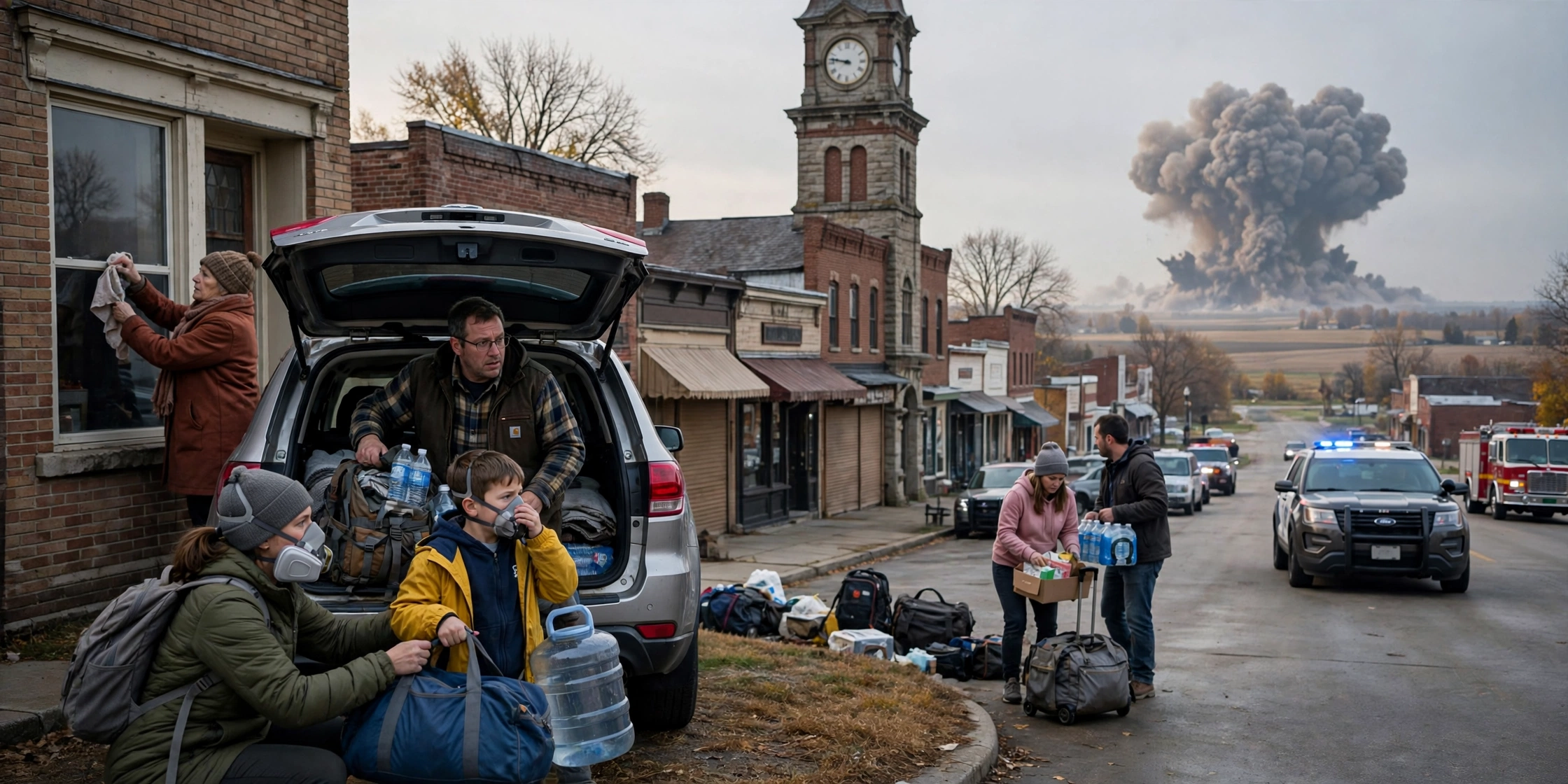
When the government is preparing to detonate thousands of pounds of unstable lead-based explosives, I don't think the public should treat this like an ordinary military operation. People deserve to know what's being released, where it could travel, and what happens afterward. My position is simple: take this seriously, demand transparency, and encourage people in the surrounding region to take extra precautions rather than assume everything will go perfectly.
The U.S. Army has scheduled a controlled detonation involving approximately 68 drums containing more than 9,700 pounds of degraded lead azide at the Iowa Army Ammunition Plant near Middletown, Iowa. The operation is scheduled for Wednesday, November 25, 2026, at approximately 9:00 a.m. Central Time, although weather conditions could affect the timing.
Officials have established an evacuation area for residents in the designated impact zone, including Middletown and an area extending southwest of the installation. People inside that area should follow evacuation instructions rather than remain in their homes.
But I think people outside that immediate evacuation zone should also pay attention. When an operation involves this much hazardous explosive material, the public should not automatically assume that everything outside the official boundary is irrelevant.
My Recommendation: Take Precautions, Even If You're Outside the Evacuation Zone
I believe people in the surrounding region should consider staying indoors during the detonation and following local emergency updates. Keep windows and exterior doors closed, limit unnecessary outdoor activity, and follow any additional instructions from local authorities.
I'm not suggesting that everyone in America is in immediate danger or that the explosion will send hazardous particles across the entire country. There is no verified evidence supporting that conclusion.
But I do believe the public nationwide should be paying attention to what happens in Iowa. This is an opportunity to ask serious questions about how hazardous materials are stored, how they are disposed of, and how communities are protected when government operations create environmental risks.
Why Should People Be Concerned About the Air?
The Army has acknowledged that the detonation could produce a dust plume containing lead-containing particles. Officials have described mitigation measures involving protective barriers, water, foam, and weather monitoring to reduce the potential for airborne dispersion.
Those precautions are important, but reducing the amount of material released is not the same as guaranteeing that nothing escapes.
Lead is a toxic metal. If lead-containing dust becomes airborne, it can travel with the wind and eventually settle on soil, vehicles, buildings, outdoor furniture, and other surfaces.
People can potentially be exposed by inhaling airborne particles or unintentionally ingesting contaminated dust. Children deserve particular consideration because of their vulnerability to lead exposure.
That's why I want to see actual environmental monitoring results, not simply assurances that everything has been handled safely.
A Controlled Explosion Doesn't Mean Zero Environmental Consequences
Officials may be able to control when the detonation occurs, establish an exclusion zone, monitor weather conditions, and take precautions to reduce the effects of the blast.
But the word controlled shouldn't be confused with harmless.
We need to know what materials could be released, what chemical residues could remain, and what environmental testing will be performed afterward.
Lead isn't the only question worth asking. The public should receive an explanation of the expected explosive reaction products, the materials used during mitigation, and the substances that will be included in post-detonation testing.
I'm not claiming that every possible chemical will become airborne. I'm saying that residents deserve a complete accounting of what was detected and what was actually tested for.
What Happens to the Contaminated Soil and Debris?
Everybody seems focused on the explosion itself, but what happens when the smoke clears?
What happens to lead-containing particles that settle on the ground? What happens to contaminated soil, sand, protective barriers, and other debris collected during cleanup?
Where does that material go? Is it tested, collected, and disposed of at an appropriately licensed facility? Who is responsible for making sure contamination isn't simply transported somewhere else?
These questions deserve answers before the operation, not after residents begin asking why their surroundings have been affected.
The government should publish the environmental sampling results and explain what standards must be met before affected areas are considered safe.
Why Shouldn't the Entire Country Be Paying Attention?
I'm not suggesting that someone thousands of miles away needs to cancel their plans or remain inside because of an explosion in Iowa. There is no evidence that this operation presents a nationwide airborne exposure threat.
But the consequences of how we manage hazardous materials are a national concern.
Military installations, industrial facilities, chemical storage sites, and other locations across the country handle materials that can become dangerous when improperly stored or allowed to deteriorate.
If one facility reaches a point where officials believe thousands of pounds of explosive material must be detonated because ordinary handling is too dangerous, shouldn't that make the rest of the country question whether our storage and inspection systems are adequate?
People shouldn't have to wait for an emergency in their own state before becoming interested in how these materials are managed.
People in the Surrounding Region Shouldn't Dismiss Precautions
For residents outside the designated evacuation area, staying indoors during the operation is a reasonable additional precaution to consider. Close windows and doors, limit unnecessary outdoor activity, and monitor official alerts for changes in guidance.
If you're inside the evacuation zone, however, staying home is not the recommendation. Follow the evacuation instructions and use the designated assistance available to affected residents.
After the operation, people should continue following local guidance about air quality, cleanup, and when it is appropriate to resume normal outdoor activities.
Precautions should be based on actual monitoring and the best available information, not rumors or assumptions about how far the plume might travel.
We Need to Stop Treating Prevention Like an Afterthought
This situation also raises a larger question about how dangerous materials are stored in the first place.
Why aren't we investing more in specialized storage facilities designed to isolate hazardous materials, detect deterioration early, and reduce the possibility of environmental releases?
Could better containment infrastructure, more frequent inspections, and improved monitoring prevent materials from reaching the point where emergency detonations become necessary?
Those are questions worth asking nationwide. The goal should be to prevent these situations rather than become increasingly skilled at managing their consequences.
The Public Deserves Answers Before and After the Explosion
People should not have to choose between blindly trusting government assurances and assuming the worst. They deserve the information necessary to evaluate the risks for themselves.
That means transparent environmental testing, explanations of the alternatives considered, clear evacuation instructions, and public access to cleanup results.
It also means acknowledging uncertainty. If officials cannot guarantee that no hazardous particles will escape, they should say so. If testing detects contamination, they should explain where it was found and what will be done about it.
My recommendation is that people in the surrounding region take extra precautions and stay indoors during the operation if they are outside the evacuation zone, while anyone inside the designated zone follows evacuation orders. And everyone across the country should pay attention to what this situation teaches us about hazardous-material storage and government accountability. We shouldn't have to wait for another community to face an emergency before asking whether our systems are doing enough to prevent one. The explosion may last seconds, but the environmental consequences and the questions about government responsibility could last much longer.











Comments
No comments yet, be the first submit yours below.