The War of the Headlights

The Brightness Problem
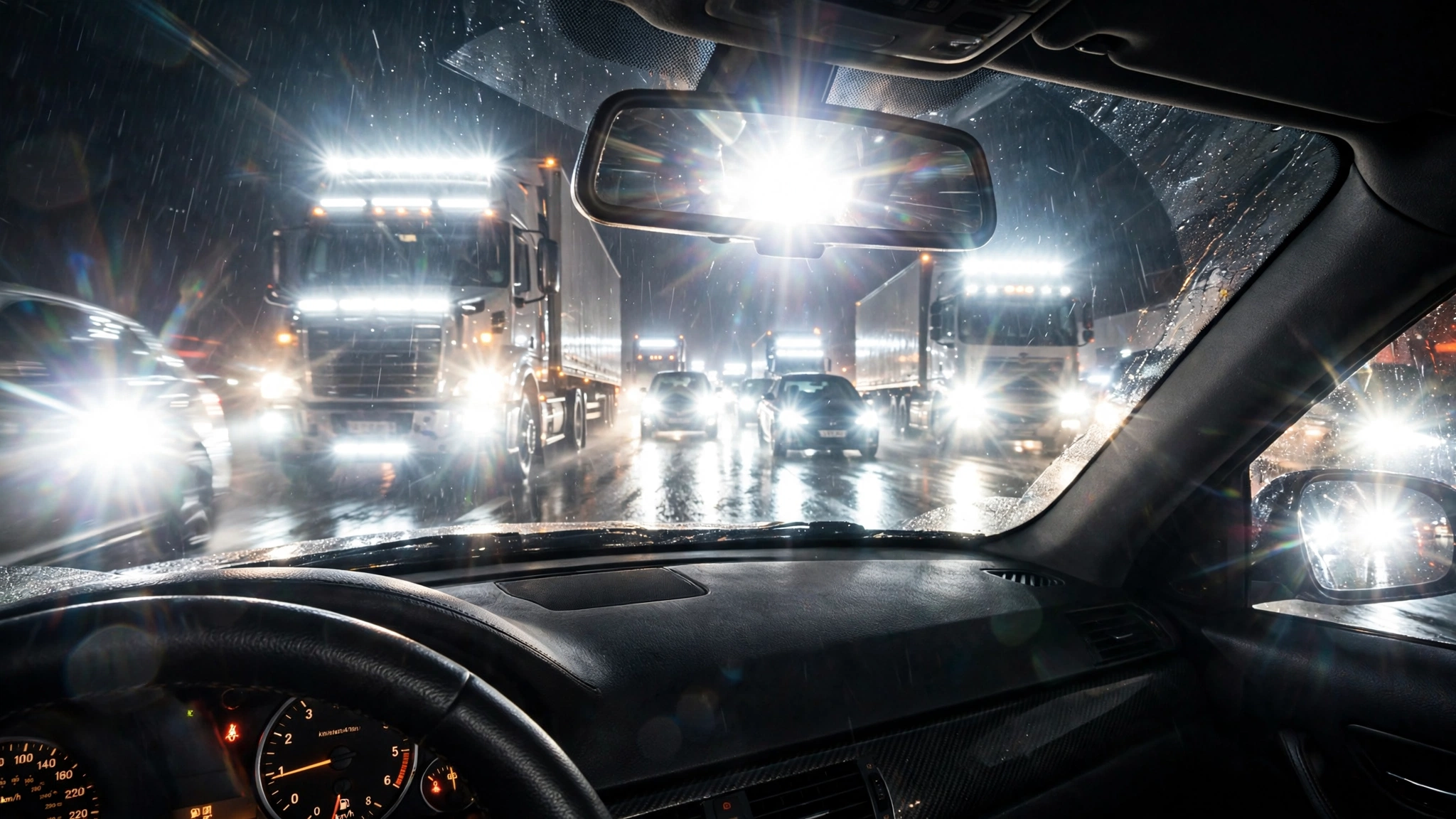
Modern cars have turned nighttime driving into an arms race of brightness. LED headlights can feel less like headlights and more like someone driving behind you with their brights permanently switched on. Newer vehicles increasingly add light bars across the front, spreading intense illumination across an even wider field of view. For people with astigmatism, that glare can become especially difficult to process and can contribute to headaches and eye strain. What was designed as better visibility can sometimes become visual overload for everyone else on the road.
When the Mirrors Become Floodlights
The problem gets worse when a bright vehicle follows closely behind. Its headlights hit the side mirrors and rearview mirror, turning them into sources of glare instead of useful information. The light can dominate your peripheral vision even when you are looking straight ahead. The driver behind may not intend to intimidate anyone, but the physical effect is still intrusive. It can make an ordinary drive feel like you are being pressured to move simply because someone else's headlights are overwhelming your mirrors.
Brightness Is Not Safety
There is an assumption that more light automatically means more safety. But brightness and useful visibility are not the same thing. Human eyes have limits, and excessive contrast can make surrounding objects harder to process. Automotive design often measures how effectively the person inside the vehicle can see forward. The experience of everyone facing those lights is a different part of the equation.
Technology Has a Blind Spot
This is a broader problem with modern technology: improvements are often measured from the perspective of the person using the product. The inconvenience transferred to everyone else can disappear from the calculation. A brighter vehicle may provide excellent illumination for its driver while creating glare for another driver. Neither person has to be acting irresponsibly for the system to produce a bad interaction. Sometimes the problem is built into the design itself.
The Hard Truth
The hard truth is that progress can create new problems while everyone is focused on the features that look impressive. Bright LEDs and full-width light bars can make a vehicle appear more advanced without necessarily making the entire driving environment better for everyone. Roads are shared spaces, so technology should be judged by its effect on the whole system rather than the person sitting behind the wheel of the newest vehicle. Better lighting should mean better visibility without turning someone else's mirrors into a wall of glare. Anything less is simply moving the problem from one driver to another.








Comments
No comments yet, be the first submit yours below.