Everybody Wants Freedom Until Somebody Else Uses Theirs

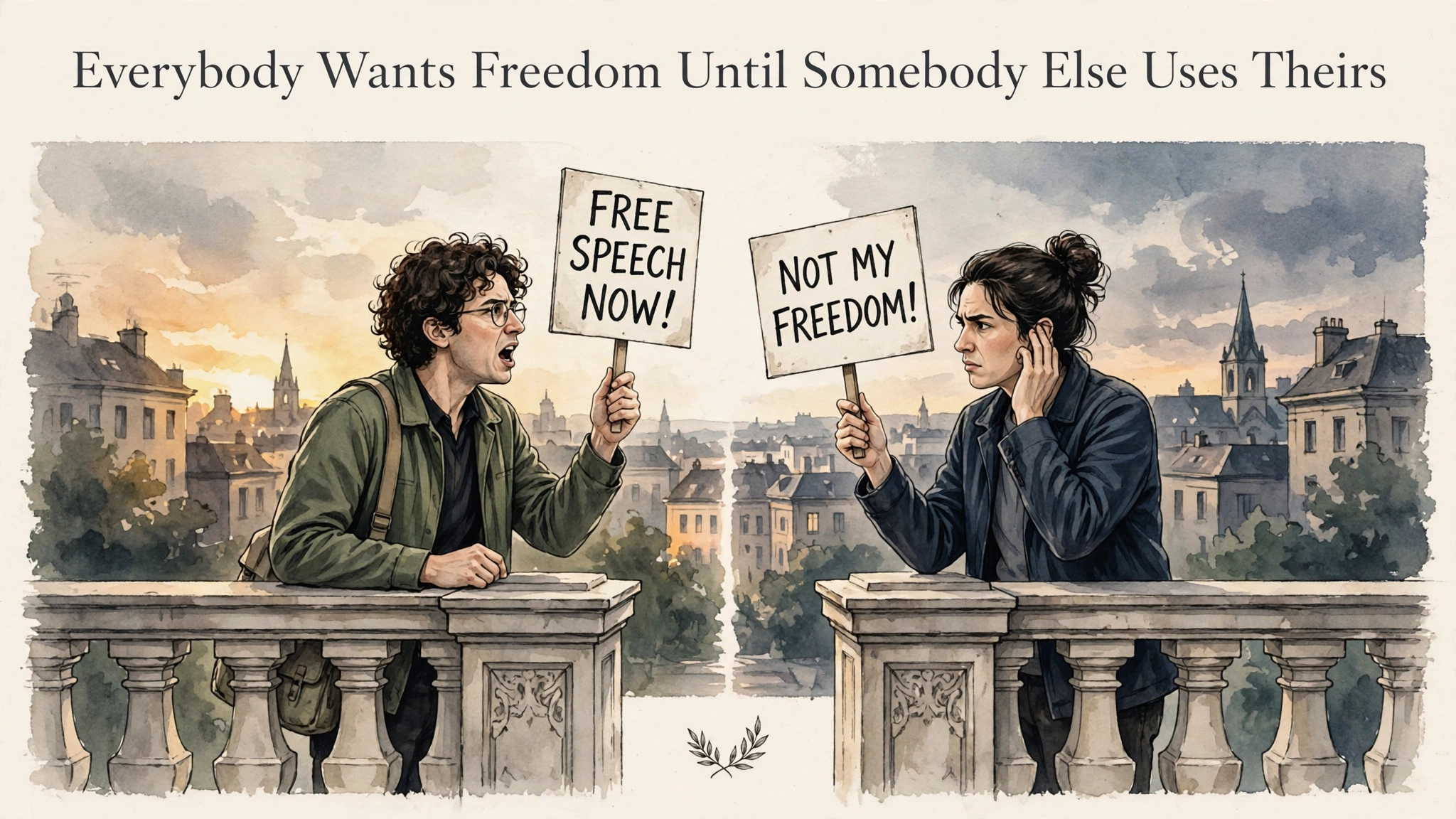
Some people don't actually want freedom. They want the freedom to live however they want while everybody else follows the rules they personally approve of.
Let's talk about something people don't like admitting: a lot of people only support freedom when it benefits them.
They want to speak their minds, but they want you silenced when your opinion makes them uncomfortable. They want to make their own choices, but they have a problem when you make choices they wouldn't make. They want people to respect their boundaries, but sometimes they refuse to respect yours.
That's not freedom. That's wanting control with a better public relations campaign.
And you can see it everywhere.
People preach tolerance until they meet someone they disagree with. They preach acceptance until somebody refuses to conform. They tell you to be yourself, then spend the next ten minutes explaining why the version of yourself you chose is unacceptable.
Apparently, you're allowed to be different as long as you're different in a way that doesn't bother anybody.
Good luck with that.
Here's where the conversation gets uncomfortable.
Freedom means allowing people to make choices you wouldn't make yourself. It means understanding that disagreement isn't automatically oppression, criticism isn't automatically hatred, and discomfort isn't automatically harm.
That doesn't mean every choice is harmless or that people should escape accountability. Your freedom doesn't give you permission to threaten people, violate their rights, or force your decisions onto everyone else.
But there's a difference between protecting people from genuine harm and trying to protect yourself from ever hearing something you dislike.
Somewhere along the way, we've started confusing those two things.
And social media has made the problem worse.
Now, people can block you, report you, organize against you, or try to damage your reputation because they don't like what you said. Sometimes those tools are necessary. People deserve protection from harassment and threats. But sometimes the goal isn't protection. Sometimes the goal is punishment for having the wrong opinion.
And when people start treating every disagreement like a personal attack, honest conversations become nearly impossible.
Everybody wants to be heard. Not everybody wants to listen.
Everybody wants their perspective understood. Not everybody is willing to consider that their perspective might be incomplete.
Everybody wants grace for their mistakes. Not everybody gives grace to anyone else's.
That's not a healthy society. That's a competition to see who gets to define what everybody else is allowed to say, think, and do.
The real test of your belief in freedom is what you do when someone uses theirs in a way you don't like.
It's easy to support free expression when somebody agrees with you. It's easy to support personal choice when somebody makes the same decisions you would. It's easy to defend independence when nobody challenges your own beliefs.
The test comes when somebody disagrees with your politics, questions your values, chooses a different lifestyle, or refuses to follow the path you think they should follow.
Can you disagree without demanding that they disappear?
Can you challenge an idea without trying to destroy the person who expressed it?
Can you accept that another adult might live differently from you without treating their existence like a personal insult?
Those questions reveal more about a person's commitment to freedom than any slogan ever will.
And let's stop pretending that conformity is always the same thing as morality.
History is full of ideas that were once unpopular, people who were criticized for challenging accepted beliefs, and institutions that resisted change until they had no choice but to confront it.
Popularity doesn't automatically make something right. Unpopularity doesn't automatically make something wrong. The number of people applauding an opinion doesn't determine whether that opinion deserves consideration.
Sometimes the majority is correct. Sometimes the majority gets it wrong. That's precisely why open debate, evidence, and independent thought matter.
If your beliefs are strong, you should be able to examine them. If your argument is solid, you should be able to defend it. And if somebody questions your position, you should be able to respond without immediately demanding that the conversation end.
You don't have to agree with everybody. You don't have to invite everybody into your life. And you certainly don't have to tolerate abuse.
But you should know the difference between protecting your peace and trying to control somebody else's existence.
Because the moment freedom becomes something we only grant to people we agree with, it stops being a principle and becomes a privilege.
And privileges can be taken away the moment the people in power decide you no longer deserve them.
Today, you might be the person deciding which opinions are acceptable. Tomorrow, you might be the person whose opinions suddenly become unacceptable.
That's why freedom needs consistent principles, not selective outrage.
So here's the question: Do we really believe in freedom, or do we just want the power to decide who gets it?
Because if your version of freedom requires everybody else to think like you, speak like you, and live like you, then what you're asking for isn't freedom.
You're asking for obedience.
And putting a nicer name on control doesn't make it any less controlling.









Comments
No comments yet, be the first submit yours below.