You Can Be Busy All Day and Still Be Going Nowhere

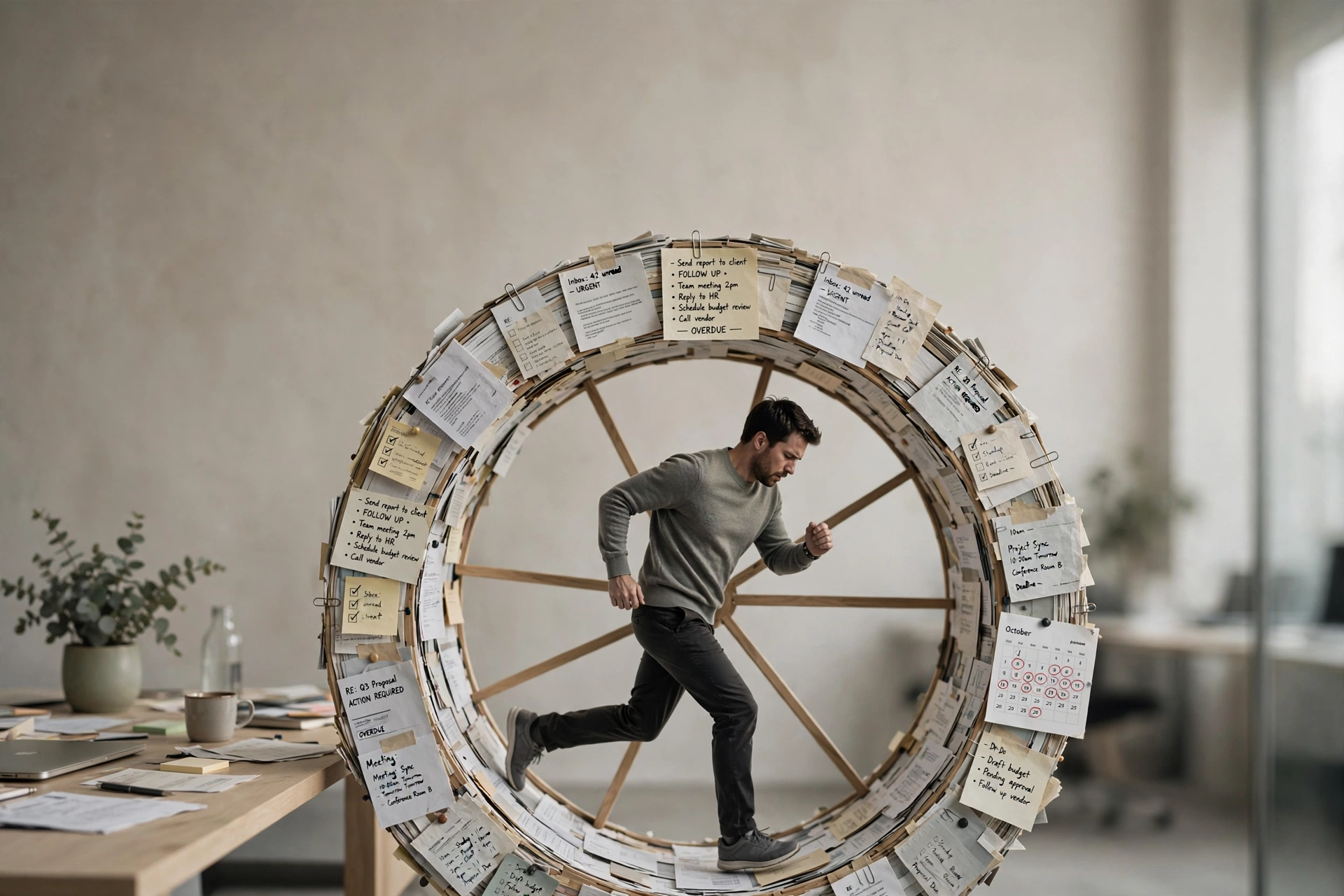
One of the easiest ways to lose your life is to stay so busy that you never stop to ask where you're actually going.
Being busy has become a status symbol.
Everybody is working.
Everybody is tired.
Everybody has somewhere to be.
Everybody has notifications waiting.
Everybody has another responsibility.
And somehow, being exhausted has become evidence that you're doing something right.
But movement and progress are not the same thing.
You can spend twelve hours working and still make no progress toward the life you actually want.
You can answer hundreds of messages and accomplish nothing important.
You can drive around all day making money and still end the night with the same financial problems.
You can spend hours scrolling through information and learn almost nothing.
You can constantly be “handling things” while never building anything.
That's the trap.
Busyness gives you the feeling of progress without requiring proof of progress.
And because being busy feels productive, people rarely question it.
They wake up.
Work.
Commute.
Shop.
Scroll.
Pay bills.
Answer messages.
Handle problems.
Go to sleep.
Repeat.
Months pass.
Years pass.
Then one day someone realizes they have been extremely busy but haven't moved much closer to what they actually wanted.
The calendar can be full while the life remains empty of direction.
This is why awareness isn't simply knowing what's happening in the world.
Awareness also means noticing what's happening to you.
What are you spending your time on?
What are you repeatedly postponing?
What problems keep returning?
What activities consume your energy without producing anything you value?
What are you doing because it matters?
And what are you doing simply because you've always done it?
Routine becomes dangerous when you stop remembering that it is a routine.
That's how people can become trapped without realizing they're trapped.
Nothing dramatic happens.
There isn't necessarily one giant mistake.
It's thousands of small decisions that all point in the same direction.
Another unnecessary purchase.
Another wasted evening.
Another month without saving.
Another year without learning the skill.
Another opportunity postponed.
Another excuse to stay exactly where you are.
Individually, none of those decisions looks catastrophic.
Collectively, they can become a life.
Your future is often hiding inside the things you repeatedly do without thinking about them.
That's why questioning your routine can feel uncomfortable.
You're not just questioning your schedule.
You're questioning the identity you've built around it.
If you've spent years saying, “I'm just busy,” what happens when you discover that some of that busyness was optional?
If you've spent years saying, “I don't have time,” what happens when you realize you had time but spent it differently?
That realization can hurt.
Sometimes the hardest truth isn't that someone stole your time. It's that you gave pieces of it away without realizing their value.
And the modern world makes that incredibly easy.
Your phone can fill every empty moment.
Entertainment can fill every quiet moment.
Work can fill every productive moment.
Notifications can interrupt every thought.
Algorithms can decide what information reaches you next.
Convenience can remove every moment where you would otherwise have to sit and think.
You can go through an entire day without experiencing a meaningful pause.
If you never create silence, you may never hear yourself think.
That's why sometimes the most productive thing you can do is stop.
Not permanently.
Not because work doesn't matter.
Because stopping gives you the opportunity to inspect the direction you're moving.
There is a difference between rest and avoidance.
There is a difference between working hard and being trapped in constant activity.
There is a difference between having responsibilities and allowing every responsibility to consume your entire identity.
You shouldn't have to destroy yourself proving that you're responsible.
The goal isn't to become lazy.
The goal is to become intentional.
If you're working, know what the work is building.
If you're spending, know what the spending is buying you.
If you're investing, know what you're investing toward.
If you're learning, know what skill you're developing.
If you're resting, actually rest.
If you're spending time with people, actually be there.
Awareness means knowing what you're doing while you're doing it.
That's harder than it sounds.
Because modern life rewards automatic behavior.
Wake up and check the phone.
See the notification.
Open the app.
See the advertisement.
Buy the thing.
Go to work.
Get paid.
Pay the bills.
Repeat.
The machine doesn't necessarily need you to stop and think.
It just needs you to continue.
Sometimes waking up isn't about discovering some hidden secret. It's simply realizing that you are allowed to question the routine.
You can change the schedule.
You can change the environment.
You can change what receives your attention.
You can stop doing things that no longer make sense.
You can learn something new.
You can save differently.
You can build something.
You can create a different routine.
None of that guarantees success.
But it creates something extremely valuable:
intentionality.
Because the opposite of being asleep isn't being angry at the world. It's becoming conscious of where your time, money and attention are actually going.
And once you see that clearly, being busy isn't enough anymore.
You start asking a better question:
“What is all this activity actually building?”
That question can change everything.









Comments
No comments yet, be the first submit yours below.