We're Raising a Generation That Knows How to Follow Instructions but Doesn't Know How to Question Them 😂

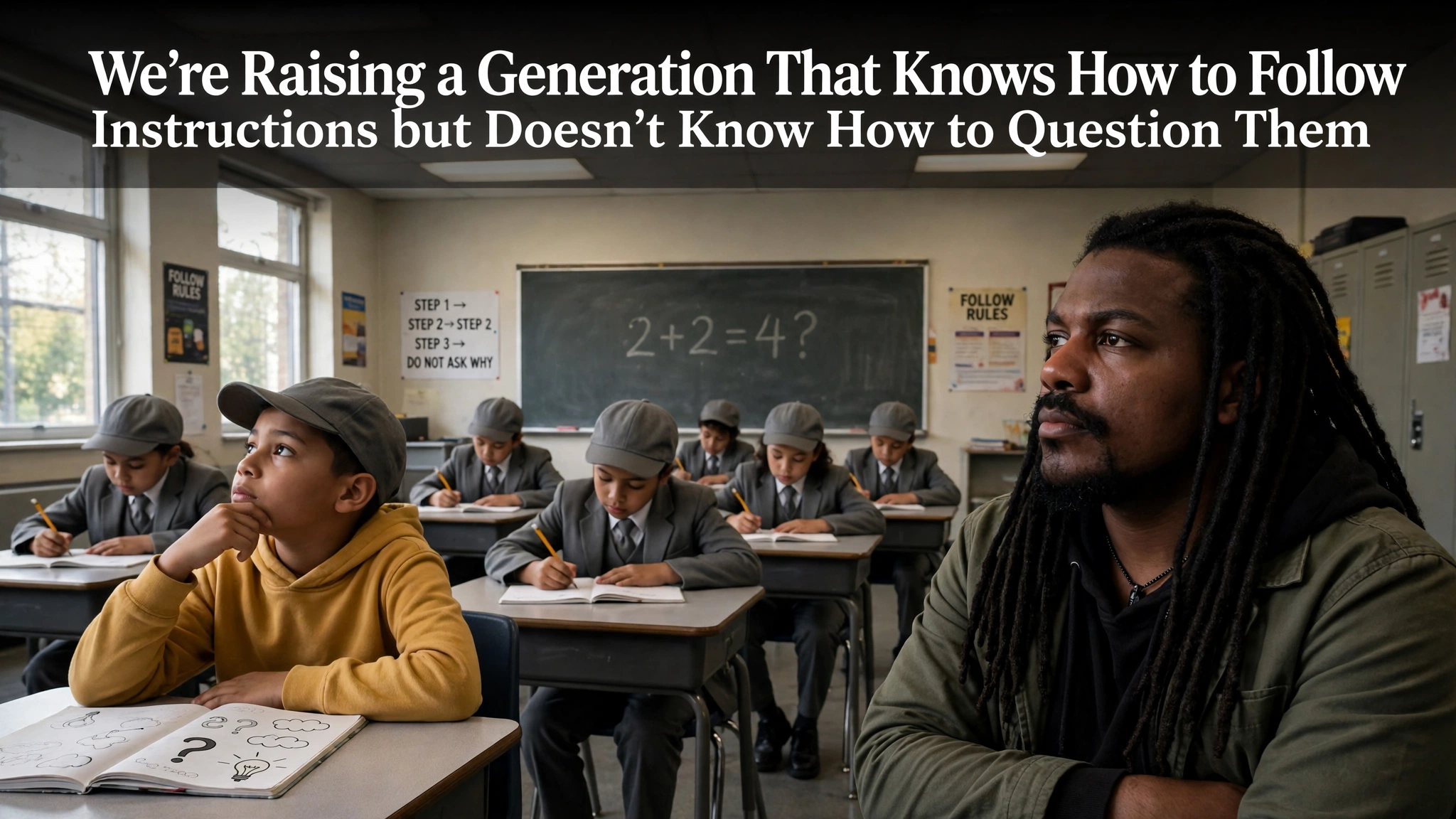
We spend 18 years teaching children to sit down, be quiet, follow directions, ask permission, and never talk back. Then they turn 18, enter the workforce, and wonder why nobody taught them how to think independently. 😂
Think about it. From the moment a child enters school, the system starts teaching them how to function within a structure. Sit in your assigned seat. Raise your hand before speaking. Ask permission to use the bathroom. Follow the schedule. Complete the assignment exactly as instructed. And whatever you do, don't question the person standing at the front of the room too much.
Now, some structure is necessary. I'm not suggesting we let children run around like unsupervised raccoons in a Walmart parking lot. 😂 Kids need boundaries, discipline, and guidance. But there's a difference between teaching a child discipline and teaching a child that authority should never be questioned.
One produces a responsible adult. The other can produce somebody who follows bad instructions simply because they came from somebody with a title.
And that second kind of person is incredibly convenient for a system that doesn't want to be challenged.
Look at the workplace. An employee notices an inefficient process, suggests a better way to do it, and gets told, "That's just how we've always done things." Meanwhile, the person making the decision hasn't touched the actual work in 15 years. The employee knows the system is broken, but the organizational chart says the person at the top gets the final word.
So what happens? People stop offering ideas. They stop thinking beyond their job descriptions. They learn that being right isn't always as valuable as being agreeable.
Then management wonders why nobody takes initiative. 😂
You spent years punishing people for stepping outside the lines, and now you're upset because nobody wants to color without permission?
We've created environments where obedience can be rewarded more consistently than independent thinking. Not everywhere, of course, but often enough that people learn to protect themselves by keeping their mouths shut.
And this doesn't stop at work. It happens in politics, relationships, religion, education, and even social media. People repeat opinions they haven't examined because those opinions are popular within their circle. They defend leaders who disappoint them because admitting a mistake would mean admitting they trusted the wrong person.
Some people would rather defend a bad decision than risk being embarrassed for questioning it.
That's how you end up with grown adults who can operate a smartphone, navigate five different apps, and argue for six hours online but struggle to explain why they believe what they believe.
They have access to more information than any generation before them, yet access to information isn't the same thing as independent thought.
You can Google an answer without understanding it. You can memorize somebody else's opinion without developing your own. You can watch 40 videos confirming your beliefs and mistake the algorithm's recommendations for evidence that you're right.
The ability to question something is not the same as automatically disagreeing with everything. That's another mistake people make. Being a critical thinker doesn't mean assuming every teacher is wrong, every politician is corrupt, or every institution is lying. It means examining the evidence, asking reasonable questions, and being willing to change your mind when the facts demand it.
Blind obedience and automatic rebellion are two sides of the same problem. In both cases, somebody else is controlling your thinking. One person follows every instruction. The other rejects every instruction. Neither has necessarily stopped to evaluate the situation for themselves.
Real independence requires judgment.
And here's where parents have to think carefully about what they're teaching their children. We tell kids to respect adults, but do we also teach them that an adult can be wrong? We teach them to follow rules, but do we explain why those rules exist? We tell them to listen to authority, but do we teach them what to do when an authority figure asks them to do something harmful?
A child who can respectfully ask, "Why?" is not automatically disrespectful. Sometimes that child is trying to understand. Sometimes they're noticing something the adults overlooked. And sometimes they're learning how to recognize the difference between a legitimate rule and somebody abusing their position.
We shouldn't be so focused on raising children who behave that we forget to raise adults who can think.
Because one day, those children will become employees, parents, voters, business owners, and leaders. They'll make decisions that affect other people's lives. They'll have to recognize bad advice, question questionable policies, and make choices without somebody standing over their shoulder telling them what to do.
You cannot prepare somebody for independence by teaching them that permission is required for every thought, every idea, and every decision.
And let's be honest: independent thinkers can be inconvenient. They ask why a company pays executives millions while telling employees there's no money for raises. They question why a policy exists if nobody can explain its purpose. They build alternatives instead of waiting for approval. They recognize that a title doesn't automatically make somebody intelligent and that confidence doesn't automatically make somebody correct.
Sometimes they're wrong. Sometimes their ideas fail. But at least they're engaging their brains instead of outsourcing every decision to whoever happens to be in charge.
The goal shouldn't be to raise a generation that refuses to listen. It should be to raise a generation that knows when listening makes sense, when asking questions is necessary, and when standing up for what's right matters more than fitting in.
Respect people. Learn from experience. Follow rules that serve a legitimate purpose. But never confuse somebody's authority over a situation with ownership of your mind.
Because the moment you stop asking questions, you make it easier for somebody else to decide what you're allowed to believe.
Now here's the real question: Are we teaching children how to think for themselves, or are we teaching them how to become adults who follow orders until retirement?
And if your answer is "Kids these days need to learn to stop questioning everything," ask yourself one thing: Would you rather raise a child who respectfully questions a bad decision, or an adult who follows one without hesitation?
Because those are two very different futures. 😂








Comments
No comments yet, be the first submit yours below.