Your Tax Refund Isn't Free Money—It's Your Own Money Coming Back, So Why Do People Act Like the Government Gave Them a Gift? 😂

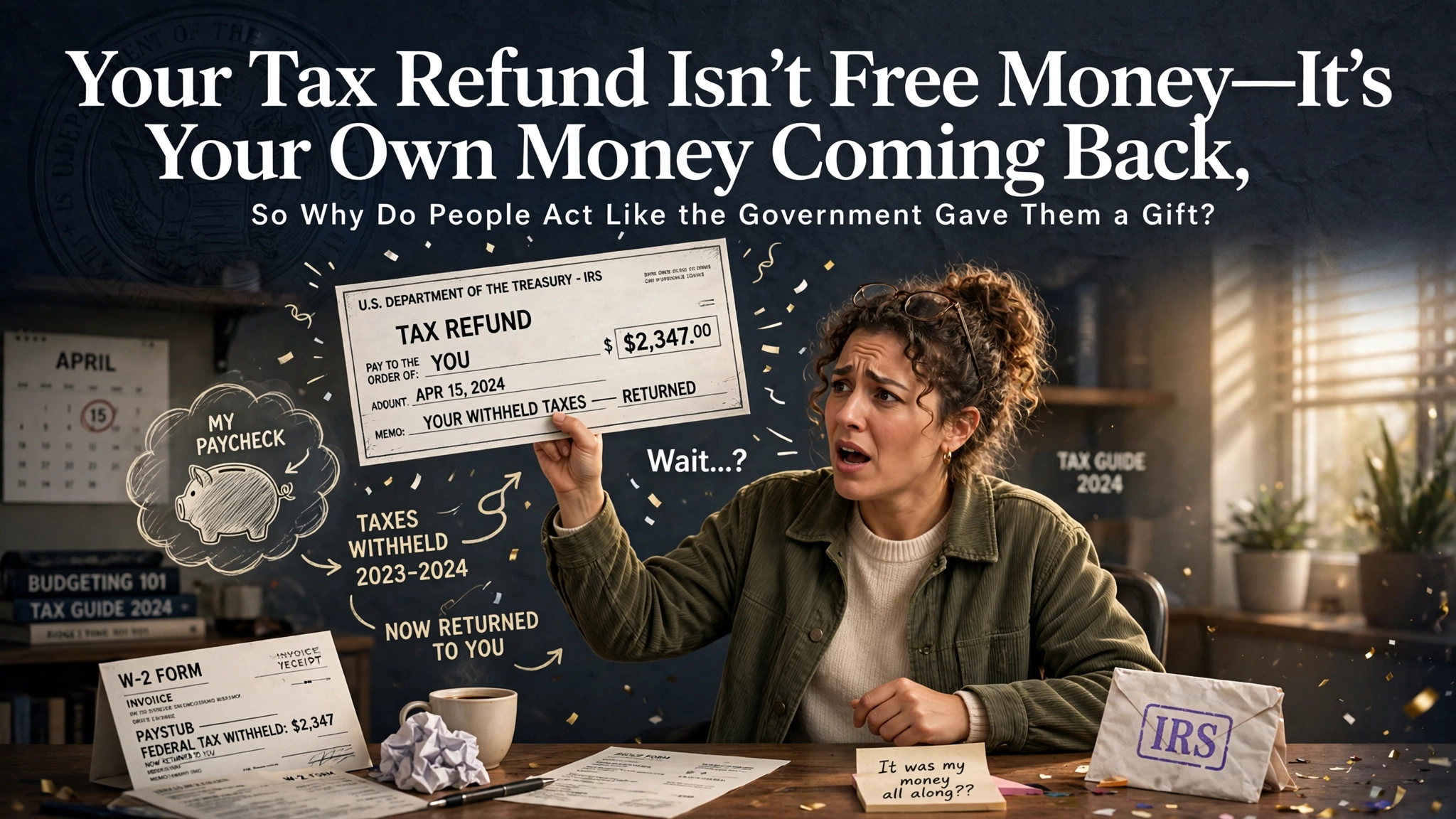
Somebody said, "If you don't pay federal taxes, you don't get a refund." And while there's some truth to that, let's talk about why people treat tax refunds like the government just walked into their house and handed them a winning lottery ticket. 😂 YOU EARNED THAT MONEY! In many cases, a refund is simply money you overpaid throughout the year coming back to you. You basically let the government hold your money, then celebrate when it returns a portion of it!
Let's clear something up before the comments turn into a financial boxing match. 😂 Not every tax refund works the same way, and not everybody who receives a refund paid federal income tax during the year. But the bigger point is worth discussing: a tax refund isn't automatically free money.
If your employer withholds federal income tax from every paycheck, that money gets sent to the government throughout the year. When you file your tax return, the IRS calculates your actual tax liability and compares it with what you've already paid through withholding and other payments.
If you paid more than you owed, you may receive a refund.
Translation: you gave them more money than your final tax bill required, and now you're getting the difference back.
Imagine lending somebody $2,000 throughout the year, interest-free, and then getting excited when they return $600 because that was the amount they didn't need to keep. You'd probably ask why you were lending them money in the first place! 😂
That's why some people describe tax withholding as an interest-free loan to the government. Technically, it isn't a loan in the legal sense; it's a system of paying taxes in advance. But the comparison makes a point about cash flow: money withheld from your paycheck is money you cannot use until it comes back to you, if it is refundable at all.
And here's where the conversation gets interesting.
Somebody might work all year, have federal income tax withheld, and receive a substantial refund. Somebody else might have little or no federal income tax withheld and receive little or no refund from overpayment. That doesn't automatically mean one person worked harder, earned more, or managed money better.
Tax outcomes depend on several factors, including income, filing status, withholding, deductions, and eligibility for tax credits.
But we need to stop confusing a tax refund with a financial reward for being alive.
Every year, people talk about their refund like it's a second paycheck. They're planning vacations, buying electronics, fixing their cars, paying overdue bills, and finally catching up on expenses. And I understand why. When money is tight, receiving a lump sum can feel like somebody opened a window in a room that's been suffocating you for months.
But think about the bigger picture. If you consistently receive a large refund because too much federal income tax was withheld, you may have had access to some of that money earlier if your withholding had been more accurate.
That money could have helped pay the electric bill, covered groceries, reduced credit card interest, or gone into savings before an emergency showed up at your front door.
Of course, some people deliberately prefer a refund because they find it easier to save through withholding than to keep extra money in their checking account. That's a valid personal budgeting choice. The important thing is understanding the trade-off rather than assuming a refund is a bonus the government invented for you.
Now, let's address the statement that if you don't pay federal taxes, you don't get a refund. That's too broad.
If you're talking specifically about federal income tax withholding, then yes, you generally can't get back income tax you never paid through withholding or other payments. But refundable tax credits can sometimes produce a refund even when a taxpayer owes no federal income tax. Eligibility rules apply, and different credits have different requirements.
That means someone can receive a federal tax refund without having paid federal income tax through paycheck withholding. The refund may come from refundable credits or other payments credited to their account.
So the more accurate question isn't simply, "Did you pay federal taxes?" It's, "What taxes and payments did you make, what credits do you qualify for, and what does your final tax calculation show?"
And here's the part people might not want to hear: not receiving a refund doesn't automatically mean you lost money, just as receiving a big refund doesn't automatically mean you came out ahead.
If your total tax payments matched your tax liability, you may owe nothing and receive nothing back. That's not necessarily a loss. If you owe more than you paid, you might have a balance due. If you overpaid or qualify for refundable credits, you may receive a refund.
The refund itself doesn't tell the whole story. You have to look at your overall income, tax liability, payments, and credits to understand what happened.
And let's not forget that federal income tax isn't the only tax many workers pay. Depending on their circumstances, they may also pay Social Security and Medicare taxes through payroll deductions, along with state or local taxes. Not getting a federal income tax refund doesn't mean someone paid no taxes at all.
So when somebody says, "I don't pay federal taxes, so I don't get a refund," the follow-up should be: what exactly do you mean by federal taxes, and are you accounting for refundable credits?
Because financial conversations get misleading when we reduce an entire tax system to one sentence.
My bigger point is this: we should understand where our money goes before celebrating its return. A refund can be helpful, and for some households it can make a meaningful difference. But it's worth knowing whether that money is coming back because you overpaid, because you qualified for refundable credits, or because of another adjustment to your tax account.
Don't let the word "refund" trick you into thinking you won a prize. Sometimes you simply got your own money back. Sometimes you qualified for a credit. And sometimes you owe more.
So here's the debate: would you rather receive a $4,000 tax refund once a year, or keep more of your own money in every paycheck and receive little or no refund?
And if you prefer the big refund, that's your choice. Just make sure you understand the numbers behind it. Because the goal shouldn't be to impress people with how much the government sent you. The goal should be to understand your taxes and make the money you earn work better for you. 💰











Comments
No comments yet, be the first submit yours below.