Why Does Paying Child Support Sometimes Get Treated Like Proof That You're a Good Parent?

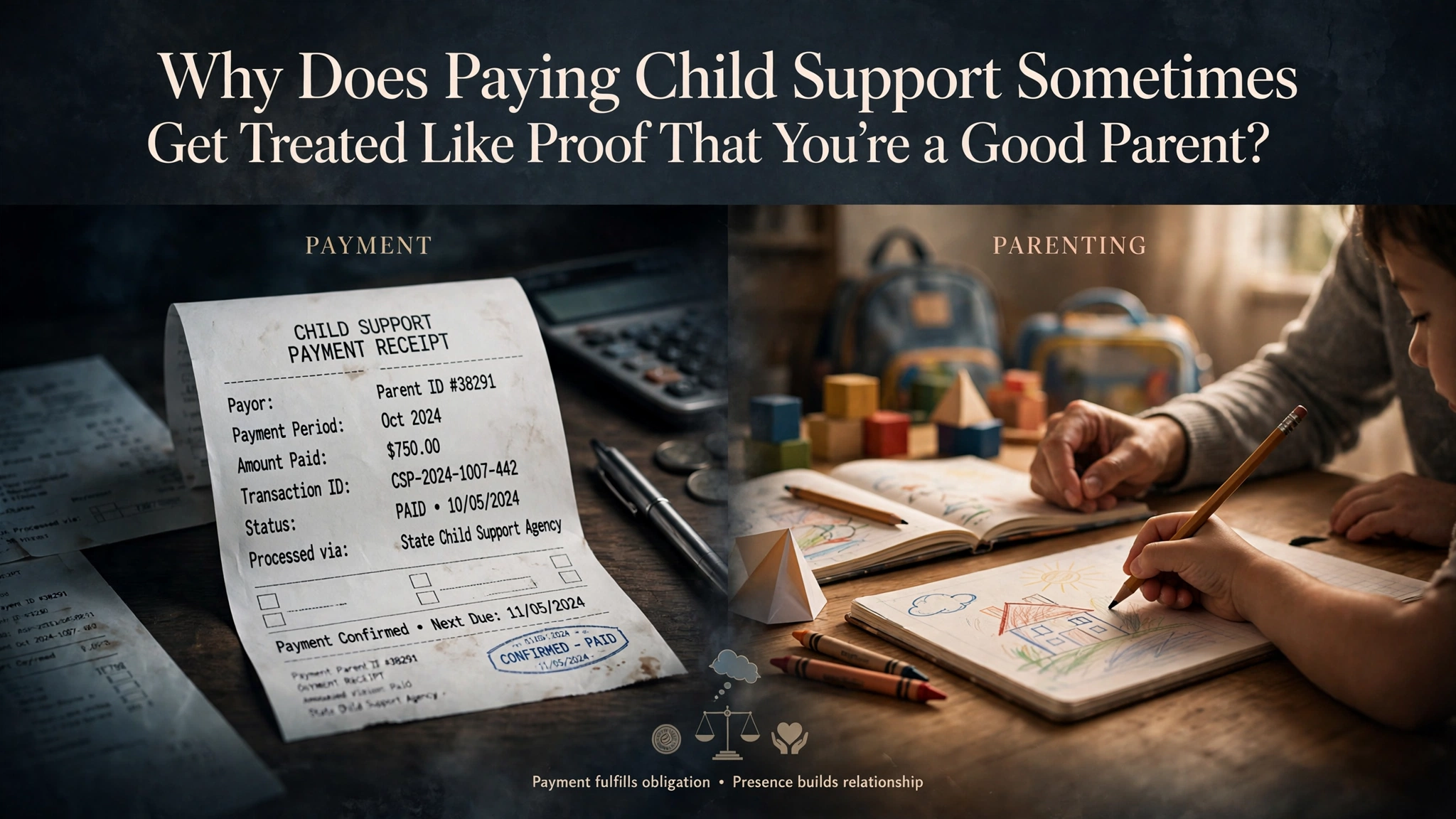
Paying child support doesn't automatically make somebody a great parent. But not paying doesn't automatically tell the whole story either. Somehow, we've turned parenting into a financial scoreboard—and the child is the one caught in the middle.
Let's talk about one of the most emotionally charged topics in family life: child support.
Some people act like the parent paying support has fulfilled every parenting responsibility the moment the payment clears. Others treat the parent receiving support like they're getting rich off the money. And somewhere in the middle, there's a child who needs food, clothes, stability, attention, and two adults who can put their personal conflict aside.
Child support is meant to help cover the costs of raising a child. Children don't stop needing things because their parents separated. Housing costs money. Groceries cost money. School supplies cost money. Healthcare costs money. The financial responsibility doesn't disappear when a relationship ends.
But here's where the conversation gets messy: people often assume they know exactly how the money is being used without knowing anything about the household's actual expenses.
They hear a support amount and immediately start doing imaginary accounting. "That's too much." "That's not enough." "She's spending it on herself." "He's not doing anything for the child."
Unless you actually know the family's financial situation, you're often just making assumptions based on a number.
And yes, there are situations where support orders feel unfair, where incomes change, where parenting time isn't reflected properly, or where one parent is carrying expenses that the other doesn't see. Those situations deserve a fair process—not a comment section full of strangers pretending they know the case.
But we also need to stop acting like money is the only measure of parenting.
A parent can pay support and still be emotionally absent. A parent can have limited money and still show up consistently. Financial responsibility matters, but so does spending time with your child, listening to them, helping them grow, and being dependable.
And here's the uncomfortable question for both sides: are we actually focused on what's best for the child, or are we using child support as another way to punish an ex?
Because when every conversation becomes a battle over money, credit, and who deserves praise, the child can end up feeling like a financial obligation instead of a person both parents love.
Children should not have to hear adults arguing over whether they're "worth" a payment. They shouldn't be made to feel guilty for needing things. And they shouldn't be recruited to take sides in financial disputes they didn't create.
Let's debate: Should child support be treated strictly as a financial responsibility, or do people use the payment itself as a shortcut for judging who the better parent is?
Because raising a child costs money—but being a parent requires more than a transaction receipt. 😂








Comments
No comments yet, be the first submit yours below.