We've Turned Every Public Space Into Something You Have to Pay to Enjoy 😂

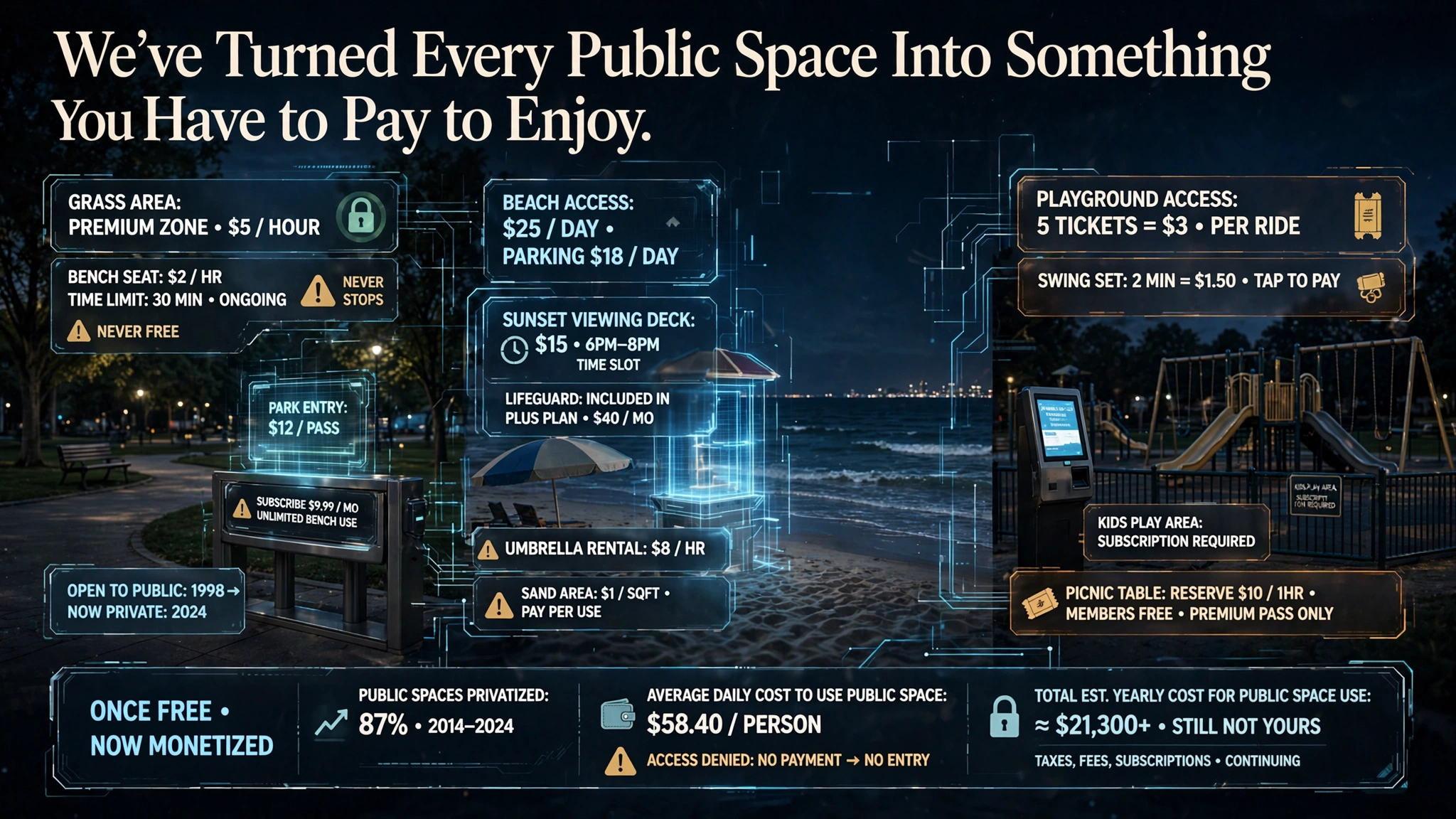
Remember when you could leave your house and actually enjoy yourself without somebody reaching into your wallet? Apparently, that was a limited-time promotion. 😂
Go to the beach, there's parking fees. Visit a state park, there's an entrance fee. Take the family to an amusement center, and suddenly you're calculating whether everybody really needs to participate. Want to sit somewhere nice downtown? Better check whether that sidewalk belongs to a restaurant charging $18 for a sandwich.
Somewhere along the way, simply existing outside your house became an expensive hobby.
Public spaces are supposed to serve the public. Parks, libraries, sidewalks, community centers, playgrounds, and recreational areas aren't just decorative features for a city brochure. They're places where people can gather, exercise, learn, relax, and spend time with their families without needing to purchase something every five minutes.
But look at how many communities are losing accessible gathering spaces. A neighborhood playground gets neglected while expensive entertainment developments receive attention. A public pool closes because maintenance costs become an issue. Community programs disappear, and residents are left with fewer affordable places to go.
Then we wonder why people spend so much time sitting inside staring at screens.
Not everybody can afford bowling, movie tickets, restaurants, sporting events, amusement parks, and weekend trips. Some parents just want to take their children somewhere safe, let them run around, and enjoy an afternoon without spending half their grocery budget.
And before somebody says, "Nothing is free," nobody is arguing that parks maintain themselves through positive thoughts and inspirational quotes. Public spaces require funding, workers, repairs, and maintenance. The question is whether communities are willing to prioritize affordable access or whether every enjoyable experience needs to become another revenue opportunity.
There's also something concerning about replacing ordinary public gathering spaces with commercial alternatives. When the only well-maintained places to socialize require purchases, people who have less money get fewer opportunities to participate in community life.
A city shouldn't measure its success exclusively by how many luxury developments it can attract. It should also consider whether an ordinary family can spend a Saturday afternoon enjoying that city without going broke.
We don't need every neighborhood to have another shopping center, luxury apartment complex, or entertainment district. Sometimes people just need a clean park, working basketball courts, public restrooms, shaded benches, and a playground that doesn't look like it survived a natural disaster.
Here's something worth debating: Should cities be required to maintain more free recreational spaces, even if that means prioritizing them over certain commercial developments? Or has everything become a business opportunity, including our ability to enjoy the communities we live in?





Comments
No comments yet, be the first submit yours below.