They Call Bitcoin Volatile, but Have You Looked at the Stock Market Lately? Apparently Volatility Only Counts When It's Crypto.

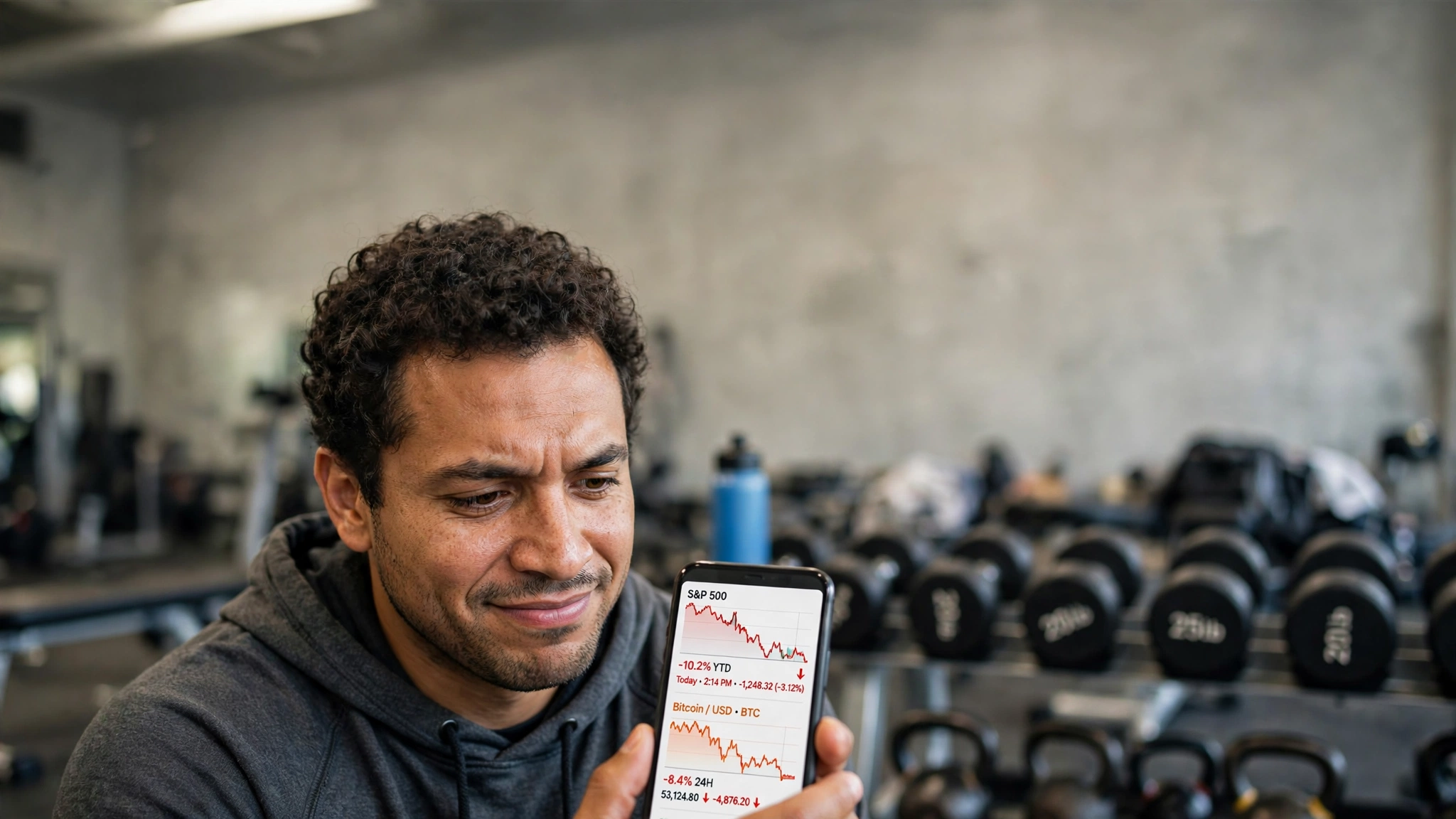
Everybody loves calling Bitcoin a volatile asset. But have you watched the stock market? Companies lose billions in market value overnight, stocks swing 10%, 20%, sometimes more, and investors start questioning their entire existence. Yet somehow, volatility becomes a completely different conversation when the asset has a familiar Wall Street ticker.
One of the biggest arguments people make against Bitcoin is that it's too volatile. They say the price moves too much, it's too risky, and you never know what it's going to be worth tomorrow.
Fair enough. Bitcoin absolutely experiences major price swings.
But I'd argue that the same conversation needs to happen with stocks. Because owning shares in a publicly traded company doesn't magically protect you from volatility.
Stocks Aren't Automatically Safe Just Because Wall Street Approves Them
People sometimes talk about stocks as if they're naturally stable investments. But a stock is still an asset whose market price can rise or fall depending on earnings, interest rates, investor expectations, competition, economic conditions, and market sentiment.
A company can report disappointing earnings and watch its stock drop. A CEO can make a disastrous decision. An industry can become outdated. A business can lose market share.
And if investors suddenly lose confidence, the stock price can take a serious hit.
Owning a recognizable company doesn't eliminate risk. It just gives the risk a corporate logo.
Bitcoin and Stocks Have Different Risks
Here's where the conversation needs to be fair. Bitcoin and stocks aren't identical investments.
When you purchase stock, you're buying an ownership interest in a company. That company may generate revenue, own assets, produce profits, pay dividends, and grow its business.
Bitcoin is a decentralized digital asset. It doesn't represent ownership in a company, doesn't generate corporate earnings, and doesn't pay dividends simply because you hold it.
Its value is influenced by supply and demand, adoption, liquidity, investor sentiment, regulation, and broader economic conditions.
Those are different investment models, and they deserve different types of analysis.
Even the Biggest Companies Can Have Brutal Price Swings
Look at major technology stocks. Some of the biggest companies in the world have experienced substantial declines during market corrections.
Investors can lose a significant percentage of their portfolio without ever touching cryptocurrency.
And individual stocks carry another risk: company-specific failure. A business can lose its competitive advantage, accumulate debt, face lawsuits, or become irrelevant.
Bitcoin has its own risks, including extreme price volatility, regulatory uncertainty, cybersecurity threats, and the possibility of losing access to your holdings.
The point isn't that one is automatically better. The point is that neither deserves a free pass from risk analysis.
Volatility Is Not the Same Thing as a Bad Investment
This is where I think people confuse two different concepts.
Volatility measures how much an asset's price moves. It doesn't independently tell you whether that asset is valuable, whether it's overpriced, or whether it belongs in somebody's portfolio.
An investment can be volatile and still perform well over a particular period. It can also be volatile and lose most of its value.
The same applies to stocks.
What matters is understanding what you're buying, why you're buying it, how much risk you're taking, and whether you can afford the possibility of losing money.
Stop Judging Investments by Their Labels
Some people will buy an individual stock after watching a company trend on social media without researching its financials. Others will dismiss Bitcoin without understanding how its supply, network, and market work.
Neither approach is investing. That's just making decisions based on familiarity or fear.
You should evaluate an asset based on its fundamentals, market behavior, risks, and role in your overall financial strategy.
Calling Bitcoin volatile doesn't make stocks stable. It just means you've noticed the price movements in one market while giving another market the benefit of the doubt. Risk doesn't disappear because an investment trades on Wall Street.
I'm not arguing that Bitcoin is safer than stocks or that everybody should invest in cryptocurrency. I'm arguing that investors should apply the same level of scrutiny to both.
Because if you're going to criticize one asset for moving up and down, you should probably understand that the stock market has been doing the same thing for generations.
Invest intelligently. Understand what you own. Diversify where appropriate. And never confuse a familiar investment with a risk-free investment.










Comments
No comments yet, be the first submit yours below.