Millions of Workers Are Funding the Stock Market Through Their Paychecks—But Nobody Explains Who Benefits

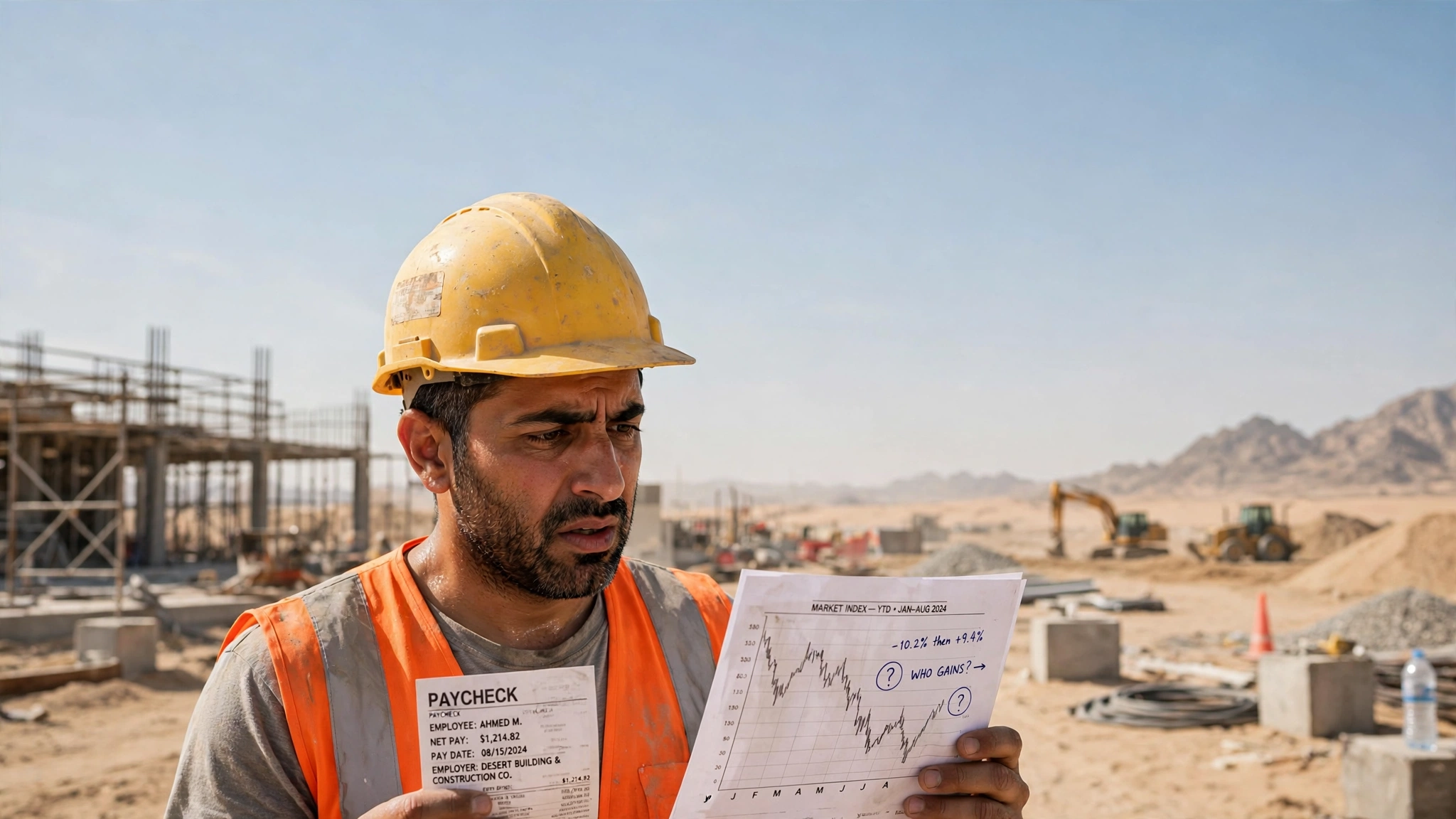
Imagine building a system where millions of workers automatically contribute money from every paycheck into retirement investments, and that money flows into publicly traded companies. Those companies benefit from a massive pool of investment capital, while many workers couldn't tell you which companies their retirement money actually owns. That's one of the most overlooked relationships between everyday workers and Wall Street.
Here's something worth thinking about when discussing the stock market.
Millions of Americans participate in employer-sponsored retirement plans. Many are automatically enrolled, meaning money can begin coming out of their paychecks unless they opt out or change their contribution.
That money doesn't just sit in a vault somewhere waiting for retirement. It's invested according to the retirement plan's investment options and default settings.
And a significant portion of that money can ultimately find its way into publicly traded companies through index funds, mutual funds, and other investment vehicles.
Your Paycheck Can Become Investment Capital for Corporate America
Think about how this works collectively.
One worker contributes $100. Another contributes $150. Another contributes $200. Multiply that process across millions of employees and you have an enormous pool of retirement capital.
Investment funds use that capital to purchase shares of publicly traded businesses.
Those businesses gain access to a broad investor base, and workers gain exposure to the potential growth of the companies inside their retirement portfolios.
It's a relationship between everyday labor and the stock market that most people never think about.
The S&P 500 Makes This Even More Interesting
The S&P 500 tracks approximately 500 leading publicly traded companies in the United States. An index fund that tracks it gives investors exposure to those companies through a single investment.
Instead of researching and purchasing individual shares of hundreds of businesses, an investor can purchase shares of one fund that follows the index.
That means a worker can indirectly own pieces of major corporations through their retirement account without ever personally selecting those companies.
However, not every retirement plan automatically puts employees into the S&P 500. Many use target-date funds, which can hold a mixture of U.S. stocks, international stocks, and bonds.
Here's Where the Fairness Argument Comes In
Think about the difference between an individual investor and someone participating in an automatic retirement system.
A person investing independently has to make decisions about what to buy, how much to invest, when to invest, and how to manage risk.
Meanwhile, an automatically enrolled employee may be investing through payroll deductions without ever making an active decision to participate.
That employee is still exposed to market movements, but may not understand the companies or funds behind the investment.
And here's the bigger question: Why do we make participation in the stock market so dependent on employment benefits and financial literacy?
People with access to good retirement plans may accumulate investments automatically over decades. Workers without employer-sponsored plans may have to figure everything out themselves.
That creates a meaningful difference in access to long-term investing opportunities.
Public Companies Benefit From the Collective Investment System
When people purchase shares through funds, they create demand for those shares in the secondary market. That can support liquidity and influence market valuations.
However, it's important to understand that buying existing shares doesn't automatically send new money directly into a company's bank account. Companies generally receive direct capital when they issue shares or raise money through other financing arrangements.
Still, a large investment ecosystem built around retirement savings creates a substantial base of long-term shareholders in publicly traded businesses.
Workers are participating in the ownership of corporate America, even if their participation is indirect.
Why Isn't Financial Education Part of Automatic Enrollment?
Automatic enrollment can be beneficial. It can help people who might otherwise never start saving for retirement.
But automatically putting somebody into an investment plan and teaching them how that investment works are two different things.
People should understand what they're contributing, what funds hold their money, what fees they're paying, how much risk they're taking, and how to change their investments.
They should also understand that retirement investments can lose value. A diversified portfolio doesn't guarantee a profit or protect against every market decline.
Millions of workers can spend decades helping build the economy through their labor while simultaneously investing part of their paychecks into the companies that make up that economy. But if you're going to participate in corporate America through your retirement account, shouldn't somebody make sure you understand the game you're playing?
I'm not arguing that the S&P 500 is a bad investment or that workers shouldn't participate in retirement plans.
I'm questioning why so many people can become investors without ever being taught what investing actually means.
We should be teaching people how money moves, how companies raise capital, how retirement funds work, and how ordinary workers can build ownership in the economy.
Because the stock market isn't just something happening on Wall Street. A portion of your paycheck might already be participating in it.









Comments
No comments yet, be the first submit yours below.