Why Are Governments Worried About E-Bikes? The Hidden Impact on Gas Revenue

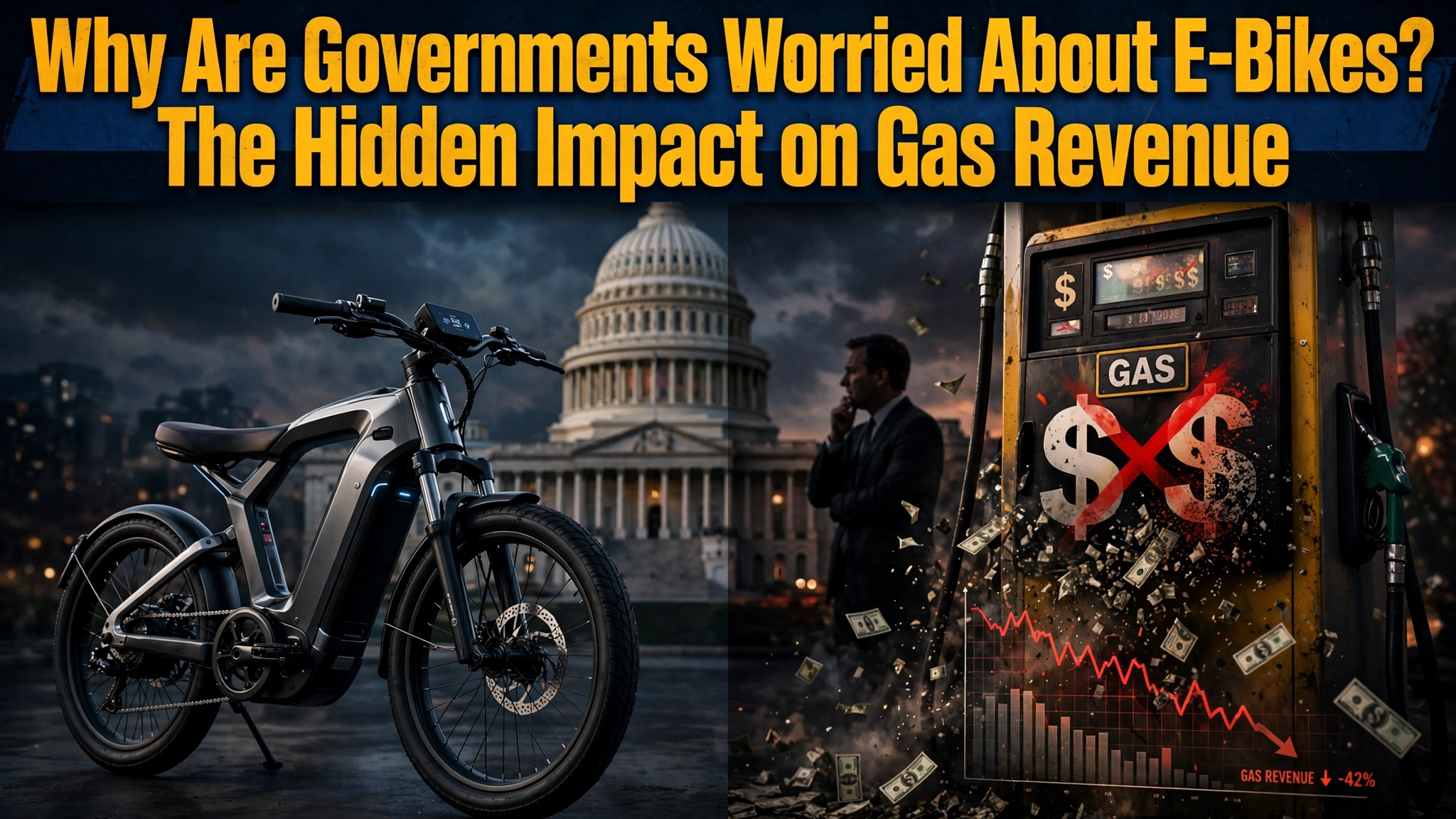
Why Are Governments Worried About E-Bikes? The Hidden Impact on Gas Revenue
E-bikes are becoming more popular every year, and that raises an interesting question: what happens when millions of people start replacing short car trips with electric bikes? The answer goes far beyond transportation. It can also affect fuel consumption, gas taxes, road usage, and the billions of dollars connected to the automobile economy.
E-Bikes Can Reduce Gasoline Consumption
Think about how often people get into their cars for short trips. A trip to the store, a quick food delivery, a ride to work, or a few miles across town can burn gasoline every single day. An e-bike can replace some of those trips without requiring a gallon of fuel.
When people drive less, they buy less gasoline. When they buy less gasoline, the entire system built around fuel consumption collects less money.
Gasoline Generates More Than Just Money for Oil Companies
Gasoline is connected to a much larger financial ecosystem. Governments collect revenue through fuel taxes, while businesses make money from gas stations, vehicle maintenance, insurance, parking, tolls, and other services associated with automobile transportation.
That means transportation habits matter. If a person normally spends money on gasoline every day but begins using an e-bike for most short-distance trips, that money starts moving somewhere else.
The E-Bike Changes the Economics of Short Trips
One of the biggest advantages of an e-bike is that it can make short-distance transportation extremely cheap. You don't need to constantly purchase gasoline, and electricity used to charge an e-bike can cost only a fraction of what many people spend operating a car.
For delivery workers, commuters, students, and people living close to businesses, the difference can become significant. Saving a few dollars every day can turn into hundreds or even thousands of dollars over the course of a year.
Is the Government Actually Worried About E-Bikes?
It's important to separate speculation from reality. Governments are not necessarily "against" e-bikes, and many governments actively encourage electric bicycles as a way to reduce congestion, pollution, and transportation costs.
However, there is a legitimate economic question: if transportation gradually moves away from gasoline-powered vehicles, traditional fuel-tax revenue can decline. Governments eventually have to figure out how to fund roads and transportation infrastructure when people are purchasing less gasoline.
The bigger question isn't whether people should ride e-bikes. It's what happens to the transportation economy when people no longer need gasoline for every trip.
E-Bikes Could Disrupt the Traditional Transportation Model
Cars require fuel, maintenance, insurance, registration, parking, and expensive infrastructure. An e-bike can eliminate or dramatically reduce several of those expenses for certain types of trips.
That doesn't mean cars are going away. Long-distance travel, families, cargo, weather, and many jobs still require automobiles. But if e-bikes replace enough short trips, they could change how people spend their transportation dollars.
The Future of Transportation Revenue
As electric vehicles, e-bikes, public transportation, and other alternatives become more popular, governments may eventually need new ways to fund roads and transportation systems. Fuel taxes work well when nearly everyone depends on gasoline. They become less effective when transportation becomes increasingly electric.
That could lead to discussions about mileage-based taxes, registration fees, road-use charges, or other forms of transportation funding.
The Bottom Line
E-bikes aren't just bicycles with motors. They represent a different way of thinking about transportation. Every time someone chooses an e-bike instead of a car for a short trip, they potentially save money on gasoline and reduce their dependence on the traditional automobile system.
That's why the rise of e-bikes is worth paying attention to. The real disruption may not be the bike itself. It may be the money people stop spending on gasoline, car ownership, and everything connected to driving.




Comments
No comments yet, be the first submit yours below.