The Internet Gave Everybody a Voice—Then Taught Us to Rent It

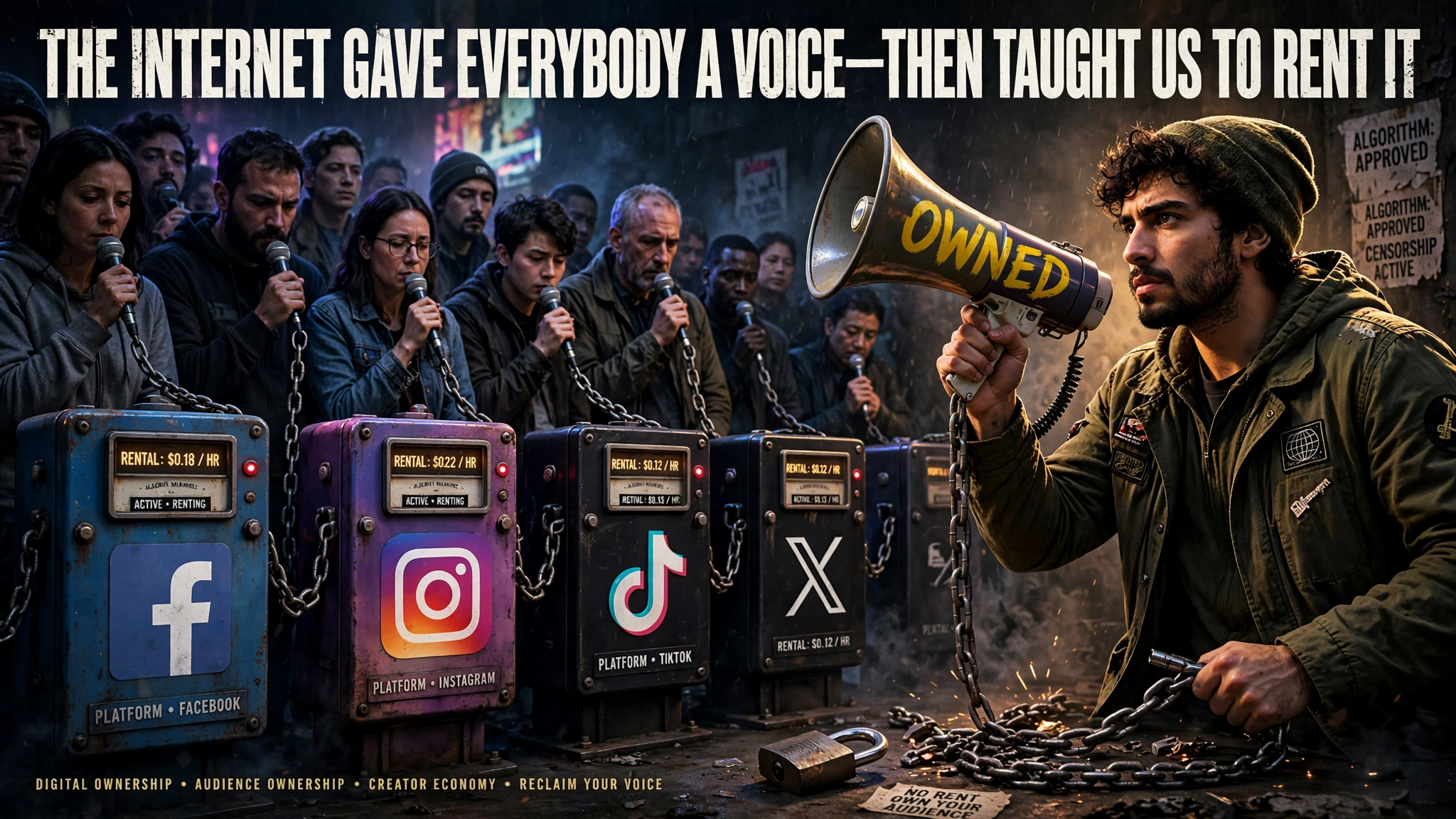
The internet was supposed to give ordinary people a way to speak without asking permission.
For a while, it actually felt that way.
You could build a website.
Start a blog.
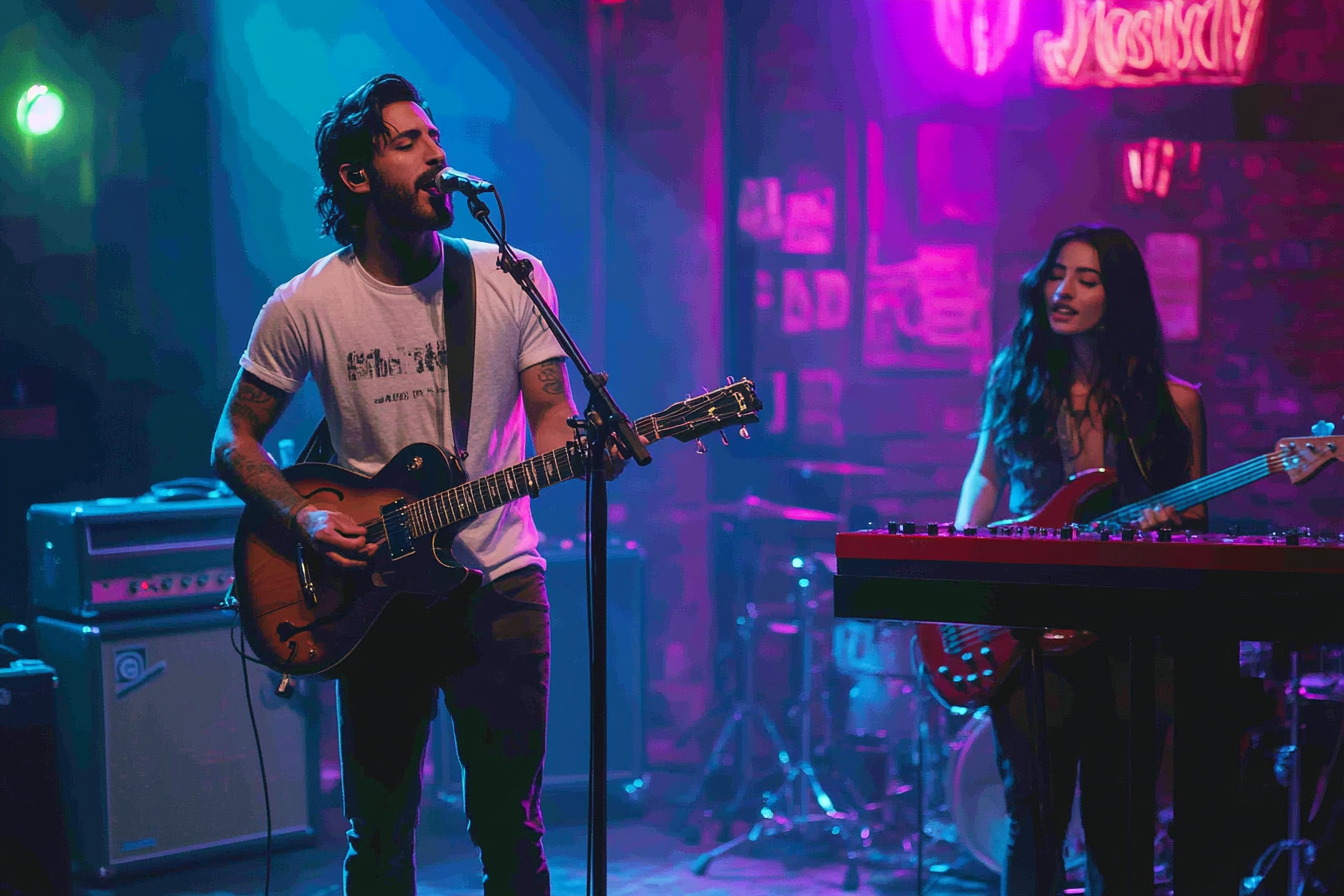
Upload your music.
Publish your thoughts.
Create a community.
You didn't need a television network.
You didn't need a newspaper.
You didn't need a record label.
You just needed a computer and an internet connection.
Then social media changed the deal.
The internet became easier to use, but we also started giving more control to the platforms hosting our content.
Instead of building a website, we built a profile.
Instead of building an email list, we collected followers.
Instead of owning a community, we joined somebody else's network.
Instead of controlling distribution, we learned how to satisfy an algorithm.
And eventually, many people started confusing visibility with ownership.
Having 10,000 followers can feel like having 10,000 customers.
It isn't necessarily the same thing.
A viral video can feel like a business.
It isn't necessarily a business.
A huge following can feel permanent.
It isn't necessarily permanent.
Your content can reach millions of people while your ability to communicate with those people still depends on someone else's platform.
That's the part creators should pay attention to.
The platform isn't necessarily your enemy.
It's a tool.
But tools are different from foundations.
If your entire business depends on one website, one algorithm, one account or one social network, you have created a single point of failure.
One policy change can affect your reach.
One technical problem can affect your communication.
One account restriction can interrupt your workflow.
One algorithm change can make yesterday's audience almost impossible to reach today.
That's why digital ownership matters.
Have somewhere people can find you outside of social media.
Keep backups of your work.
Build an email list when appropriate.
Own your domain.
Keep your original videos, music, photographs and written work.
Create multiple ways for people to discover what you do.
Social media should help distribute your work—not become the only place your work exists.
The smartest creators aren't necessarily trying to escape social media.
They're learning how to use it without becoming completely dependent on it.
That's a major difference.
Use the platform.
Build the audience.
Take advantage of the exposure.
But quietly build something underneath it that you control.
Because a rented audience can disappear. An owned connection is much harder to take away.
The internet still gives ordinary people something incredibly powerful: the ability to create and distribute information without waiting for traditional gatekeepers.
But that power becomes stronger when you understand the difference between participating in a platform and owning your digital infrastructure.
Don't just build followers.
Build assets.
Don't just chase views.
Build relationships.
Don't just create content.
Keep copies of what you create.
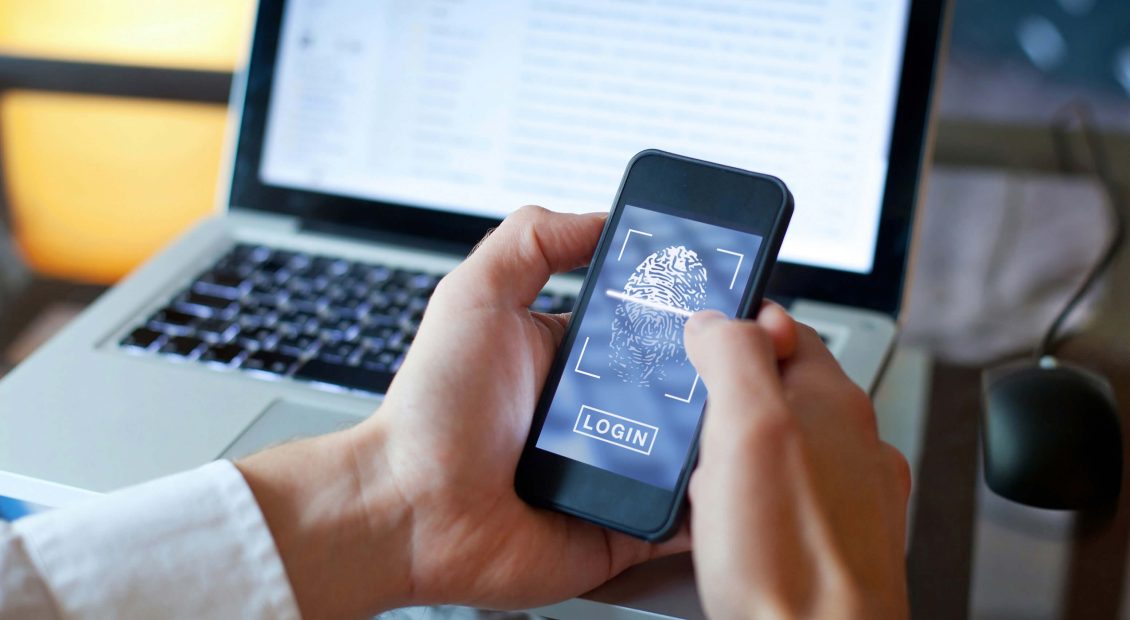
And don't put your entire digital future behind one login screen.
The internet gave us a voice. The next step is making sure we still have somewhere to speak when the platform changes.




Comments
No comments yet, be the first submit yours below.