Having Children Is Not the Problem — Pretending Raising Them Is Cheap Is the Problem

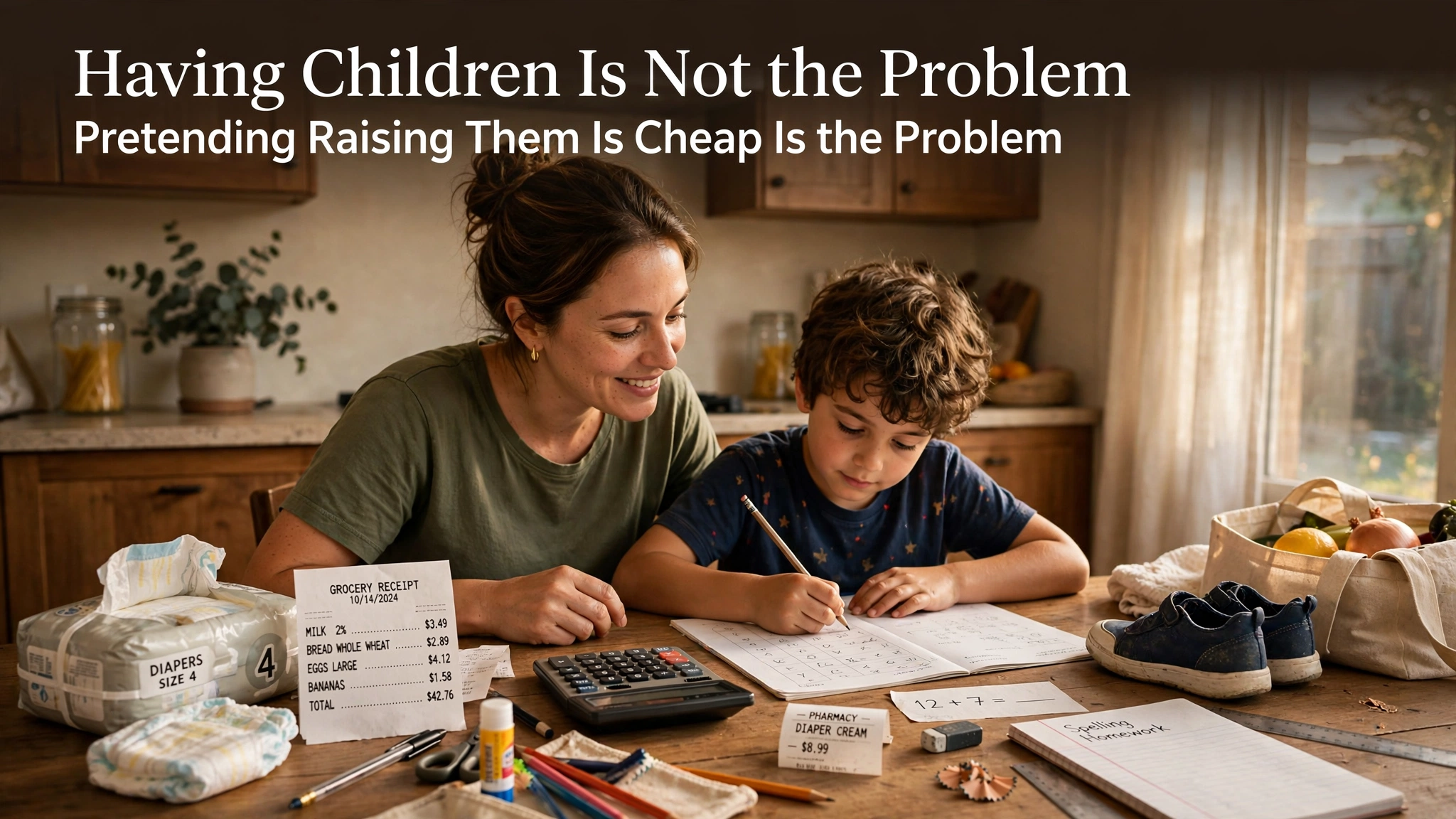
Everybody loves telling people to have children, but the moment those children need food, housing, healthcare, childcare, clothes, and stability, suddenly everybody has an opinion about what the parents should have done differently.
Let's have a conversation that might upset a few people.
Society constantly talks about the importance of family. Politicians talk about traditional values. Religious leaders talk about raising the next generation. Social media is full of people posting pictures of happy families, celebrating pregnancies, and telling everybody that children are blessings.
But where is that same energy when parents are trying to figure out how to afford those blessings?
Because having a child doesn't stop the rent from going up. It doesn't make groceries cheaper. It doesn't convince the electric company to give you a discount. It doesn't make daycare affordable or guarantee that your employer will give you enough hours to cover the bills.
The baby arrives, but the economy doesn't suddenly become more compassionate.
And somehow, parents are expected to figure everything out without complaining.
If you're struggling financially with children, somebody will tell you that you should have waited until you were financially stable. If you wait too long, somebody asks why you don't have children yet. If you have one child, somebody asks when you're having another. If you decide not to have children at all, somebody wants to explain why you're missing out on life's greatest experience.
It seems like everybody has a preferred timeline for your life, but nobody is volunteering to pay the bills associated with it.
That's convenient.
And let's be honest: financial stability isn't always something people can perfectly plan for. People lose jobs. Relationships end. Medical emergencies happen. Rent increases. Industries change. A parent can make responsible decisions and still encounter circumstances they never anticipated.
Planning matters, absolutely. Children deserve food, shelter, care, and responsible adults looking after them. But pretending that responsible planning eliminates every financial risk is simply dishonest.
Here's another uncomfortable reality: raising children is expensive even when both parents are trying their best.
Two parents can work full-time and still struggle with childcare costs. A single parent can work overtime and still have trouble finding affordable housing near a good school. A father can pay child support and still need to maintain a separate household. A mother can receive financial assistance and still have expenses that exceed what she receives.
The details differ from family to family, but the underlying issue remains: children have needs that don't conveniently fit inside a paycheck.
And children don't stop needing things because adults are having a difficult month.
They still need shoes when their feet grow. They still need lunch when money is tight. They still need transportation, school supplies, medical appointments, attention, and time.
There is no pause button on parenting.
But instead of asking whether the cost of raising a family has become unreasonable, we often turn the conversation into a competition over which parents deserve sympathy.
People argue about mothers versus fathers. Married parents versus single parents. People who receive assistance versus people who don't. Working parents versus stay-at-home parents.
Everybody is defending their category while the bills keep arriving for all of them.
Why are we so comfortable arguing over which struggling parent has it worse, but so uncomfortable discussing why raising a family can require so much money in the first place?
You can hold parents accountable for their decisions without pretending the economic pressure doesn't exist. You can encourage financial responsibility without shaming families who hit hard times. You can believe children deserve stability while also acknowledging that the systems surrounding parents don't always make stability easy to achieve.
Those ideas are not mutually exclusive.
And here's the part that really deserves attention: children shouldn't have to pay for the economic mistakes, relationship conflicts, or financial struggles of the adults around them.
Children didn't set housing prices. They didn't decide what childcare should cost. They didn't create the job market. They didn't choose whether their parents would separate.
Yet they can be the ones who experience the consequences most directly.
That is why conversations about family finances should go beyond judging individual parents. We should also discuss wages, affordable housing, childcare, healthcare, family leave, and whether people who work full-time can realistically provide a stable home.
And no, that doesn't mean the government should pay every bill for every family. It means we should be capable of discussing practical solutions without turning every concern into an ideological fight.
We can value personal responsibility and still recognize that a healthy society benefits when children have opportunities to succeed.
We can encourage parents to plan ahead and still admit that life doesn't always follow the plan.
We can celebrate families and still talk honestly about what families need.
Because saying children are the future means very little if we're unwilling to talk about the conditions they're growing up in today.
So here's the controversial question: If society constantly tells people that family is important, why do we act surprised when parents point out how difficult it has become to afford one?
Maybe the problem isn't that people are talking too much about the cost of raising children.
Maybe the problem is that we've spent too much time telling people what family should look like and not enough time discussing what it takes to support one.
Children are not luxury products. Parents are not walking ATMs. And struggling financially doesn't automatically make someone a bad parent.
It's time to stop treating every conversation about the cost of raising children like an excuse and start treating it like the serious economic and social issue it is.









Comments
No comments yet, be the first submit yours below.