Voting Has Become So Intrusive That People Are Knocking on Your Door to Find Out Who You're Voting For 😂

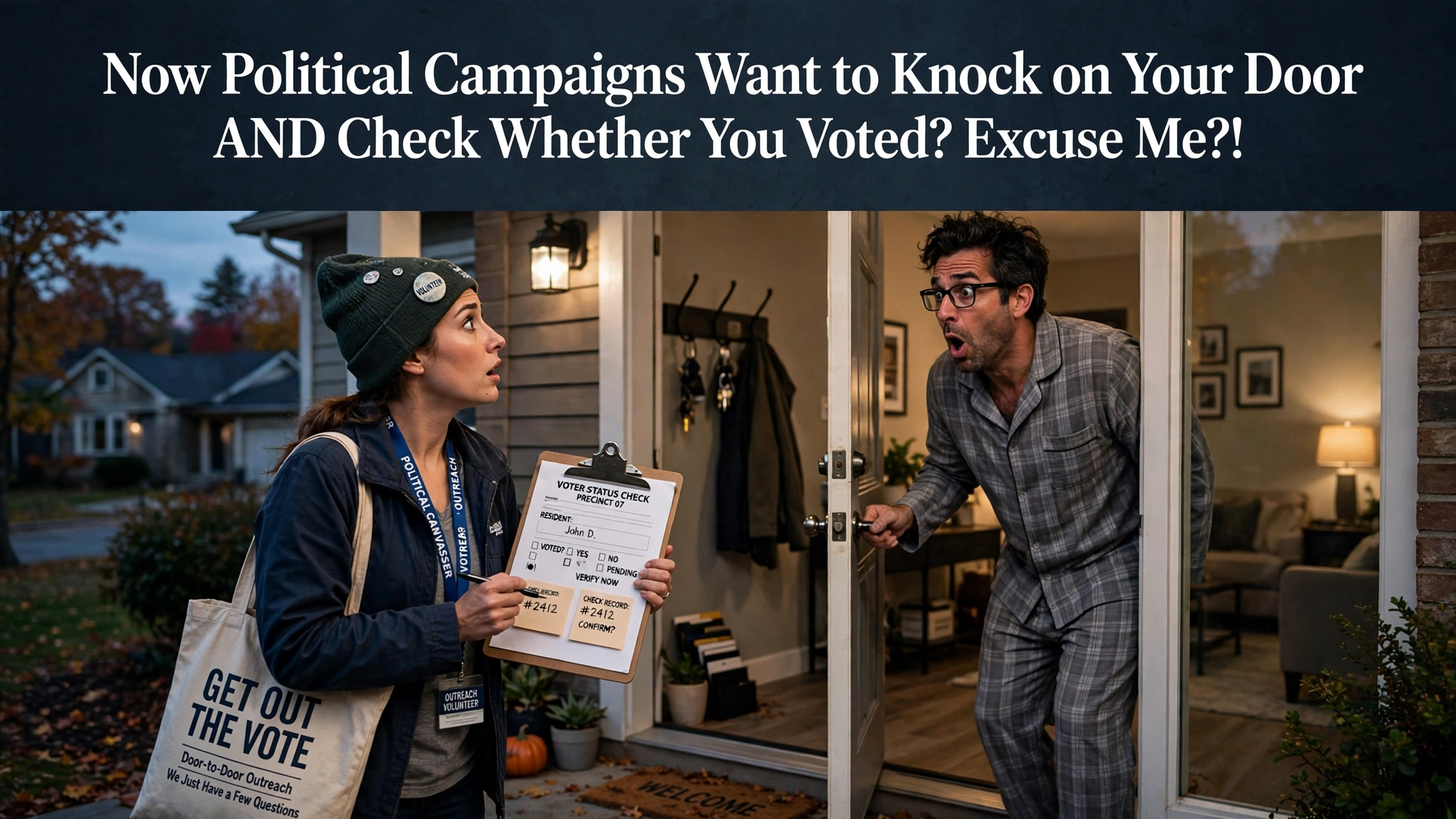
Imagine sitting at home minding your own business, and somebody knocks on your door trying to find out who you're voting for. 😂 Excuse me?! Is my front porch a polling station now, or did I accidentally sign up for a political interrogation?
Let's talk about how intrusive voting season can get. Every election, people start knocking on doors, handing out campaign materials, asking questions, and trying to figure out where everybody stands politically.
I understand that campaigning is part of the political process. Candidates want supporters, volunteers want to spread their message, and campaigns want to encourage people to participate. Fine. That's part of how elections work.
But here's my question: When did my personal space become an invitation to investigate my political business?
I'm at home relaxing, working on my computer, spending time with my family, or trying to enjoy a little peace and quiet. Then somebody knocks on the door wanting to discuss an election. Now I have to decide whether I want to stop what I'm doing and entertain a political conversation with a complete stranger.
And if they start asking who I'm supporting? That's where I draw the line. 😂
My political choices are personal. I don't owe a door-to-door canvasser an explanation of which candidate I support, which party I belong to, or whether I've even decided how I'm voting.
THE BALLOT IS PRIVATE. WHY DOES EVERYBODY WANT A PREVIEW OF MY ANSWERS BEFORE I GET THERE?
Think about how strange that sounds outside of election season. Imagine somebody knocking on your door asking how much money you have in your bank account, who you're dating, or what you discussed with your family last night.
You'd probably look at them like they had lost their entire mind. 😂 But introduce politics, and suddenly some people act like asking personal questions is automatically acceptable because they have a campaign badge and a clipboard.
Campaigning is one thing. Making somebody feel pressured to reveal their political preferences is another.
And politics is already divisive enough. People lose friendships over candidates. Families argue at the dinner table. Coworkers get into heated debates. Neighbors who have lived beside each other for years suddenly act like they belong on opposite sides of a battlefield.
Now we're supposed to open our doors and tell strangers which side we're on?
Some people don't even feel comfortable discussing politics with their own relatives. Why would they want to disclose those opinions to somebody they have never met?
Privacy shouldn't disappear just because an election is approaching.
There's also a difference between encouraging civic participation and treating people like they owe a campaign their time. You can leave information, explain a candidate's platform, and politely ask whether someone plans to vote. But people should be able to decline the conversation without being pressured, judged, or treated as if they're doing something wrong.
And let's be honest: sometimes you're not avoiding the conversation because you don't care about the election. You're avoiding it because you don't want to debate politics with somebody standing between you and your living room. 😂
Maybe you're still researching the candidates. Maybe you don't trust either option. Maybe you already made your decision and don't feel like announcing it. Or maybe you simply don't want to discuss politics with strangers at your front door.
All of those are personal choices.
What's especially interesting is that people can have strong opinions about protecting their privacy online while casually sharing political information with strangers who knock on the door. You don't have to disclose everything just because somebody asks politely.
You can participate in democracy without turning your private life into a public announcement.
Vote according to your conscience. Research the candidates. Ask questions. Challenge claims. Make your own decision. But remember that your vote belongs to you, not to the person who knocked on your door, not to your neighbor, and not to anybody trying to pressure you into revealing your choice.
And if someone asks who you're voting for, you're allowed to smile and say, "That's private." You don't have to turn it into an argument or justify your answer.
Maybe that's what we need more of during election season: less pressure to announce our political identities and more respect for people's right to make their own decisions.
Because the whole point of having a private ballot is that you can make your choice without having to perform that choice for everybody else.
LET'S DEBATE IT: Is door-to-door political canvassing a normal part of democracy, or has election season become too intrusive when strangers show up at your home trying to learn your political business?
And be honest: When a political canvasser knocks on your door, are you answering and having the conversation, or are you suddenly very busy doing absolutely nothing until they leave? 😂






Comments
No comments yet, be the first submit yours below.