It's Okay to Be Alone — Not Every Season of Life Needs an Audience

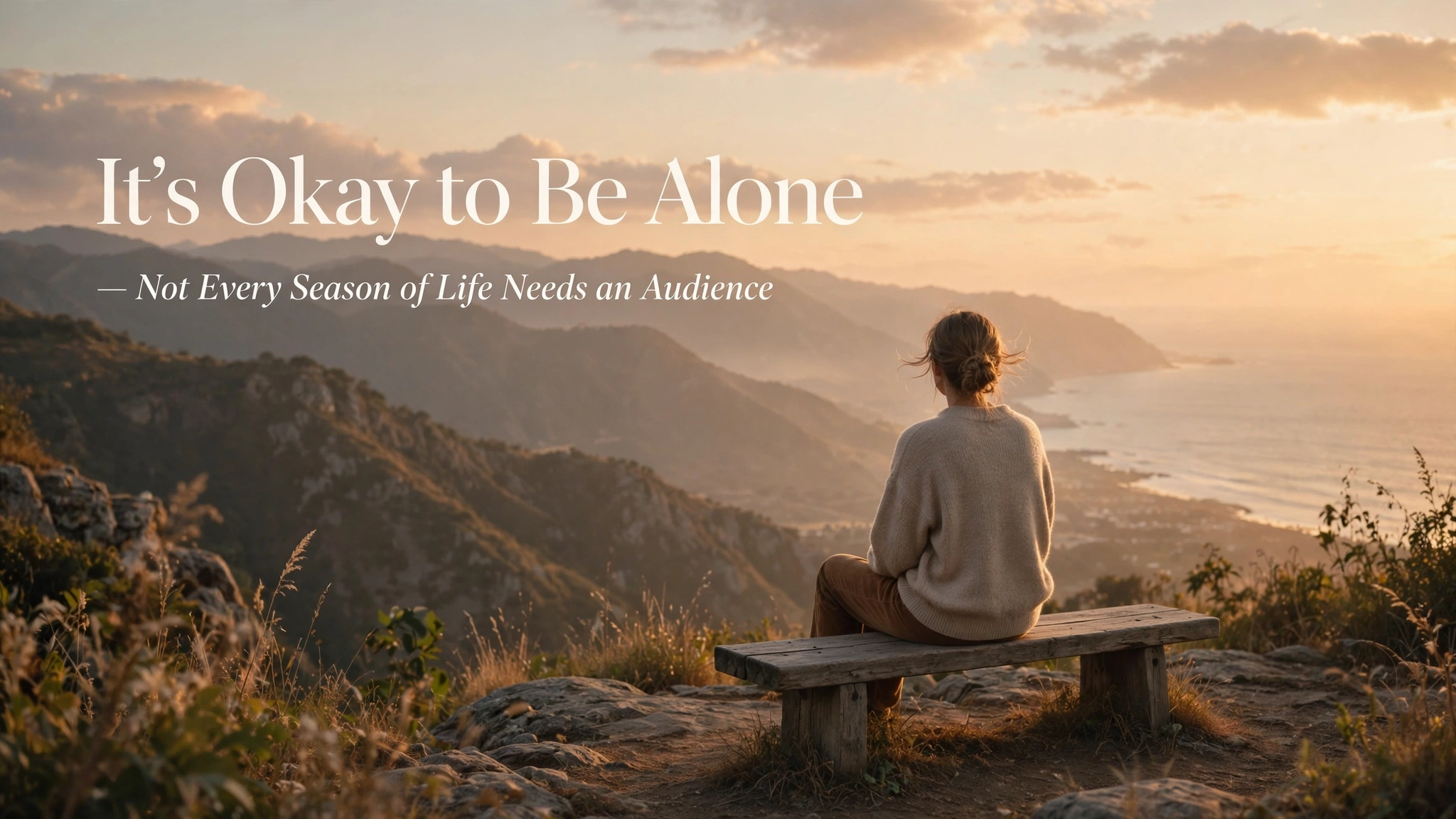
Sometimes the most peaceful thing you can do for yourself is stop trying to make sure somebody is always around.
Somewhere along the way, we started treating being alone like something is wrong with us. If you're single, people want to know why. If you spend weekends by yourself, somebody assumes you're lonely. If you stop going out, stop answering every invitation, and start enjoying your own company, people wonder what happened.
But what if nothing happened? What if you finally got comfortable enough with yourself to stop needing constant company?
There is a difference between being lonely and being alone. Loneliness is wanting a connection you don't have. Being alone can be a choice—a chance to breathe, think, recover, and live without constantly adjusting yourself to fit somebody else's expectations.
Not every empty seat in your life needs to be filled.
Think about how much energy people spend keeping relationships alive that stopped bringing them peace a long time ago. They tolerate disrespect because they don't want to be single. They keep answering calls from people who only remember them when they need something. They attend events they don't enjoy because they are afraid of being left out.
Some people would rather be surrounded by the wrong company than sit in a quiet room with themselves.
That is worth thinking about.
Because when you become afraid of being alone, you can start accepting almost anything just to avoid it. You might confuse attention with affection, convenience with commitment, and familiarity with love. You might stay in situations that drain you simply because leaving would mean starting over without anybody beside you.
But being alone can teach you something that constant company sometimes prevents you from learning: what your life feels like when nobody else is influencing the atmosphere.
Peace can feel unfamiliar when you've spent years surrounded by chaos.
At first, the quiet might feel strange. You may reach for your phone out of habit. You may wonder why nobody has called. You may feel tempted to reconnect with people you already know aren't good for you, just because the evening feels empty.
Don't mistake that discomfort for proof that you need someone.
Sometimes you're not missing a particular person. You're missing the routine, the attention, the distraction, or the feeling of having something happening around you. Those are different things, and recognizing the difference can change the way you approach relationships.
Learn to enjoy your own company. Take yourself out to eat. Watch the movie you want to watch. Work on the idea you've been putting off. Go for a walk without needing to document it for social media. Spend an evening doing absolutely nothing productive if that's what you need.
Your life doesn't have to be witnessed to be meaningful.
You don't need a crowd to prove that your life is moving forward.
Social media can make solitude feel like failure. You open an app and see couples traveling, groups celebrating, friends at restaurants, and people appearing to have the time of their lives. Meanwhile, you're home in comfortable clothes, enjoying the fact that nobody is asking you for anything.
And somehow, the internet can convince you that you're missing out.
But you're comparing your private reality with somebody else's public presentation. You don't know what happens after the pictures are taken. You don't know which relationships are healthy, which friendships are one-sided, or how many people in those photos wish they could go home and have some peace.
Being surrounded by people doesn't automatically mean you're connected. Having a full calendar doesn't mean you're fulfilled. And being in a relationship doesn't guarantee that you feel understood.
Sometimes people are lonely in crowded rooms. Sometimes they're peaceful in an empty house.
The goal isn't to need nobody. It's to stop accepting the wrong people because you're afraid of having nobody.
That distinction matters. Humans need connection. Healthy friendships, family relationships, romantic partnerships, and supportive communities can make life better. Choosing solitude doesn't mean you have to shut everyone out or pretend you never need help.
It means you can appreciate people without making your happiness entirely dependent on their presence. You can love someone without losing yourself. You can enjoy a relationship without believing that being single would make you less valuable.
You can also recognize when solitude is helping you grow and when it is becoming isolation. If you're withdrawing because you're afraid of being hurt, struggling to trust anyone, or feeling increasingly disconnected from life, you deserve support and meaningful connection, too. Peace should give you room to live, not make your world smaller out of fear.
There is nothing wrong with wanting companionship. There is also nothing wrong with refusing to rush into a relationship just to satisfy other people's timelines.
You don't owe anybody a romantic partner by a certain age. You don't owe your friends an explanation for every quiet weekend. You don't have to prove that you're desirable by keeping somebody around. And you don't have to turn every chapter of your life into a search for someone to share it with.
Some seasons are for partnership. Some are for friendship. Some are for rebuilding, learning, healing, or figuring out what you actually want before inviting somebody else into your world.
Being alone is not the same as being unwanted. Sometimes it's a decision to stop abandoning yourself just to be wanted by somebody else.
So if you're spending more time alone these days, don't automatically assume you're falling behind. Maybe you're learning what you enjoy. Maybe you're protecting your peace. Maybe you're discovering how much energy you used to spend managing other people's expectations.
Let yourself enjoy the quiet without turning it into a problem that needs solving.
And when the right people come into your life, let them add something meaningful to it—not become the only reason you enjoy it.
It's okay to be alone. It's okay to enjoy your own company. It's okay to choose peace over forced connections.
You are still worthy of love on the nights nobody calls, on the weekends you spend by yourself, and during the seasons when your circle gets smaller.
Your worth was never measured by how many people were standing beside you.
Sometimes, learning to stand comfortably on your own is what helps you recognize who genuinely belongs beside you.










Comments
No comments yet, be the first submit yours below.