Politicians Want Your Vote Every Election—But Do They Remember You Exist When They Start Voting on New Laws? 😂

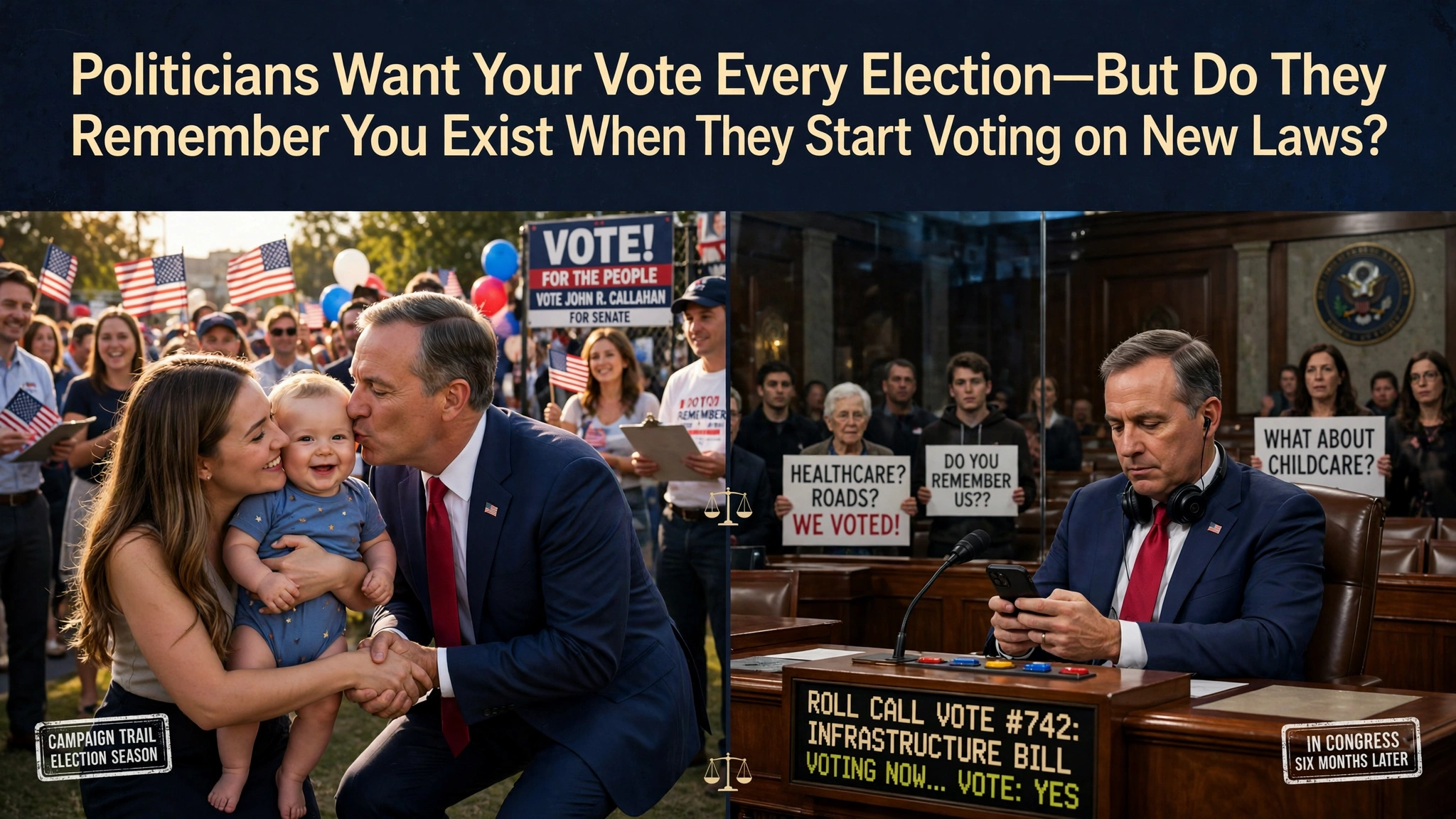
Isn't it funny how politicians suddenly know your name, your neighborhood, your struggles, and how much they care about your future when election season rolls around? 😂 They'll shake your hand, smile for the camera, knock on your door, and promise to fight for the people. But once they're sitting in that legislative chamber voting on new laws, regulations, and policies that affect your everyday life, how often do you feel like anybody is fighting for YOU?
Let's talk about the relationship between politicians and the people who elect them, because something about this arrangement deserves a serious conversation.
When election season arrives, suddenly you're important. Your vote matters. Your voice matters. Your family matters. Your community matters. Every candidate has a plan to make life better, lower costs, improve public services, protect your rights, and create a brighter future.
Then the election ends, the campaign signs disappear, and you go right back to trying to afford groceries, keep the lights on, pay your rent, maintain your vehicle, and figure out why everything costs more than it did last year.
Meanwhile, the people you helped put into office are making decisions that could affect your finances, your freedoms, your employment, your education, and your future.
Apparently, you're a constituent when they need something from you, but sometimes you feel like a stranger when you need something from them.
And here's the part that gets me: politicians don't need your permission for every individual vote they cast on legislation. That's part of representative government. We elect people to study issues, debate proposals, and make decisions on our behalf.
But if they're going to make decisions on our behalf, shouldn't we expect them to explain those decisions to us?
If a legislator votes for a new rule that increases costs for working families, explain why. If they support a policy that changes how businesses operate, explain who benefits and who carries the burden. If they vote against a proposal that could help their constituents, tell us the reasoning behind it.
Don't just tell us what you believe during the campaign. Show us what you did after you got elected.
Campaign promises tell us what politicians want us to hear. Legislative voting records show us how they actually voted.
And before somebody jumps into the comments saying, "Well, that's why you need to vote," I agree that elections are an important way to hold public officials accountable. But voting is not a magic wand that makes every decision made afterward beneficial to the people.
Democracy isn't supposed to be a transaction where citizens hand over their votes and then disappear from the conversation for the next several years. People should be able to question decisions, contact their representatives, attend public meetings, review legislation, and demand explanations without being treated like an inconvenience.
And let's be honest: reading legislation isn't always easy. Some bills are hundreds of pages long. Proposals can contain multiple provisions, technical language, amendments, and exceptions. A headline might tell you a law was passed without explaining what changed, who it applies to, or when it takes effect.
That's why transparency matters. Citizens need accessible explanations of what lawmakers are voting on, what the likely effects are, and which officials supported or opposed the measure.
Because when people don't understand what their government is doing, they have a harder time holding anyone accountable.
Now, let's look at the other side of this. Not every unpopular law is proof that a politician doesn't care about the public. Legislators sometimes face competing interests, budget limits, constitutional requirements, and difficult choices where one group's priorities conflict with another's. Sometimes a vote has consequences that aren't immediately obvious.
That's exactly why we need explanations instead of campaign slogans. If a decision is difficult but necessary, make the case for it. If a policy isn't working, acknowledge the problems. If new information changes your position, explain that, too.
Accountability doesn't mean politicians must agree with every voter. It means they should be prepared to defend their decisions to the people affected by them.
What makes this conversation even more important is that the consequences of legislation aren't always distributed equally. A new fee that barely affects a wealthy household could be a serious burden for somebody living paycheck to paycheck. A regulatory change that a large corporation can absorb might create a much bigger challenge for a small business.
So when lawmakers talk about how a policy benefits the economy, we should be asking another question: benefits whose economy?
When they say a new rule is necessary, we should ask who has to follow it, who pays for it, who receives an exception, and how its effectiveness will be measured.
Those aren't disrespectful questions. They're reasonable questions from the people expected to live with the consequences.
And this standard should apply regardless of political party. If your favorite politician makes a decision you support, you can still ask questions. If the politician you dislike makes a decision you oppose, you should still examine the actual details rather than automatically believing every criticism.
Otherwise, politics becomes a spectator sport where people defend their team instead of examining what their representatives are doing.
We don't need politicians who simply tell us what we want to hear. We need a system where the public can see what is happening, understand the choices being made, and hold elected officials responsible for their records.
Because the vote isn't supposed to be the end of the relationship between a citizen and their representative. It's the beginning of an obligation.
So here's the question: if politicians spend months convincing you that your voice matters, why do so many people feel unheard when those same politicians start making decisions that affect their lives?
Should elected officials be required to publish plain-language explanations of every major legislative vote, including who benefits, who pays, and why they voted the way they did? Or is the current system of elections and public records enough to hold them accountable?
Let's have that conversation. Because regardless of which party you support, the laws passed today may affect your life tomorrow.
Your vote gives someone the authority to represent you. It doesn't mean you should stop asking them to explain themselves. 🎯









Comments
No comments yet, be the first submit yours below.