They Call BLM “Radical”—Apparently They Forgot the Radical Republicans Were Fighting Slavery 😂

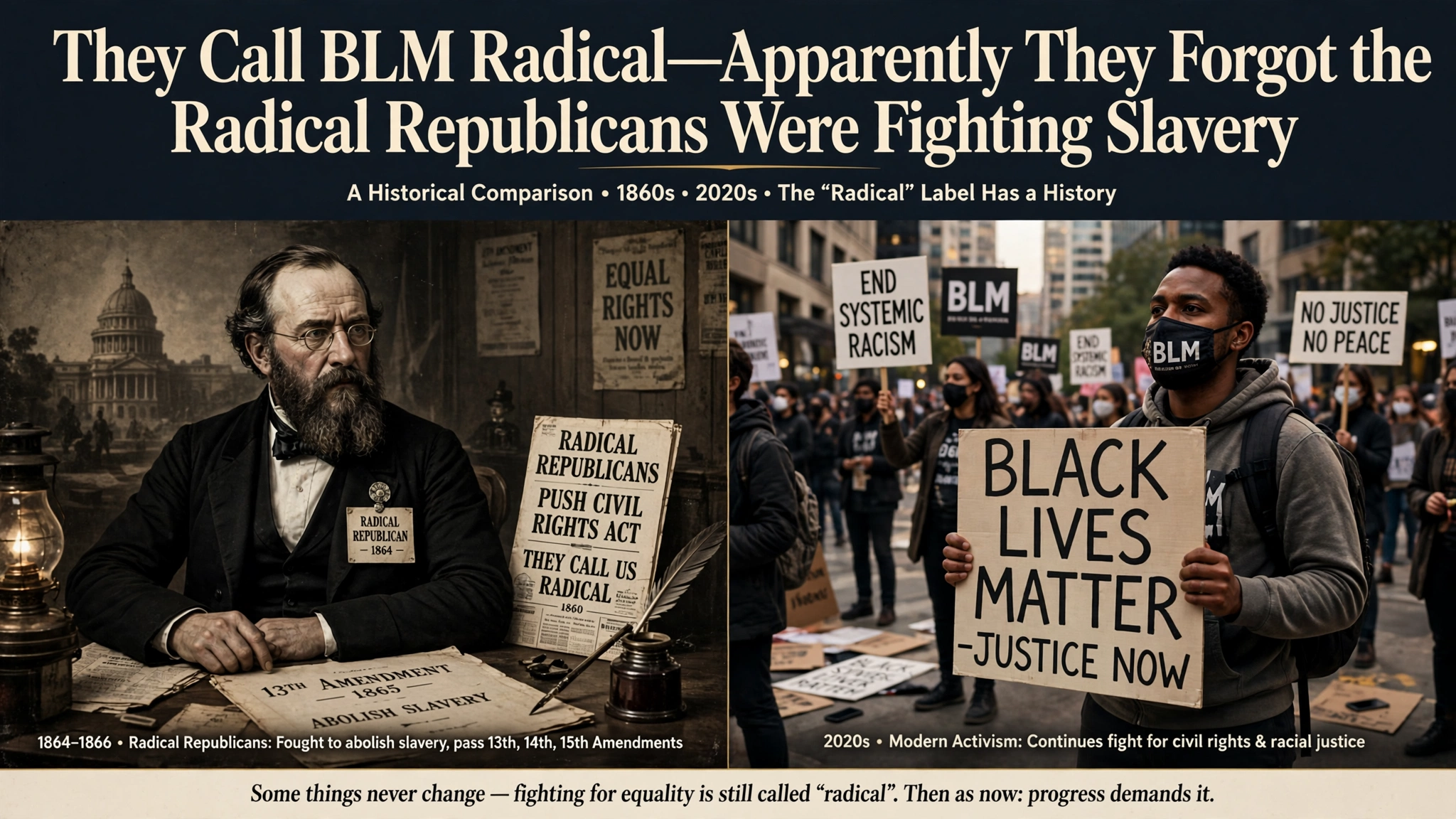
This campaign is calling Black Lives Matter “radical” like the word itself proves something. Somebody might want to open a history book before turning political slogans into historical amnesia.
Apparently, calling a movement “radical” is supposed to make people stop listening. Just slap the label on it, make a scary commercial, and hope nobody asks what the word actually means.
But here's the historical plot twist: America had a faction called the Radical Republicans during the Civil War and Reconstruction.
They pushed to abolish slavery and protect the civil rights of formerly enslaved Black Americans. They fought for federal protections, citizenship, and voting rights when those ideas were considered extreme by many people in power.
So yes, history has a group called the Radical Republicans—and their “radical” agenda included challenging slavery and expanding civil rights.
Now, that doesn't mean every modern movement is identical to the Radical Republicans. History is more complicated than a meme, and movements can be judged by their actual goals, actions, and outcomes.
But that's exactly the point: “Radical” is a label, not an argument.
If a campaign wants to criticize Black Lives Matter, then explain what specific policies, actions, or ideas you're criticizing. Don't expect the word “radical” to do all the thinking for the audience.
Because depending on the moment in history, “radical” can mean challenging an unjust system—or defending the status quo from being challenged.
And let's not pretend that the political meaning of “radical” has stayed consistent across generations. The Republican Party of Reconstruction and today's Republican Party are not interchangeable historical entities. Parties change. Coalitions change. Political labels change. That's why history matters.
So when somebody uses “radical” like it's the ultimate insult, the obvious question is: radical according to whom—and radical for doing what?
Let's debate: Is this campaign actually making a historical argument, or just using a loaded word because it sounds scarier than explaining the issue?
Because if your political strategy depends on people forgetting history, maybe the problem isn't the people asking questions. Maybe it's the campaign hoping nobody remembers the lesson. 😂







Comments
No comments yet, be the first submit yours below.