Tesla, NVIDIA, and Wall Street: Insider Trading Is Illegal, But Who Really Has the Advantage? 😂

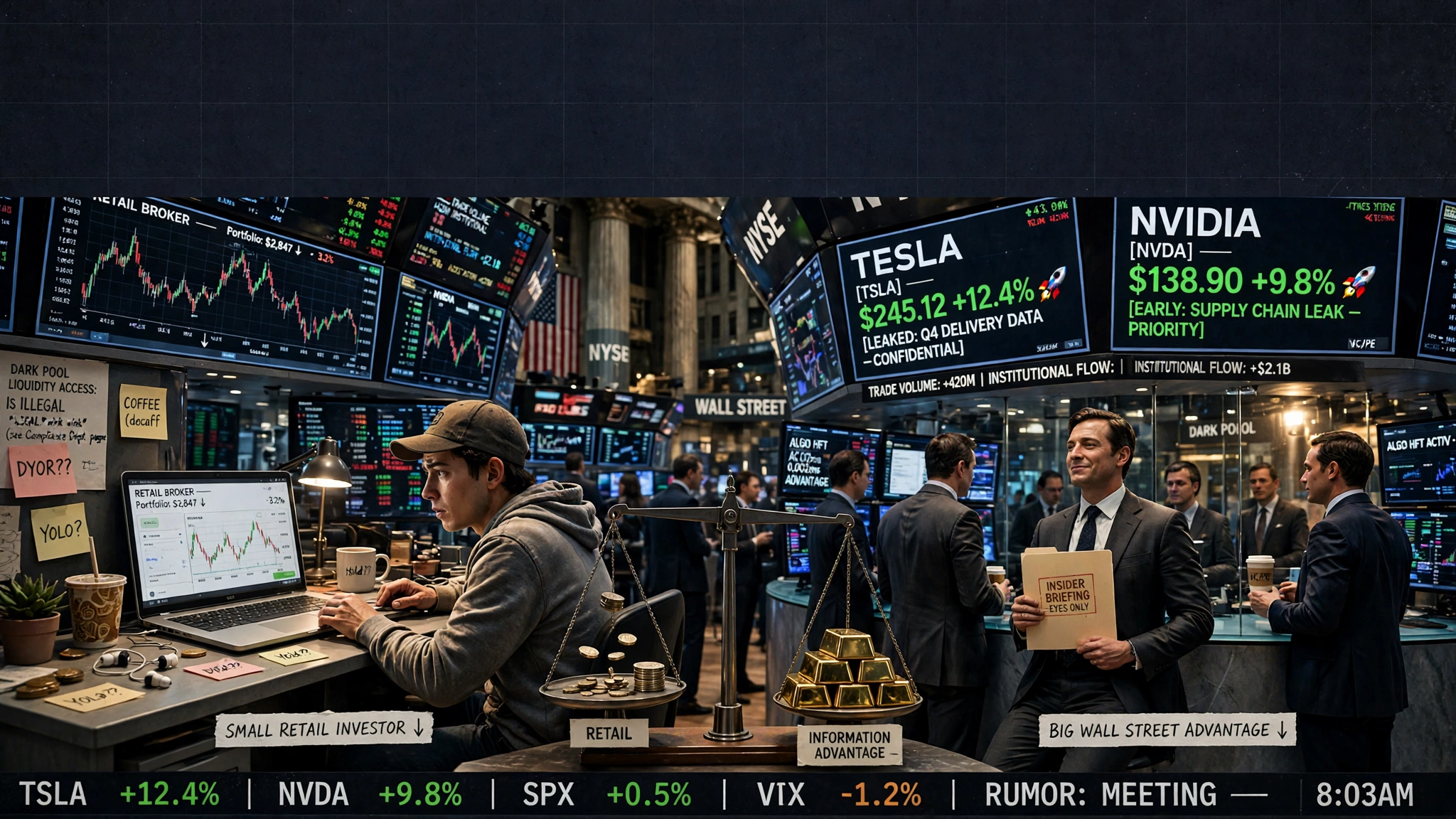
Imagine being an ordinary investor trying to make a few dollars in the stock market while companies like Tesla and NVIDIA are making billion-dollar business decisions, announcing major developments, and operating with entire teams of financial professionals. We're told insider trading is illegal because nobody should have an unfair advantage. But when you're competing against corporations with access to information, resources, and enormous capital, how equal does the playing field really feel? 😂
Let's talk about Tesla and NVIDIA because these two companies are perfect examples of why investors should pay attention to more than just the stock price.
First, understand what insider trading actually means. If somebody trades securities based on material, nonpublic information in violation of securities laws, they can face serious consequences. It doesn't matter whether you're an executive, an employee, or somebody who received confidential information from another person.
But there's another side of the stock market that deserves attention: corporate stock repurchases, executive transactions, and major business announcements.
NVIDIA announced an additional $150 billion stock-repurchase authorization in September 2026, bringing its remaining authorized repurchase capacity to $235 billion. That's an enormous amount of potential buying power. But authorization doesn't mean the company immediately spent that money purchasing shares.
And that's exactly the kind of distinction investors should understand before reacting to a headline.
Now look at Tesla. The company has executives and directors whose stock transactions are disclosed through regulatory filings. Those filings allow investors to examine reported transactions, share amounts, and ownership changes.
But here's my question: how many ordinary investors actually take the time to read those filings?
Most people see a headline, watch the stock move, and make a decision based on whatever information is circulating on social media. Meanwhile, institutional investors and professional analysts have entire departments dedicated to researching corporate financial activity.
Everybody may have access to public information, but not everybody has the same resources to understand it or act on it.
And let's talk about business announcements. Imagine a major company announces a partnership, a manufacturing agreement, a new technology, or a multibillion-dollar investment. That information can change how investors view the company almost immediately.
The stock market reacts to expectations. Sometimes the announcement sends shares higher. Sometimes investors sell because the deal wasn't as impressive as they expected.
Now add stock repurchases to the conversation. A company may have an existing buyback program, and those purchases can influence the number of shares outstanding and the market's perception of the company.
There are regulations governing these transactions. Companies cannot simply use confidential information to trade however they want. But investors should still be able to examine the timing of corporate announcements and repurchases.
And this isn't an accusation that Tesla or NVIDIA has committed insider trading. It's a question about transparency and whether the rules give ordinary investors enough information to evaluate what is happening.
There's also an interesting Tesla-NVIDIA connection that made headlines in March 2026. Leo KoGuan, one of Tesla's largest individual shareholders, publicly announced that he had purchased one million NVIDIA shares. That's an individual investor making a major investment, not Tesla purchasing NVIDIA stock. And that's precisely why understanding who is actually making a transaction matters.
Think about how much attention a purchase like that receives. When somebody with a significant investment in Tesla announces a million-share NVIDIA purchase, investors pay attention. They start asking questions about artificial intelligence, future growth, and where the technology industry is heading.
One person's investment decision can become a headline that influences how other people think about a stock.
Now imagine being an average investor trying to separate an actual corporate announcement from somebody's personal investment opinion. That's why reading original filings and understanding the source of the information matters.
And here's something else: stock buybacks aren't automatically good news for shareholders. They can return capital to investors and reduce the number of shares outstanding, but they also raise questions about how companies allocate their money.
Should that money go toward research and development? New facilities? Employee compensation? Paying down debt? Or purchasing shares?
Those are legitimate questions, especially when a company is asking investors to believe in its long-term growth.
The point isn't that corporations shouldn't be allowed to buy their own stock. The point is that ordinary investors deserve to understand the transactions happening around the companies they're investing in.
We shouldn't automatically call every executive sale insider trading. We shouldn't assume every stock buyback is manipulation. And we shouldn't confuse a public announcement with proof that somebody had illegal access to confidential information.
But we should demand transparency. We should read SEC filings. We should understand buyback authorizations versus actual purchases. We should know when executives are trading and whether transactions were conducted under prearranged trading plans.
Because if the market is supposed to reward informed decisions, investors need access to reliable information and meaningful disclosure.
And maybe the biggest lesson here is that investing isn't simply about picking Tesla or NVIDIA because somebody on the internet says the stock is going to the moon.
It's about understanding the business, examining the financials, and knowing what the people running the company are doing with its money.
So here's the debate: should companies like Tesla and NVIDIA face even stricter public disclosure requirements around stock repurchases and major business announcements? Or are the existing SEC rules and reporting requirements enough?
Because ordinary investors are risking their hard-earned money, too. They deserve to understand the playing field they're stepping onto. 📈










Comments
No comments yet, be the first submit yours below.