When Your Body Becomes Your Entire Introduction, What Happens When People Want to Know What's Beyond the Picture?

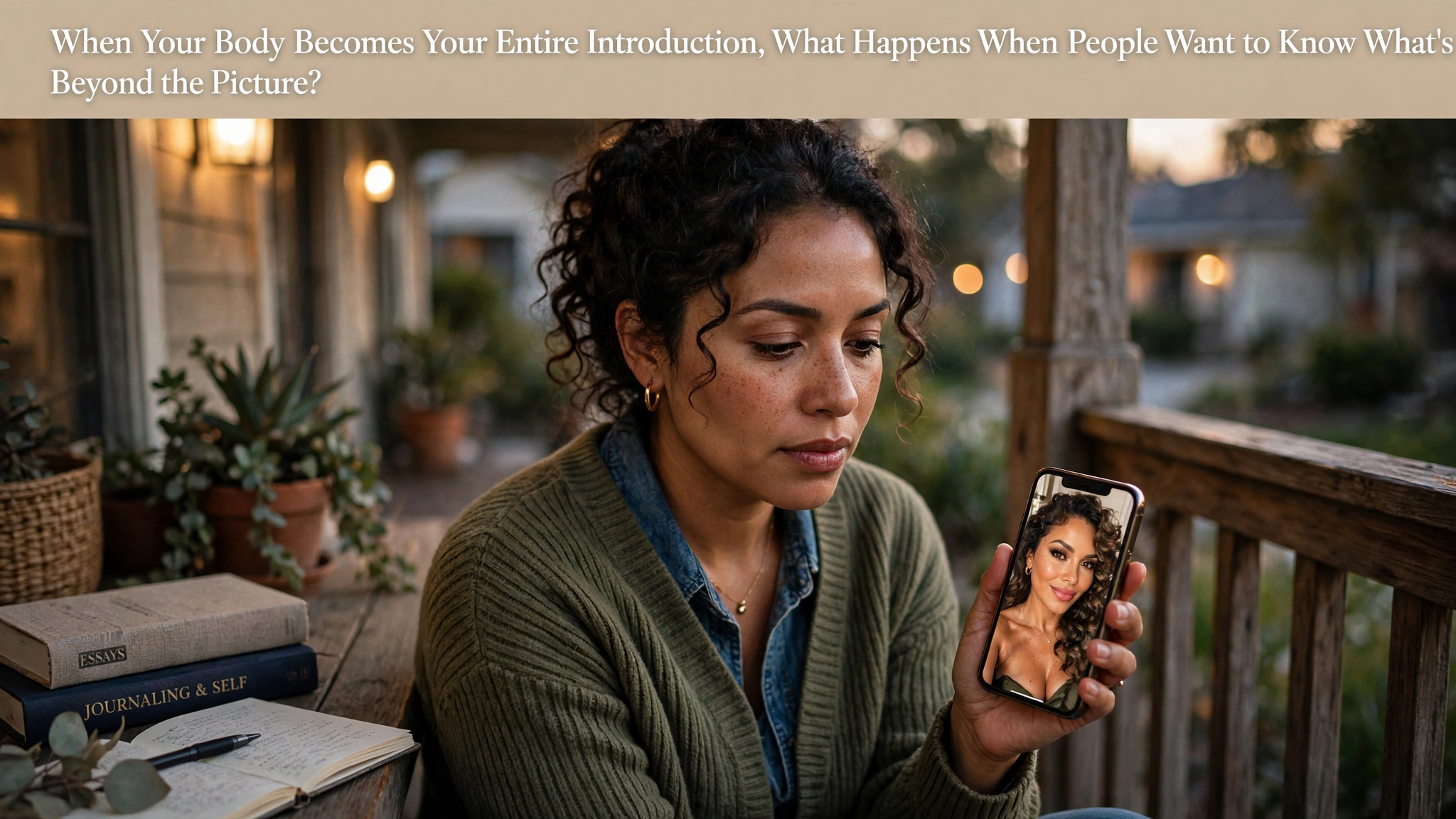
We've reached a point where some social media profiles look less like introductions and more like online auditions for attention. Every picture is a body pose, every caption is bait for compliments, and the comment section is full of people fighting to get noticed. But here's an interesting question: If you attract everybody with your body, how do you know who's actually interested in YOU?
Let's have an honest conversation about social media and the way some women choose to present themselves online.
Open certain profiles and you'll notice a pattern. The majority of the pictures revolve around the same thing: revealing outfits, carefully positioned body shots, exaggerated poses, and angles designed to emphasize physical features.
There's nothing inherently wrong with being attractive, feeling confident, dressing how you want, or enjoying your appearance. Women have every right to control how they present themselves.
But there's a difference between expressing confidence and making physical appearance the entire foundation of your public identity.
What Exactly Are You Trying to Attract?
Social media rewards attention. Pictures that generate reactions can bring followers, comments, shares, and engagement. And physical attraction is one of the easiest ways to capture someone's attention online.
But attention and genuine interest are not the same thing.
If most of your online presence revolves around your body, it's reasonable to expect that many people approaching you will start with physical attraction. That doesn't automatically mean they're incapable of seeing anything else about you. It simply means the first thing you've presented is what they're responding to.
You cannot control what every viewer thinks, but you can recognize what kind of attention your content is likely to generate.
Are You Building a Personal Brand or Just Collecting Reactions?
Think about the difference between somebody who uses social media to showcase their personality, creativity, business, interests, humor, intelligence, and accomplishments versus somebody whose entire online identity revolves around looking desirable.
Both can attract attention. But what happens when the attention becomes the goal?
Every post needs to outperform the last one. Every picture needs a better angle. Every caption needs to generate more comments. The audience becomes accustomed to a particular version of you, and eventually you might feel pressure to keep delivering that version.
That's when attention can start controlling the person who originally wanted it.
The Comment Section Isn't a Character Reference
Having thousands of men compliment your appearance doesn't necessarily mean you've found people who value your personality, goals, or character.
A man telling you that you're beautiful underneath a picture doesn't automatically mean he's interested in building a relationship. He may simply find the picture attractive.
And women shouldn't confuse a flood of compliments with evidence of genuine commitment.
At the same time, men need to understand that finding somebody physically attractive doesn't give them permission to disrespect, objectify, harass, or make assumptions about her character.
There's More to Being Attractive Than Being Desired
Physical attraction is a real part of human relationships. Nobody needs to pretend otherwise. But attraction can get somebody's attention without necessarily giving them a reason to stay.
Personality, emotional maturity, communication, humor, intelligence, ambition, values, and compatibility all matter when people are trying to build something meaningful.
Your appearance can introduce you to somebody. It cannot do all the work of maintaining a relationship.
Don't Let an Algorithm Decide Your Value
Social media can make it seem like the more attention your appearance receives, the more valuable you are. But an algorithm doesn't understand your character. It doesn't know how you treat people, what you've overcome, what you're building, or what you bring into somebody's life.
It measures engagement, not human worth.
If you enjoy posting pictures of yourself, that's your choice. If you prefer to keep your body private, that's your choice too. The point isn't to dictate how women should dress or present themselves. The point is to understand the difference between being noticed and being known.
You can have a million people looking at your body and still have very few people interested in your mind. Being desired is not the same as being valued. And if your entire identity becomes what people can see in a photograph, don't be surprised when some people never bother looking any deeper.








Comments
No comments yet, be the first submit yours below.