Having Children Doesn't Automatically Make You a Good Parent—Some People Just Reproduced and Called It Parenting.

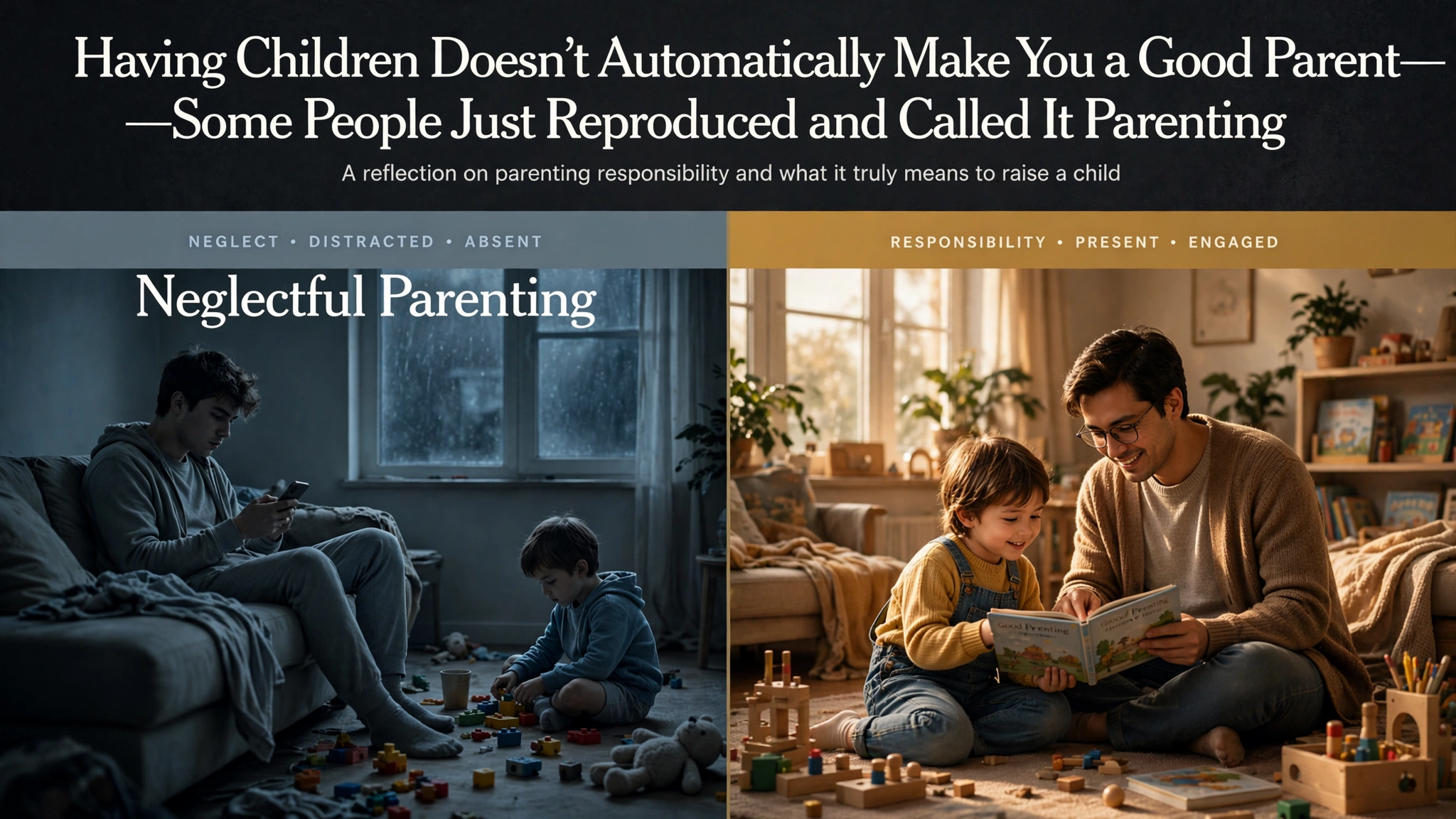
Unpopular opinion: Anybody can become a parent. That doesn't mean everybody is qualified to raise a child. Biology gives you a child. Your actions determine whether you actually show up as a parent.
We need to stop treating parenthood like some automatic achievement that deserves applause regardless of how somebody actually raises their children.
You had a baby. Congratulations. But what happens after the hospital? That's where parenting actually begins.
Because posting pictures of your children, buying them expensive clothes, throwing birthday parties, and calling yourself Mom or Dad doesn't automatically make you a good parent.
Some parents are more concerned about looking like good parents than actually doing the work. They want the Facebook pictures, the Mother's Day posts, the Father's Day appreciation, and the public recognition. But ask about consistency, emotional availability, discipline, or spending quality time with their children, and suddenly the conversation gets uncomfortable.
Some children don't need another expensive toy. They need somebody to listen to them. They don't need another staged family photograph. They need a parent who actually knows what's happening in their lives.
And let's talk about the parents who use their children as weapons against each other. You don't like your ex? Fine. But why does a child have to pay the emotional price for a relationship that didn't work out?
Some adults will spend years arguing over who gets credit for raising a child while the child is sitting there wondering why two grown people can't put their differences aside long enough to be parents.
Then there's the double standard where one parent gets celebrated for doing the bare minimum while the other gets criticized for every mistake. Parenting shouldn't be a competition for public approval. Children need consistency from both sides, not a social media campaign proving who loves them more.
And no, being a good parent doesn't mean being perfect. People struggle. People make mistakes. People work long hours. People go through financial problems, breakups, and personal challenges. But there's a difference between struggling and refusing to take responsibility.
Your childhood may explain why you parent the way you do, but it doesn't give you unlimited permission to repeat the same damage with another generation.
At some point, adults have to stop saying, "That's how I was raised," as if generational dysfunction is a family heirloom we're supposed to proudly pass down.
The real question isn't whether you love your children. Plenty of people love their children. The question is whether your children actually experience that love through your actions.
Let's make some people uncomfortable: Should having children automatically earn someone respect as a parent, or should that respect depend on how they actually raise them?
Because giving birth or contributing DNA is the easy part. Raising a healthy, confident, emotionally secure human being is the assignment. And some people are still trying to get credit for enrolling in the class. 😂







Comments
No comments yet, be the first submit yours below.