Iowa's Lead Azide Detonation Is Scheduled for 9 AM—Why Shouldn't Everyone in the Surrounding Region Take Precautions?

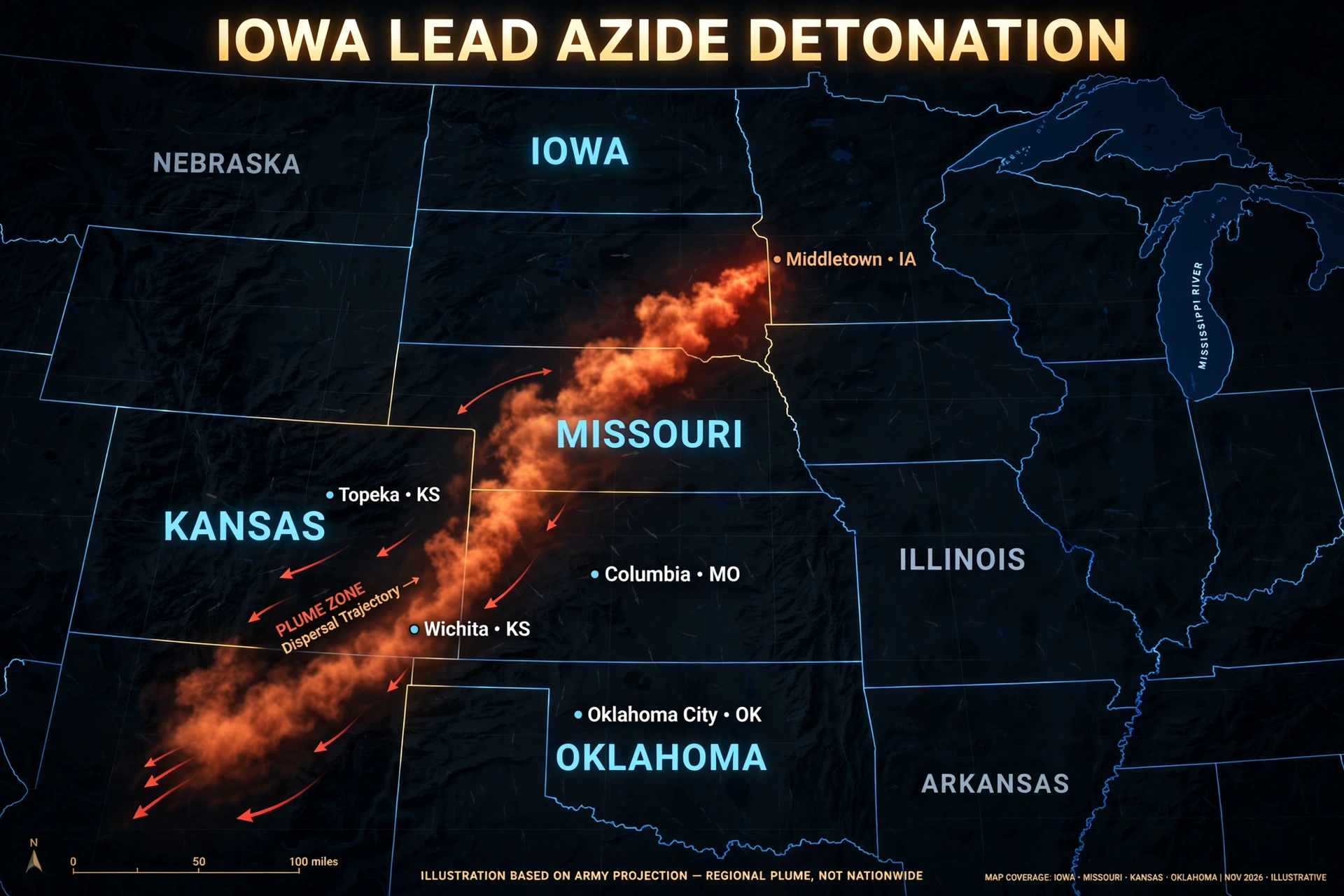
When the government is preparing to detonate thousands of pounds of unstable lead-based explosives, I don't think extra caution should be limited to the people living closest to the facility. If officials acknowledge that lead-containing dust could travel through the air, why shouldn't people throughout the surrounding region take precautions instead of assuming they're automatically out of danger?
The U.S. Army has scheduled its controlled detonation of approximately 68 drums of degraded lead azide for Wednesday, November 25, at approximately 9:00 a.m. Central Time at the Iowa Army Ammunition Plant in Middletown. The exact time may change depending on weather conditions.
Officials have established a relocation area for Middletown and surrounding impacted locations, including a five-mile cone extending southwest of the installation. Residents within the designated evacuation area should follow the evacuation instructions rather than remain inside their homes.
But I think there's another precaution worth discussing: people outside the evacuation zone, particularly those in surrounding communities, should consider staying indoors during the operation and following updates from local emergency officials.
Why Take Chances When You Can Take Precautions?
The Army has acknowledged that the detonation could produce a dust plume containing lead particles. Officials have developed weather models and mitigation measures to reduce the amount of material traveling beyond the installation.
That's encouraging, but modeling is still a prediction. Wind conditions can change, and the actual environmental results must be measured after the operation.
I'm not suggesting that everyone across the country needs to panic or that lead contamination will automatically reach distant communities. I'm saying that people in the broader surrounding region shouldn't dismiss reasonable precautions simply because they fall outside a designated evacuation boundary.
My Recommendation: Stay Indoors During the Operation
If you're in the surrounding region but outside the evacuation zone, consider remaining indoors during the detonation and until local officials provide updated guidance.
- Keep windows and exterior doors closed.
- Limit unnecessary outdoor activity during the operation.
- Follow local emergency alerts and updated air-quality guidance.
- If your local authorities recommend adjusting ventilation or air-conditioning systems, follow their instructions.
- Don't approach the installation or attempt to observe the explosion.
- Follow official instructions about returning home if you've been told to evacuate.
These are precautionary suggestions, not a claim that every community has been ordered to shelter indoors. Anyone inside the designated relocation area should follow the evacuation order.
The Public Deserves More Than a Weather Prediction
Officials say they have conducted extensive environmental sampling before the detonation and will continue monitoring afterward. That's important. But residents should have access to the results, including air, soil, and water testing, so they can understand what actually happened rather than relying exclusively on pre-detonation predictions.
We should also remember that the environmental question doesn't end when the explosion is over. Lead-containing particles can settle on surfaces, and any contaminated material must be properly identified and managed.
I'm not telling people to panic. I'm saying that when thousands of pounds of hazardous explosive material are about to be detonated, a little extra caution makes sense. Follow evacuation orders if they apply to you. If you're outside the evacuation area but nearby, consider staying indoors during the operation. We can debate the government's decision afterward. Right now, protecting people should come first.











Comments
No comments yet, be the first submit yours below.