Displacement and Resilience: The History of Black Communities in America

From Forced Migration to Urban Shifts
The story of Black displacement in America spans centuries, beginning with the forced migration of enslaved Africans and continuing through policies that reshaped urban landscapes. The Great Migration saw millions of Black Americans leave the rural South for Northern and Western cities, seeking opportunity but encountering systemic barriers, redlining, and segregated neighborhoods.
Each move promised freedom and advancement but was often met with new forms of displacement, from discriminatory housing policies to urban renewal projects that demolished established Black communities in the name of “progress.”
Redlining and Housing Segregation
Throughout the 20th century, government-sanctioned redlining restricted where Black families could buy or rent homes. Neighborhoods were marked “high risk,” denying mortgages and investment while wealth accumulated in predominantly white areas. This forced many Black communities into under-resourced neighborhoods and limited generational wealth-building.
Urban Renewal and Gentrification
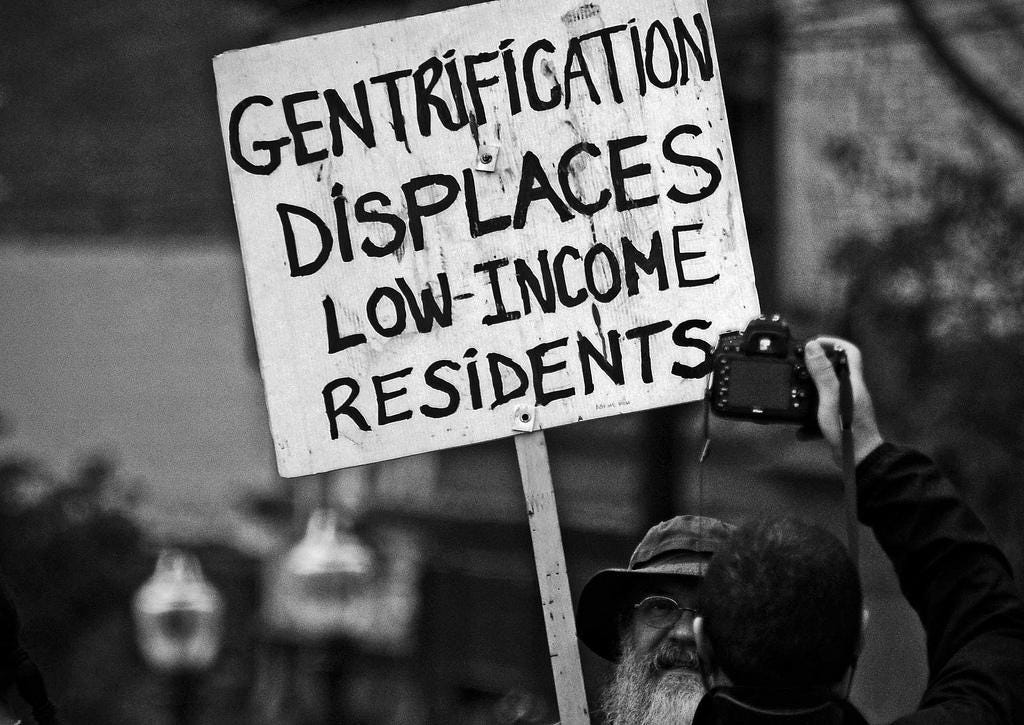
Post-war urban renewal programs often targeted thriving Black neighborhoods for demolition to make way for highways, commercial centers, or new developments. Decades later, gentrification continues the pattern: long-standing communities are priced out, cultural landmarks erased, and networks of support disrupted. Displacement is both economic and cultural, not merely physical.
The Human Cost
Displacement affects more than housing. It disrupts social networks, education continuity, and access to employment. Mental health and community cohesion are strained when families are repeatedly uprooted. The legacy of systemic displacement is visible in wealth gaps, educational disparities, and uneven access to opportunity.
Resilience and Resistance
Despite centuries of systemic displacement, Black communities have shown resilience through cultural, social, and economic innovation. Grassroots organizing, community advocacy, and the creation of Black-owned businesses and institutions preserve identity and foster empowerment. History reveals both the injustice of forced movement and the strength of communities that endure.
Understanding the patterns of displacement illuminates contemporary struggles and highlights the importance of intentional policy, community preservation, and historical awareness. Black history is not only a story of loss but of resilience, resistance, and enduring influence on American society.








Comments
No comments yet, be the first submit yours below.