Why Getting Your Driver's License Unsuspended Can Feel Like a Full-Time Job

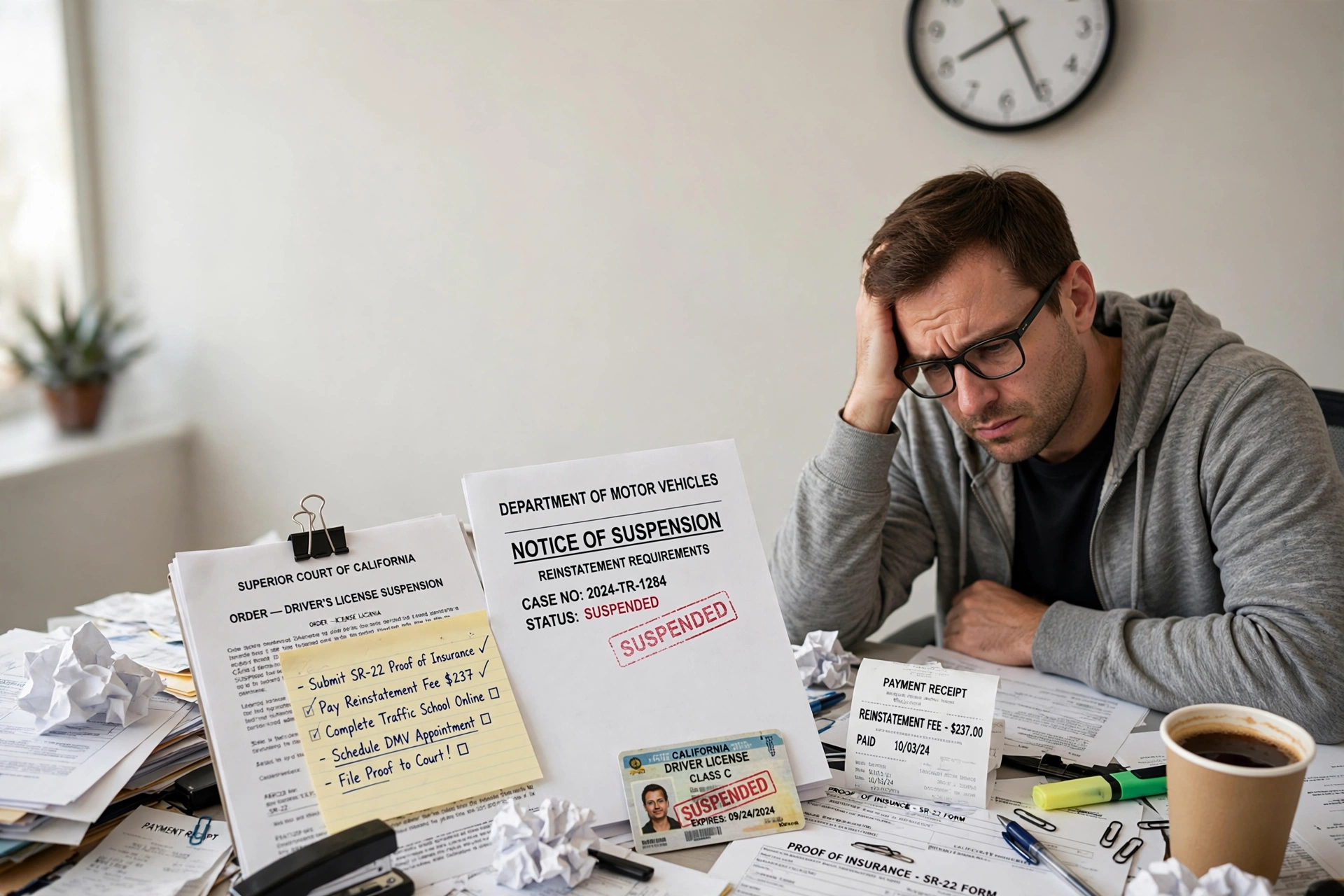
Getting your driver's license suspended is one thing.
Getting it unsuspended? That's a completely different battle.
I'm speaking from personal experience because I've been going through the process myself, and one thing I've learned is that getting your license back isn't simply a matter of paying a fee and walking away with your freedom.
There can be insurance requirements, SR-22 paperwork, reinstatement fees, court requirements, documentation, deadlines, phone calls, emails, and a whole lot of waiting.
The County Handles One Thing. The State Handles Another.
This is the part that really made me scratch my head.
You can deal with the county because that's where your court case is handled. Then you have to deal with the state because that's where your driver's license status is handled.
As a citizen, though, you're looking at one problem:
"My license is suspended. I need to get it reinstated."
You're not thinking about which government entity controls which portion of the process. You're just trying to get everything resolved.
And sometimes it feels like you're stuck playing messenger between two systems.
The county may have information the state needs. The state may require documentation related to something that happened through the court. And meanwhile, you're sitting in the middle trying to figure out who actually needs what.
Why Can't These Systems Talk to Each Other?
This is the part that frustrates me the most.
If government agencies already have the information needed to determine whether someone has satisfied their requirements, why should the individual have to spend so much time moving information from one place to another?
I'm not saying there shouldn't be requirements. There absolutely should be a process for making sure someone has satisfied whatever legal and insurance requirements apply to them.
But the process shouldn't feel like:
County → Driver → State → Insurance Company → Driver → State → Wait → Call State → Find Out Something Is Missing → Start Over.
That's where the system starts feeling unnecessarily complicated.
The Person With the Suspended License Becomes the Middleman
That's what I think is so frustrating.
Instead of the different systems communicating efficiently, the person trying to get their license reinstated can end up becoming the communication system.
You make the calls.
You send the documents.
You forward the emails.
You contact the insurance company.
You check whether the SR-22 was submitted.
You contact the state.
You wait for an update.
Then you contact them again because you're not sure whether the first submission was actually processed.
And if you make one mistake or misunderstand one requirement, you can potentially lose even more time.
The Problem Isn't Having Requirements
I want to make something clear: I'm not arguing that people shouldn't have to satisfy the requirements to get their driving privileges back.
If someone owes a reinstatement fee, they should know that.
If they need proof of insurance, they should know that.
If an SR-22 is required, they should know that.
The problem is how difficult it can be to navigate all of those requirements across different government systems.
There is a difference between having reasonable requirements and making the process unnecessarily difficult to understand.
When Your Vehicle Is Part of Your Income
This becomes even more serious when you depend on driving to make money.
For many people, a driver's license isn't just transportation.
It's their paycheck.
It's how they get to work.
It's how they take their children where they need to go.
It's how they buy groceries, make appointments and handle everyday responsibilities.
So when reinstatement takes longer than expected, the consequences can go far beyond inconvenience.
What I've Learned From My Experience
My biggest lesson has been simple: Don't assume that because you completed one requirement, everything is automatically finished.
Keep copies of everything.
Save your insurance documents.
Keep your SR-22 information.
Document when you submitted paperwork.
Keep emails and confirmation numbers.
Write down who you spoke with and when.
And most importantly, don't assume you're legally cleared to drive until you've confirmed that your driving privileges have actually been reinstated.
We Can Do Better
Government processes are always going to have rules. That's understandable.
But there should also be a way for those systems to communicate with each other without making the person who needs help become the middleman.
If the county has one piece of information and the state needs that information, there should be a reliable way for those systems to exchange it.
If an insurance company submits an SR-22 electronically, there should be a clear way for the driver to know whether it was received and accepted.
And if something is missing, people should be able to find out exactly what is missing without having to spend days making phone calls.
Because getting your license reinstated shouldn't feel like you're trying to solve a government scavenger hunt.
Getting suspended might happen in one moment. Getting reinstated can feel like a whole journey.










Comments
No comments yet, be the first submit yours below.