You Can Work for 40 Years, Pay Your Mortgage, and Still Never Truly Own Your House. 😂

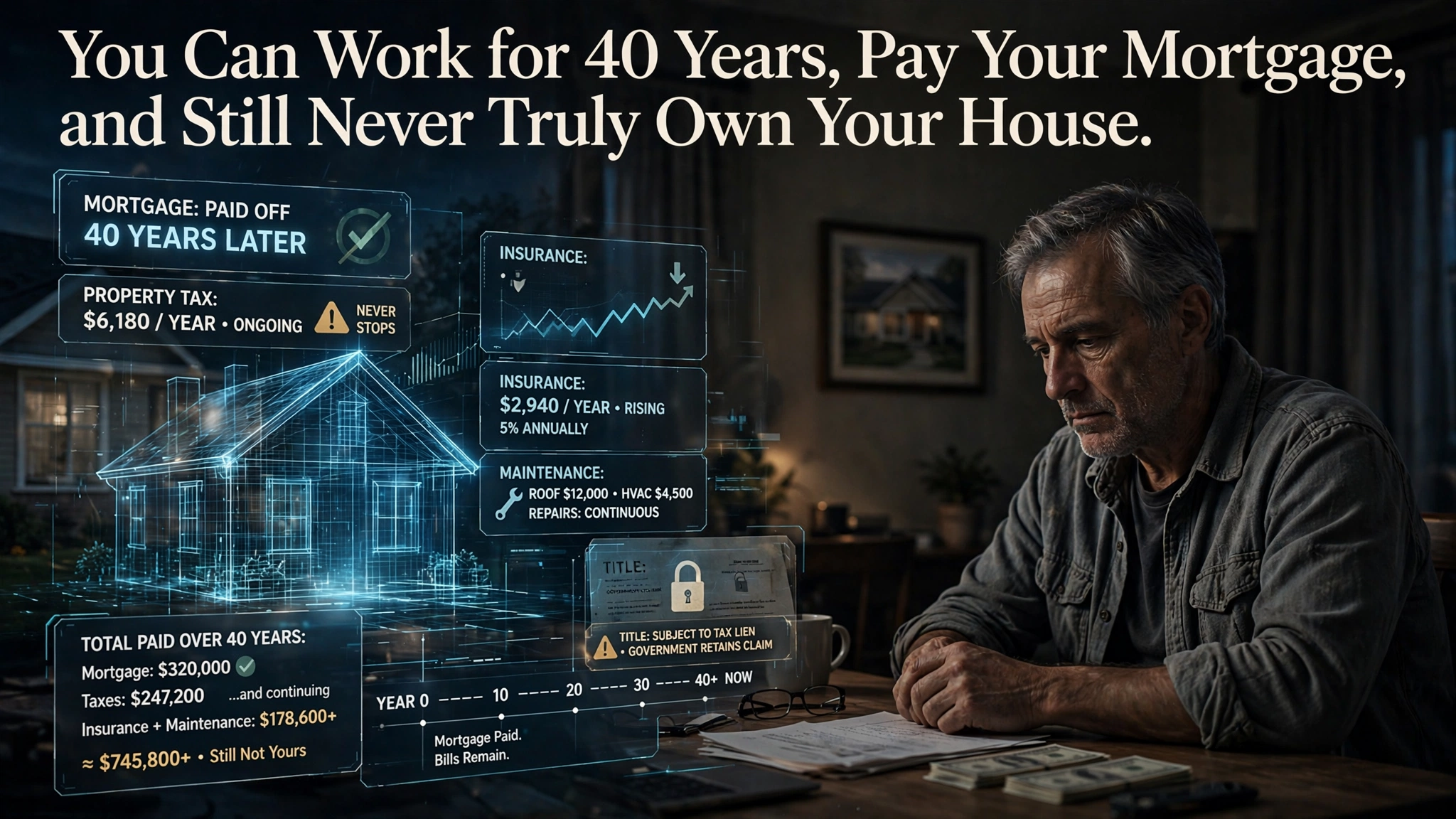
Imagine spending 30 years paying off a house, finally making that last mortgage payment, and then discovering that the government still expects rent from you every single year. Congratulations, you own the house—as long as you keep paying to be allowed to own it.
Let's talk about one of the biggest illusions of financial independence: homeownership.
We're raised to believe that buying a house is the ultimate achievement. Get a good job, save for a down payment, sign a mortgage, and spend the next few decades paying it off.
And once that mortgage is gone, you're supposed to be financially free.
Except there's property tax. Homeowners insurance. Maintenance. Repairs. Utility bills. Sometimes HOA fees. And if you live somewhere with rising property taxes, your annual housing costs can increase even after you've paid off the actual house.
So what exactly does owning something mean when you can still lose it over an unpaid recurring obligation?
Now, property taxes fund local services such as schools, emergency services, roads, and other public infrastructure. Those services matter. Local governments need revenue to operate.
But that doesn't mean people shouldn't question the arrangement.
Imagine being retired, living on a fixed income, having paid off your home after decades of work, and suddenly facing a property tax increase you can barely afford. Your income didn't increase just because the assessed value of your neighborhood did.
Your house might be worth more on paper, but that doesn't mean you have more cash in your checking account.
And here's another uncomfortable question: should somebody who has completely paid off their home ever be at risk of losing it because they can no longer afford the taxes?
People will say, "Well, that's just how property ownership works." Okay, but why should a lifetime of mortgage payments, maintenance, and financial sacrifice still come with the possibility of losing the property over an annual bill?
This is especially worth discussing as housing costs rise and longtime residents find themselves living in neighborhoods that have become significantly more expensive.
We celebrate homeownership as the path to wealth, and it can absolutely build equity and provide stability. But we rarely discuss the ongoing financial obligations that come with it.
Renters pay landlords. Homeowners pay lenders until the mortgage is gone, then continue paying taxes and other expenses. Those arrangements aren't identical, but neither comes with a completely free place to live.
Here's the debate: If you've paid off your mortgage, should you still have to pay property taxes indefinitely to keep your home—or should there be stronger protections for people who have lived in and paid for their properties for decades?
Because apparently the American Dream comes with a monthly payment, a 30-year commitment, and a yearly reminder that the government still wants its subscription fee. 😂








Comments
No comments yet, be the first submit yours below.