People Want Loyalty From You While Keeping Their Own Options Open

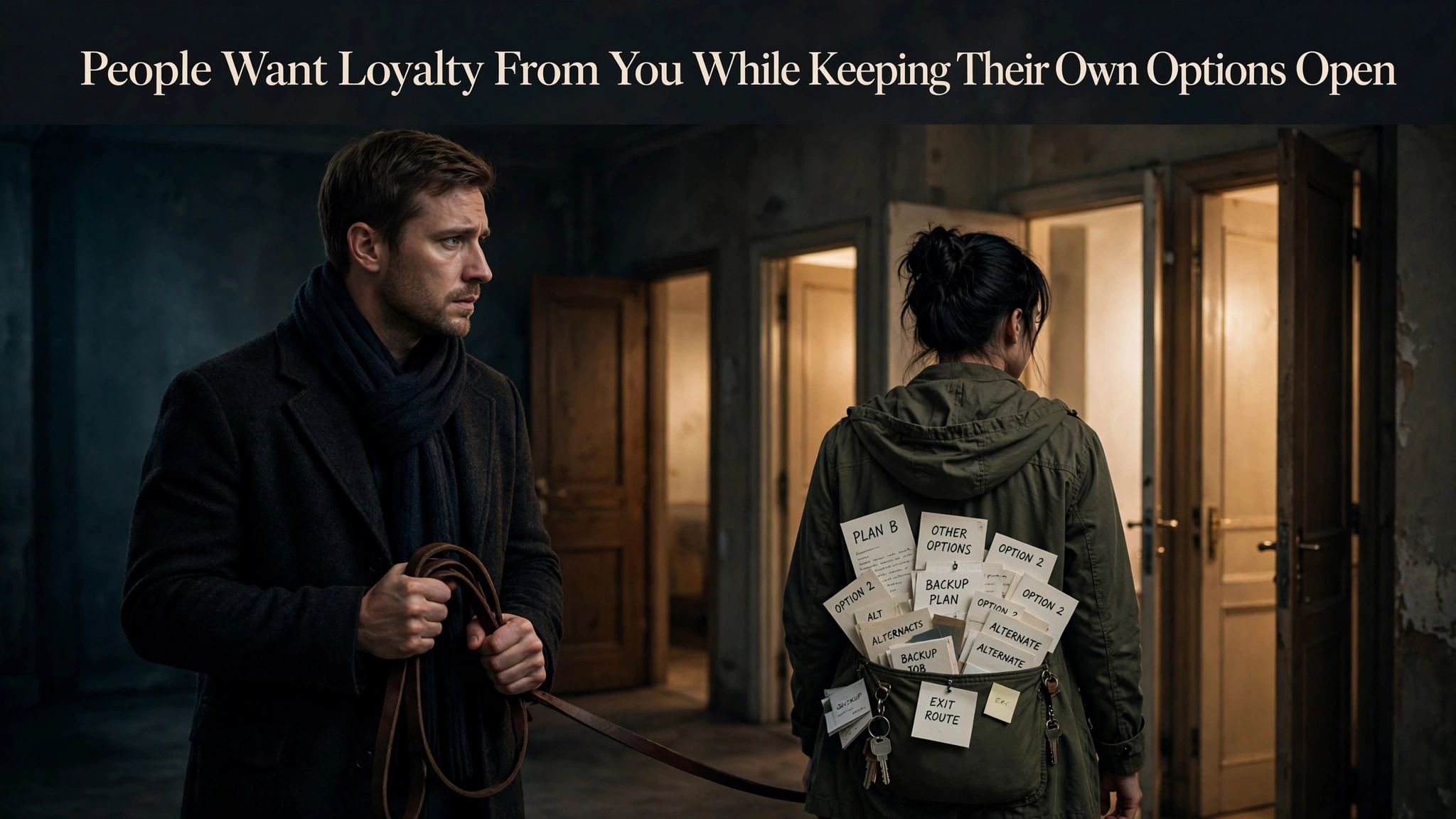
Some people want you to act married while they act single. They want your loyalty, your attention, your time, your support, and your commitment—but the moment you ask for the same energy in return, suddenly you're doing too much.
Let's talk about one of the biggest problems in modern dating: people wanting the benefits of commitment without accepting the responsibilities that come with it.
They want you to check in when you wake up. They want to know where you're going, who you're talking to, and why you haven't responded to their message. They want you to make time for them, reassure them when they're insecure, and prove that nobody else has your attention.
But when it's time for them to provide that same reassurance? Now you're controlling. Now you're insecure. Now you need to relax because you're putting too much pressure on them.
Wait a minute. So you want exclusive access to me, but you want unlimited access to everybody else?
That's not commitment. That's wanting to reserve somebody while keeping the rest of the market open.
And social media has made this behavior even easier. Somebody can tell you they want something serious while entertaining ten different conversations in their inbox. They can post you publicly, make you feel special privately, and still keep a few backup options in case the relationship doesn't work out.
Everybody wants to be somebody's first choice, but not everybody is willing to stop shopping around long enough to build something real.
Some people are so afraid of missing out on a better option that they never fully invest in the person standing right in front of them. They're constantly comparing their partner to people online, wondering whether somebody richer, prettier, more successful, or more exciting might be available.
Meanwhile, the person they're dating is trying to build a relationship with somebody whose mind is still browsing the catalog.
And here's the funny part: people can spend so much time searching for somebody better that they fail to appreciate somebody good.
Of course, nobody should be forced into a relationship they don't want. Nobody owes another person exclusivity before they agree to it. Dating casually is fine when both people understand the arrangement. Keeping your options open is your choice when you're honest about it.
The problem starts when you make promises you don't intend to honor. You tell somebody they're the only one while treating them like one of several candidates. You demand transparency while hiding your own behavior. You expect emotional security from somebody while deliberately creating uncertainty for them.
You cannot demand trust while making yourself difficult to trust.
And loyalty isn't just about whether you physically cheat. It's also about whether your actions respect the agreement you've made with another person. It's about honesty, consistency, boundaries, and not deliberately putting your partner in situations where they have to compete for the commitment you already promised them.
That doesn't mean your partner owns you. It doesn't mean you stop having friends, enjoying your life, or maintaining your independence. A healthy relationship isn't a prison. But independence and keeping somebody emotionally confused are two completely different things.
Some people use the language of freedom to avoid accountability. They want to do whatever they want, whenever they want, but still expect their partner to remain available, forgiving, and emotionally invested.
They want the security of a relationship without the inconvenience of being accountable to another person.
And if you finally get tired of the double standard, suddenly you're the problem because you refuse to keep accepting it.
Let me tell you something: you do not have to compete for a position you were already promised.
If somebody genuinely wants to be with you, you shouldn't have to spend every week investigating whether their words match their behavior. You shouldn't have to beg for basic honesty. You shouldn't have to perform emotional gymnastics just to convince somebody to respect the agreement they willingly made.
Relationships will always require effort. There will be misunderstandings, disagreements, difficult seasons, and moments when both people need reassurance. Nobody is perfect. But there is a difference between working through normal relationship problems and constantly trying to convince somebody to take the relationship seriously.
One requires patience. The other can slowly destroy your self-respect.
And don't confuse somebody's jealousy with loyalty, either. A person can be possessive and still be unfaithful. They can demand your passwords and still hide their own conversations. They can get angry when somebody compliments you while collecting compliments from everybody else.
Jealousy doesn't automatically mean love. Sometimes it means somebody is afraid of losing access to you, even when they're unwilling to give you the same level of commitment.
That's why you have to pay attention to behavior, not just emotional speeches. Anybody can say, “I don't want to lose you.” The real question is whether they're willing to treat you like somebody they value.
Because at some point, you have to stop asking, “How do I get this person to choose me?” and start asking, “Why am I working so hard to be chosen by somebody who keeps making me question my place?”
You deserve a relationship where the expectations are mutual. If you agree to exclusivity, both people honor it. If you agree to date casually, both people understand what that means. If either person changes their mind, they communicate honestly instead of keeping somebody around as a safety net.
You don't need to control somebody to have a healthy relationship. You need somebody whose choices align with the commitment they say they want.
Stop trying to win a competition you never agreed to enter. If somebody wants to keep auditioning other people while expecting you to remain committed, let them make their choice. You can make yours, too.
Because loyalty should never be a one-person job.
Now here's the question: if you expect your partner to stop entertaining other romantic options, should you be held to that same standard—or is keeping your options open just part of modern dating?








Comments
No comments yet, be the first submit yours below.