People Will Judge You for Being Broke While Supporting a System That Keeps Getting More Expensive

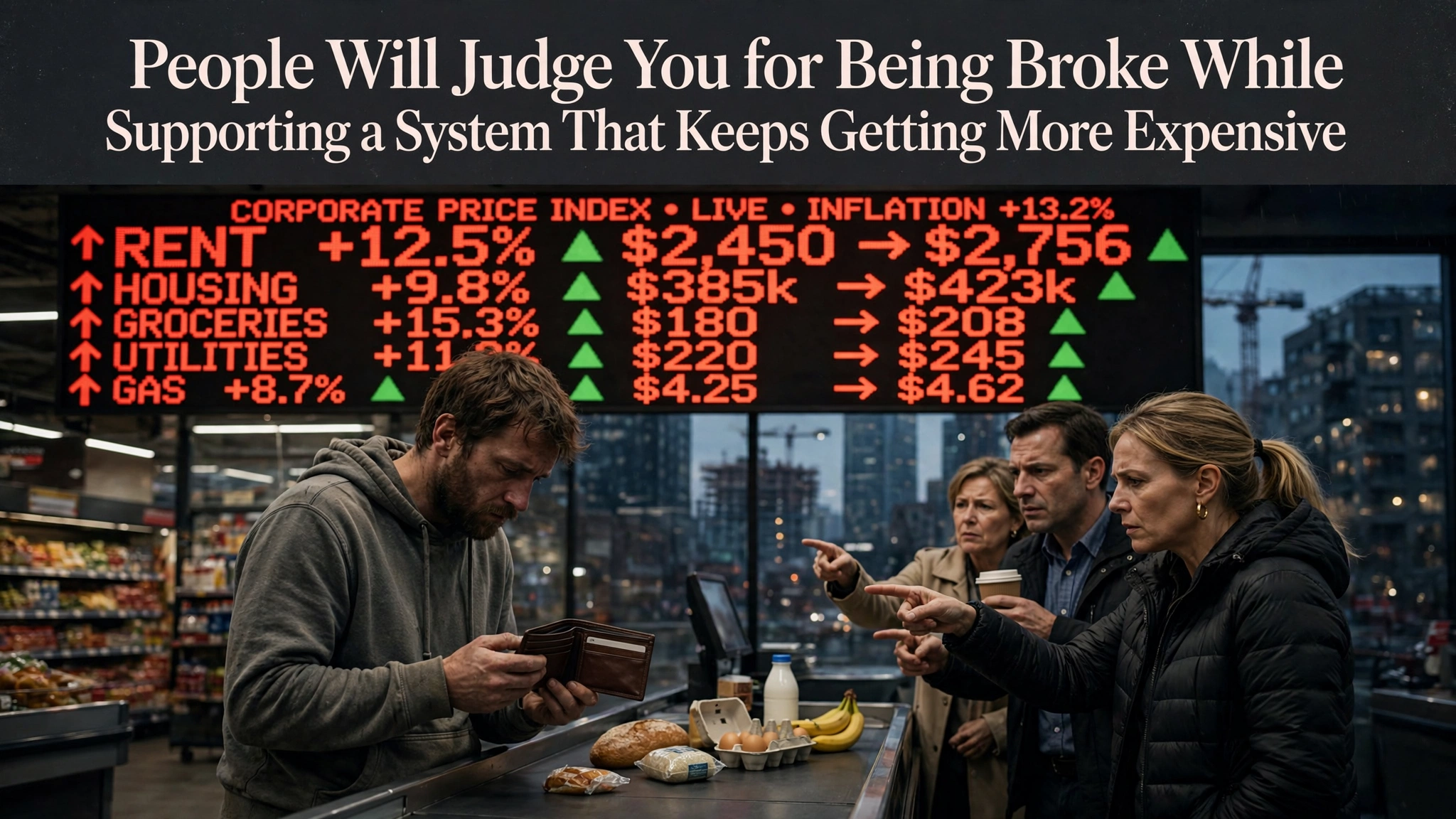
It's funny how society will shame you for not having money while everything around you is designed to take money out of your pocket. Your rent goes up, groceries cost more, insurance gets more expensive, and your paycheck barely moves. Then somebody who hasn't seen your bank account in their life tells you that you need to manage your money better.
Let's have an uncomfortable conversation about being broke in America. Somehow, struggling financially has become a character flaw. If you don't have savings, you're irresponsible. If you drive an older car, you aren't successful. If you rent instead of own, you must be doing something wrong. If you can't afford a vacation, people act like you failed at life.
But nobody wants to examine the actual numbers.
How much is rent? How much are groceries? How much does transportation cost? How much are utilities, insurance, childcare, and healthcare? And after somebody pays all those bills, how much money is realistically left to save?
People love giving financial advice without understanding somebody else's financial reality. They'll tell you to stop buying coffee while ignoring the fact that somebody's rent increased by hundreds of dollars. They'll tell you to stop eating out while overlooking the cost of raising children. They'll tell you to get a better job as if every employer is handing out higher salaries to anybody who walks through the door.
You cannot budget your way out of every financial problem when the money coming in isn't enough to cover the essentials going out.
Yes, budgeting matters. Spending habits matter. Personal responsibility matters. Some people genuinely make their financial situations worse through unnecessary purchases, high-interest debt, gambling, or trying to impress people they don't even like. We should be honest about that, too.
But personal responsibility doesn't mean pretending the cost of living has no effect on people's lives. Two things can be true at the same time: people need to make better financial decisions, and the economy can make those decisions increasingly difficult.
Somebody earning a decent income can still feel financially trapped when housing, transportation, and basic necessities consume most of their paycheck. They might look successful from the outside while having almost nothing left after payday.
And that's where the pressure starts.
People don't just want to survive anymore. They feel like they have to look successful while surviving. They need the right clothes, the right phone, the right car, the right vacation pictures, and the right lifestyle to convince everybody else they're doing well.
So instead of building financial security, they build an image of financial security.
They finance things they cannot comfortably afford because they don't want to look broke. They spend money to impress people who aren't contributing a single dollar to their household. Then they go home, open their banking app, and wonder why their account looks like a crime scene.
The pressure to look wealthy can keep people from ever becoming financially secure.
And the people who choose differently often get judged for it. Somebody saves money by driving an older vehicle, and people call them cheap. Somebody stays home instead of spending hundreds on a night out, and people say they never do anything. Somebody takes years to build an emergency fund, and others act like that accomplishment is insignificant.
Meanwhile, that person might be making the smartest financial decision in the room.
There is nothing embarrassing about taking your time to build savings. There is nothing shameful about living within your means. There is nothing wrong with saying no to a purchase because your future matters more than somebody else's opinion of your present.
In fact, learning to tell people “I can't afford that right now” without feeling ashamed might be one of the most valuable financial skills you can develop.
You don't owe anybody an explanation for protecting your money.
And let's stop acting like everybody starts from the same position. Some people receive financial help from their families. Some inherit property. Some graduate without student debt. Some have partners who can cover the household if they lose their jobs. Others are supporting children, helping relatives, paying off old debts, or rebuilding after a financial setback.
Two people can earn the same salary and have completely different financial lives because their responsibilities and starting points are different.
Comparing their bank accounts without understanding those differences is pointless.
What matters is whether you're making progress toward your own goals. Maybe your first milestone is saving $500. Maybe you're trying to reach $1,000, pay off a credit card, or finally stop living from one paycheck to the next. Those goals might not impress social media, but they can make a real difference in your life.
Financial progress doesn't always look exciting. Sometimes it looks like leaving money in your savings account instead of touching it. Sometimes it means cooking at home, turning down an invitation, or waiting another year before buying something you want.
Sometimes success is simply having enough money to handle an unexpected expense without your entire life falling apart.
Think about how much peace that can bring. A car repair doesn't automatically become a debt crisis. A missed shift doesn't mean you can't pay rent. A medical bill doesn't immediately wipe out everything you've worked to save.
That kind of security might not look glamorous, but it is worth more than pretending to be rich.
We need to stop treating financial struggle as proof that somebody is lazy and start having honest conversations about income, expenses, opportunity, spending habits, and the support people actually have.
Some people need better financial habits. Some need better-paying opportunities. Some need relief from overwhelming expenses. Many need a combination of all three.
Shaming people doesn't solve any of those problems. It just makes people less willing to talk honestly about them.
So if you're rebuilding financially, don't let somebody else's lifestyle make you feel behind. You don't know what they owe, who helps them, or how much of their life is financed. And they don't know how hard you're working to create stability.
Keep building. Protect your money. Learn from your mistakes. Make adjustments where you can. And don't confuse a slow financial journey with a failed one.
Because the goal isn't to convince everybody that you're doing well. The goal is to get to a place where one bad week can't destroy everything you've spent years building.
Let's talk about it: are people struggling financially because they make poor decisions, because the cost of living has gotten out of control, or because society has made us feel like we need to afford a lifestyle we never needed in the first place?








Comments
No comments yet, be the first submit yours below.