Being Poor Is Expensive as Hell—And the People Who Have Money Don't Always Understand Why 😂

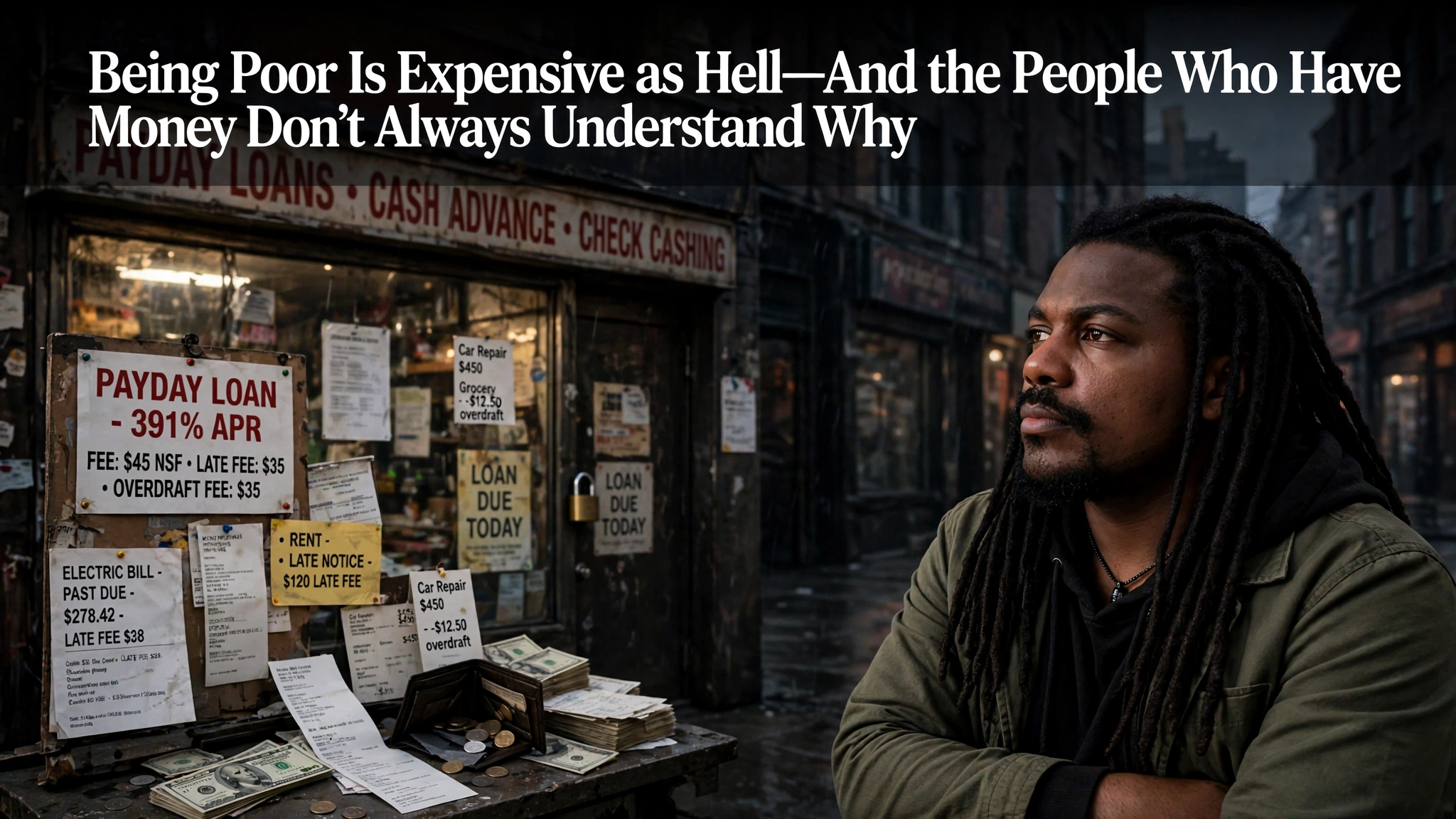
People will tell you to buy in bulk, buy a house, buy a reliable car, invest your money, and stop wasting it. The only problem? Half of that advice requires money you don't have in the first place. 😂
One of the funniest things about financial advice is how often it comes from people who have forgotten what it's like to be broke.
"Just buy the bigger package. It's cheaper per ounce!" Wonderful advice. Except the smaller package costs $4 and the bulk package costs $28. When you've got $11 left until payday, you're not calculating the cost per ounce. You're calculating whether you can afford dinner and gas without your bank account filing a missing-person report.
That's the part people don't understand. Being broke doesn't necessarily mean you're bad with money. Sometimes it means you don't have enough money to take advantage of the very opportunities that would help you save it.
Poverty charges you extra for not having enough money.
You can't afford the reliable car, so you buy the cheaper one. Then the cheaper one breaks down, and now you're paying for repairs, missing work, or borrowing somebody else's vehicle. The person with money buys the reliable car once. The person without money keeps paying for the consequences of not being able to afford it.
You can't afford to buy a house, so you rent. Your rent increases, but you don't build equity in the property. You need to move, and suddenly you're facing deposits, application fees, moving expenses, and another round of financial gymnastics. Meanwhile, somebody who bought a house years ago might be sitting on equity while telling you that renting is throwing money away.
Okay, but where exactly were you supposed to get the down payment? Did it come with the lecture? 😂
Even food works this way. Fast food can be expensive, but so can buying groceries when you don't have enough cash to stock a kitchen. You might save money cooking at home over time, but you still need the money upfront to buy ingredients, containers, cooking equipment, and everything else required to make that plan work.
And if you're working unpredictable hours, raising children, or juggling multiple responsibilities, time becomes another expense. Sometimes convenience isn't a luxury. Sometimes it's the only thing keeping the entire week from falling apart.
The financial system often rewards people for having resources they already possess. A person with savings can handle an emergency without borrowing. A person without savings might need a credit card, a payday loan, or help from family. The emergency costs both people money, but the person with fewer resources can end up paying far more.
That's why one unexpected bill can separate two households that earn nearly the same income. One household has a cushion. The other household has a collection of bills waiting in line like they're auditioning for the opportunity to ruin the weekend.
And then comes the advice: "You need to start saving."
No kidding. Nobody wakes up excited to have no financial cushion. Most people understand that saving is important. The difficult part is having enough left after housing, food, transportation, utilities, childcare, and other necessities to actually save something meaningful.
Saving $20 is still saving. But if an emergency costs $800, that $20 isn't going to provide much protection. It is a start, not a complete solution.
People love to celebrate financial discipline while ignoring financial capacity. Discipline matters, absolutely. But you can be disciplined with a small income and still struggle because there are limits to how much you can cut without cutting into basic living needs.
You can cancel every streaming subscription, stop buying coffee, pack your lunch, and refuse to go out with friends. Eventually, you run out of unnecessary expenses to eliminate. You can't coupon your way out of a housing payment that consumes half your income.
Sometimes the problem isn't that somebody spends too much. Sometimes the problem is that the math doesn't work.
And the answer isn't always to tell people to work harder. Some people are already working long hours. Some work multiple jobs. Some are caring for children while trying to build a better future. Telling an exhausted person to add another 20 hours to the week doesn't magically create more hours in the day.
Of course, people can make poor financial decisions at any income level. Some people overspend, take on unnecessary debt, or buy things to impress others. Personal responsibility matters. But personal responsibility should include looking honestly at the circumstances, not assuming everybody struggling must have made the same mistakes.
We need to stop treating financial hardship like a personality defect. A person's bank balance doesn't tell you how hard they work, what responsibilities they carry, or how many times they've had to start over.
And here's another uncomfortable truth: when someone finally gets a little money ahead, they may become protective of it. They might decline invitations, refuse to lend money, or hesitate before making purchases that other people consider small. That's not necessarily stinginess. If it took years to build a financial cushion, spending it can feel like watching years of progress disappear in one afternoon.
When you've experienced what it feels like to have nothing between you and a financial emergency, a few thousand dollars isn't always "extra money." Sometimes it's peace of mind. Sometimes it's the difference between handling a problem and having that problem turn into five more problems.
That's why we should encourage people to build savings without mocking how slowly they get there. The first $100 matters. The first $500 matters. The first $1,000 matters. Every milestone represents progress, even if somebody else's starting point was much further ahead.
We also need better conversations about wages, housing costs, emergency savings, affordable transportation, and access to financial services. Budgeting can help people make better decisions, but a budget cannot manufacture income that isn't there.
The goal should be to make financial stability achievable—not to shame people for failing to achieve it quickly enough.
So the next time somebody says, "Poor people just need to manage their money better," ask them a simple question: If you gave two people the same emergency, but one had $10,000 in savings and the other had $100, which person would have an easier time recovering?
The answer isn't complicated. The person with money has more options.
And that's the point. Money doesn't solve every problem, but it can prevent one problem from becoming an entire financial disaster.
Being broke is expensive. Being unable to pay upfront can cost you more. And sometimes the hardest part of escaping the cycle is that every step toward stability seems to require the very stability you're trying to build.
Let's debate this: Are people struggling financially because they need better money habits, because the cost of living has outpaced what they earn, or because it's usually a combination of both?
And if you've ever been broke, tell us the one thing that was always more expensive simply because you couldn't afford the better option upfront. 😂









Comments
No comments yet, be the first submit yours below.