The Fall Of Jensen Huang: How NVIDIA's Golden Boy Went From AI Icon To Corporate Controversy

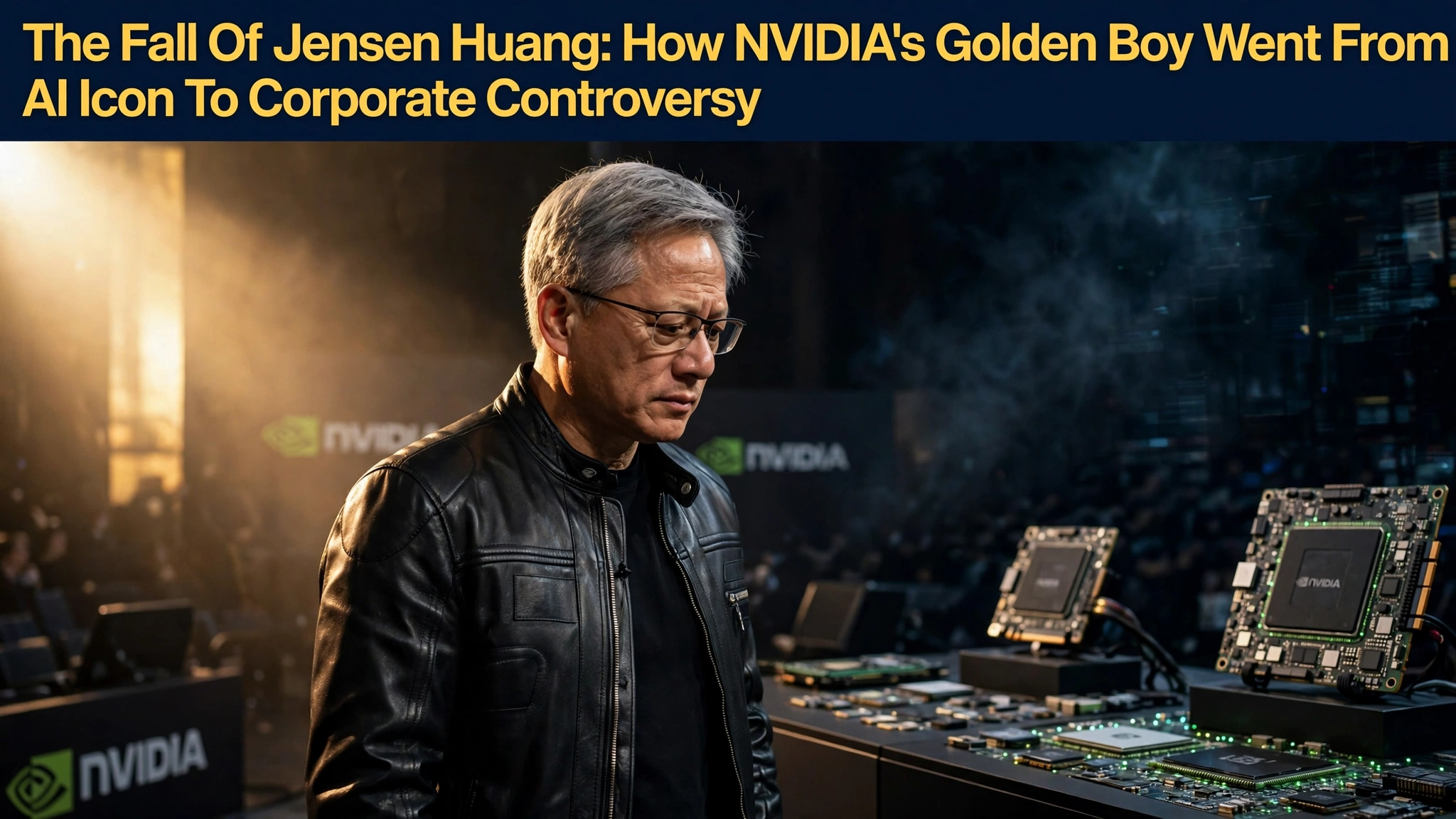
From AI Superstar To Corporate Controversy
For years, Jensen Huang was practically untouchable in the technology industry. As the co-founder and CEO of NVIDIA, he became the face of the artificial intelligence revolution. His signature leather jacket became iconic, his company's processors became essential to AI development, and investors watched NVIDIA's growth as one of the biggest success stories in modern corporate history.
Then the headlines changed. Suddenly, conversations about semiconductor dominance and artificial intelligence were replaced by reports about personal relationships, intelligence allegations, corporate investigations, and questions about executive leadership.
When Personal Controversy Becomes A Corporate Crisis
Huang acknowledged infidelity in an apology to NVIDIA employees. Separately, reports surfaced involving a Singapore-based businesswoman whom U.S. intelligence officials reportedly suspected of having connections to Chinese intelligence. Those allegations have not been established as fact.
Additional reporting surrounding alleged relationships with NVIDIA employees added another layer to the controversy.
What makes this situation particularly interesting is how quickly a personal controversy can become a corporate liability when the individual involved is responsible for leading one of the world's most influential technology companies.
The Timing Raises Questions
Just days before the leadership announcement, NVIDIA was still being celebrated for its extraordinary position in the artificial intelligence industry. Its technology was powering the AI boom, its financial performance was attracting attention, and Huang remained one of the most recognizable executives in technology.
Then the narrative shifted dramatically.
Investors were suddenly evaluating a different set of risks. Questions about corporate governance, executive relationships, national security, and leadership stability became part of the conversation.
It's a reminder that the public narrative surrounding a company can change much faster than its underlying business.
The Boardroom Becomes The Center Of Attention
On November 12, 2026, Huang stepped down as NVIDIA's president, CEO, and board member. Longtime CFO Colette Kress was appointed interim CEO while the company considers its next leadership chapter.
After more than three decades leading the organization he co-founded, Huang's departure represented an extraordinary transition for NVIDIA.
The bigger question is what the board knew, when it knew it, and how it evaluated the potential risks to the company.
Wall Street Doesn't Have Personal Attachments
NVIDIA shares experienced selling pressure as the controversy unfolded. Investors who had spent years celebrating the company's AI dominance suddenly had another set of concerns to evaluate.
That's how the stock market works. Investors can admire an executive's accomplishments while simultaneously reconsidering the risks associated with that person's leadership.
A successful company doesn't automatically become a safe investment simply because it has a recognizable CEO and a revolutionary product.
Is NVIDIA Bigger Than The Man Who Built It?
Huang's contributions to NVIDIA's growth cannot simply be erased. He helped transform a graphics processor company into a cornerstone of the global AI economy.
However, NVIDIA now has an opportunity to demonstrate that its infrastructure, workforce, research, customer relationships, and business strategy can continue independently of its longtime leader.
That's the real test of a successful organization: building something strong enough to survive beyond the person who originally created it.
The Bigger Lesson About Power And Accountability
Technology executives are often celebrated as visionaries. Their accomplishments become part of their public identities, and their companies sometimes become so closely associated with them that questioning their leadership feels almost like questioning the entire organization.
But wealth, influence, and professional accomplishments don't eliminate accountability.
Jensen Huang helped shape the modern technology industry. His departure doesn't erase that history, but it does introduce a new chapter in NVIDIA's story.
The company spent decades building the infrastructure powering the AI revolution. Now it has to prove that its future is bigger than the man who became its face.









Comments
No comments yet, be the first submit yours below.