Black Friday Isn't Always a Sale—Sometimes They're Just Returning Prices to Normal and Expecting You to Celebrate

Tomorrow is Black Friday, and before everybody starts running around celebrating 40%, 50%, and 70% off, remember something: some of those products weren't worth their original advertised prices in the first place. They just needed a dramatic price drop to make you feel like you were getting away with something.
Let's talk about this little game retailers play every year. They'll spend months advertising products at inflated prices, let those prices sit long enough for consumers to accept them as normal, and then when Black Friday arrives, suddenly they're offering you an incredible deal.
You'll see a television marked down from $1,200 to $599. A mattress supposedly reduced from $2,000 to $899. A pair of shoes advertised at 60% off. Everybody starts celebrating because the retailer has convinced them they just saved hundreds of dollars.
But here's a question: What if the product was never realistically worth that original advertised price? What if the Black Friday price is closer to what the retailer intended to sell it for all along?
Congratulations. You didn't necessarily save $601. You just paid $599 for a television.
The Original Price Is Part of the Sales Pitch
One of the easiest ways to make somebody feel like they're getting a bargain is to show them a much higher price first. Psychologically, that original number becomes the reference point. When you see $1,200 crossed out and $599 underneath it, your brain immediately starts calculating the money you're supposedly keeping.
Retailers understand this. The higher reference price makes the discounted price look more attractive, even when the actual market value of the product may be much closer to the sale price.
And let's be honest, some of these price tags look like somebody just threw darts at a wall. A product can be advertised for $899 one week, $749 the next, and suddenly $499 on Black Friday. Now everybody is supposed to believe they've witnessed a once-in-a-lifetime opportunity.
Meanwhile, the product hasn't changed. The manufacturing cost hasn't magically disappeared. The retailer didn't suddenly develop a personal relationship with your bank account. They just changed the number on the advertisement.
They Sell You the Feeling of Saving Money
This is where the real marketing genius comes in. The retailer isn't just selling you a television, laptop, refrigerator, or pair of sneakers. They're selling you the feeling that you're making a financially intelligent decision.
Think about it. If you walked into a store and saw a television for $599 without any advertised discount, you might compare prices, think about whether you need it, and decide to come back later.
But put a giant sign above it that says "WAS $1,200 — BLACK FRIDAY SPECIAL — 50% OFF," and suddenly people start acting like somebody is giving away free money.
That's the trick. They turn shopping into a competition against an imaginary deadline. You aren't just buying something anymore. You're racing against other shoppers, limited inventory, countdown clocks, and the fear that you'll miss an opportunity.
And nothing makes people spend money faster than convincing them they're losing money by not spending it.
Some Discounts Are Real, but Not Every Discount Is a Bargain
Now, let's be fair. There are legitimate Black Friday deals. Retailers do offer genuine discounts, clear inventory, bundle products, and compete for customers. Some products really are cheaper during major sales events.
But that doesn't mean every discount is legitimate, and it certainly doesn't mean every advertised percentage represents actual savings.
Sometimes the product is an older model. Sometimes it's a different configuration with fewer features. Sometimes the retailer is comparing it against a suggested retail price that customers rarely pay. And sometimes the same product has been available at a similar price for weeks.
You have to look beyond the percentage. A 70% discount means absolutely nothing if the original price was inflated or if another retailer has the same product cheaper without the dramatic advertisement.
Black Friday Is Also a Test of Your Self-Control
Here's something else worth remembering: you don't have to buy something simply because it's on sale.
Retailers know that people will purchase things they weren't planning to buy because the discount makes the purchase feel justified. You might walk into a store looking for a $40 item and walk out spending $400 because you found nine other things that were supposedly too good to pass up.
That's how you end up spending more money while convincing yourself you saved money.
Imagine spending $800 on things you didn't need because you supposedly saved $400. You didn't walk out of that store $400 richer. You walked out $800 poorer with a collection of purchases you weren't planning to make.
And the credit card bill isn't going to care how impressive the discount signs looked.
Check the Price History Before You Celebrate
Before buying something tomorrow, take a few minutes to compare prices across retailers. Look at the product's price history when that information is available. Check the exact model number, specifications, and included features. Don't assume two products are identical just because they look the same in an advertisement.
Set a budget before you start shopping. Decide what you actually need, what you're willing to pay, and what price would make the purchase worthwhile. If the deal doesn't meet your expectations, walk away.
And please stop letting a countdown clock convince you that your financial future depends on buying a blender before midnight.
The Best Deal Is the One That Actually Saves You Money
There's nothing wrong with taking advantage of a good sale. If you need something and find it at a genuinely competitive price, by all means, take advantage of it.
But don't confuse marketing with mathematics. A retailer can print 80% OFF in letters large enough to be seen from outer space. That doesn't automatically make the purchase a smart financial decision.
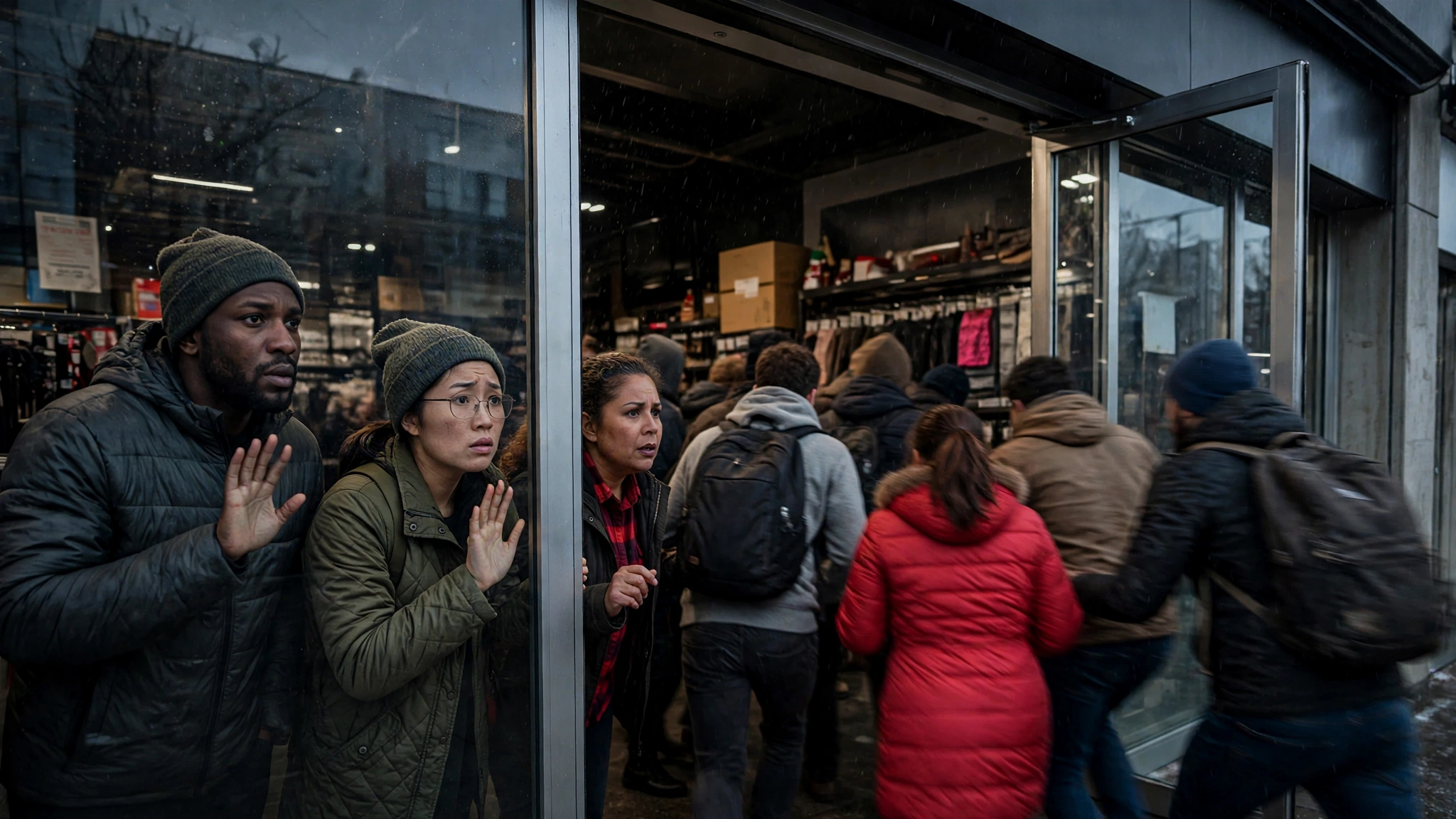
Tomorrow, stores will be packed with people chasing discounts, websites will be covered in red banners, and advertisements will make it sound like the entire economy is about to collapse if you don't buy something immediately.
Take your time. Compare prices. Do your research. Remember that retailers are trying to make money, not rescue your household budget.
And here's the savage part: If a store has to convince you that you're saving money by spending it, maybe you should stop and ask who is actually winning that transaction.
Happy Black Friday. May your discounts be legitimate, your credit cards remain under control, and your bank account survive the annual celebration of spending money you weren't planning to spend.








Comments
No comments yet, be the first submit yours below.