When the Platform You Built On Decides You Can Only Watch

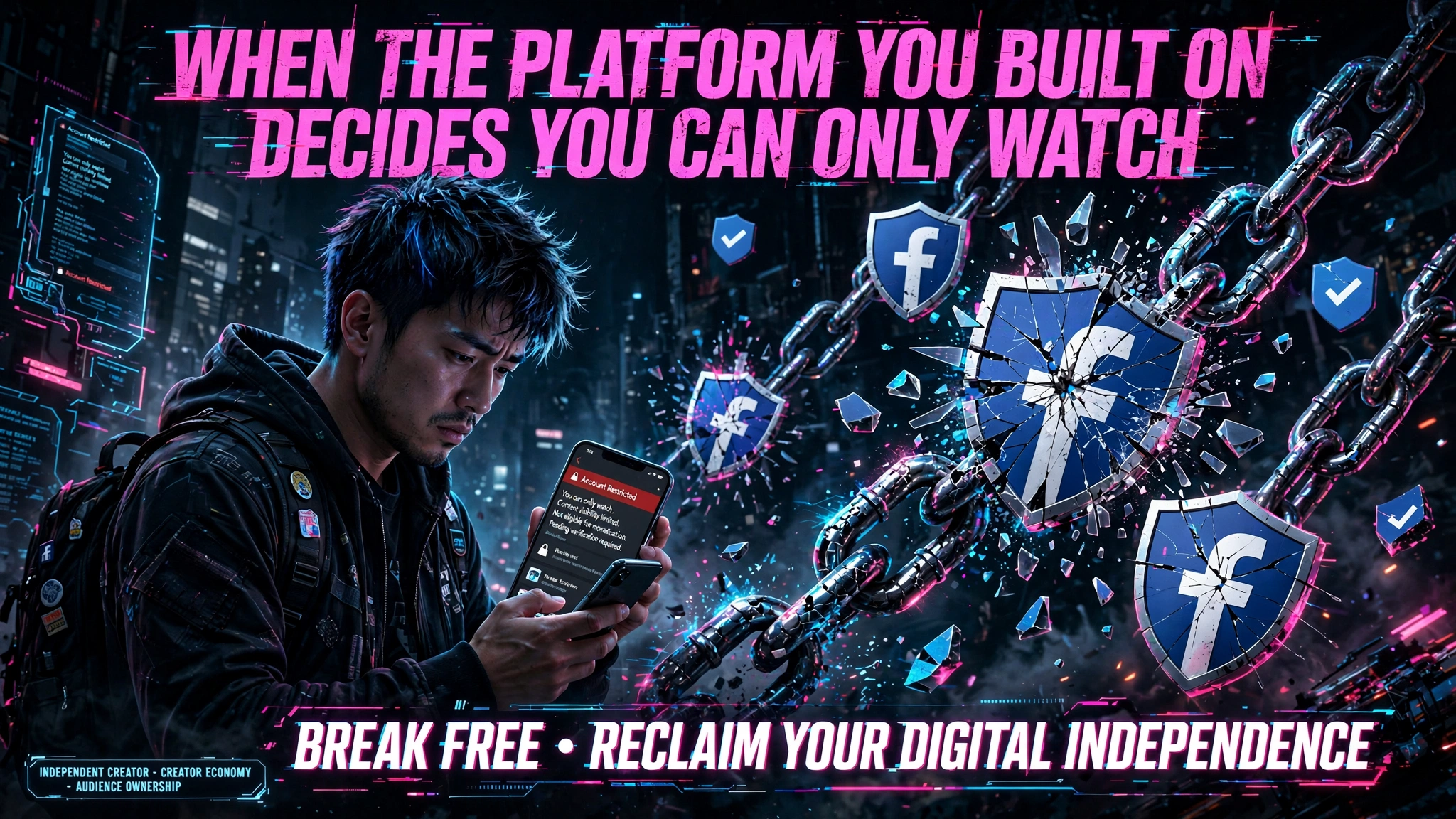
Imagine spending years building a presence on a platform.
Hundreds of videos. Years of posts. Conversations. Connections. Memories. People who know you. People who follow your work.
Then one day, the platform tells you it needs you to verify that you're actually you.
So you cooperate.
You provide identification.
And after all of that, you still can't message people.
You still can't post.
You can't interact normally with the people you've spent years connecting with.
Now you're basically sitting in the audience of your own account.
That's the strange part about digital ownership.
We spend years building digital identities on platforms we don't control.
We create the content.
We build the audience.
We make the connections.
We generate the activity that makes these platforms valuable.
But ultimately, the platform controls the door.
They can decide when you can speak, when you can message someone, when you can post and when you can simply watch.
And that's a lesson a lot of people don't think about until it happens to them.
Verification is supposed to prove who you are. It shouldn't feel like losing your ability to participate.
I've already got hundreds of videos of myself sitting on the platform. I've spent years creating and interacting there. My history on the platform is part of the evidence of who I am.
Yet I'm still being asked to prove my identity.
And after cooperating with that process, I'm dealing with restrictions that prevent me from doing basic things like messaging people and making posts.
That's frustrating because social media isn't just a collection of pictures and videos anymore.
For millions of people, it's communication.
It's business.
It's promotion.
It's networking.
It's community.
It's how independent creators reach people without having a television network, record label, newspaper or advertising department behind them.
When you lose access to communication, you aren't just losing a button.
You're potentially losing access to your audience.
And that's why creators need to understand something bigger than Facebook, Instagram, TikTok, X or any other platform.
Your followers are not the same thing as your audience.
Your audience is the relationship you can actually maintain.
If the platform controls whether you can communicate with those people, then the platform controls part of that relationship.
Build on the internet—but don't build everything on somebody else's property.
Have your own website.
Keep copies of your content.
Build an email list when appropriate.
Develop your own brand.
Create things people can find outside of one social network.
Don't assume that because you have thousands of followers that you own thousands of relationships.
You may have access to those people today.
Tomorrow, the platform's rules, algorithms, verification systems or account restrictions could change that.
The real lesson isn't “delete Facebook.”
The lesson is don't confuse access with ownership.
I can appreciate what Facebook has allowed me to build while still questioning what happens when the platform suddenly limits my ability to participate.
I can appreciate the connections while recognizing the vulnerability.
And I can cooperate with a verification process while still asking whether the experience makes sense.
Because when you've spent years contributing content, conversations and attention to a platform, being reduced to someone who can only watch is a strange reminder of who actually controls the platform.
Don't wait until you're locked out to realize you never owned the door.
Build something that exists beyond the platform.
Because your voice shouldn't live in only one place.

:max_bytes(150000):strip_icc()/GettyImages-748345779-a8bf13eb512a4d66a5f42191e803d29d-c9c906df668b404fb1a77b4c75a06de8.jpg)


Comments
No comments yet, be the first submit yours below.