The Internet Has Turned Everybody Into a Performer, Even When Nobody Is Watching

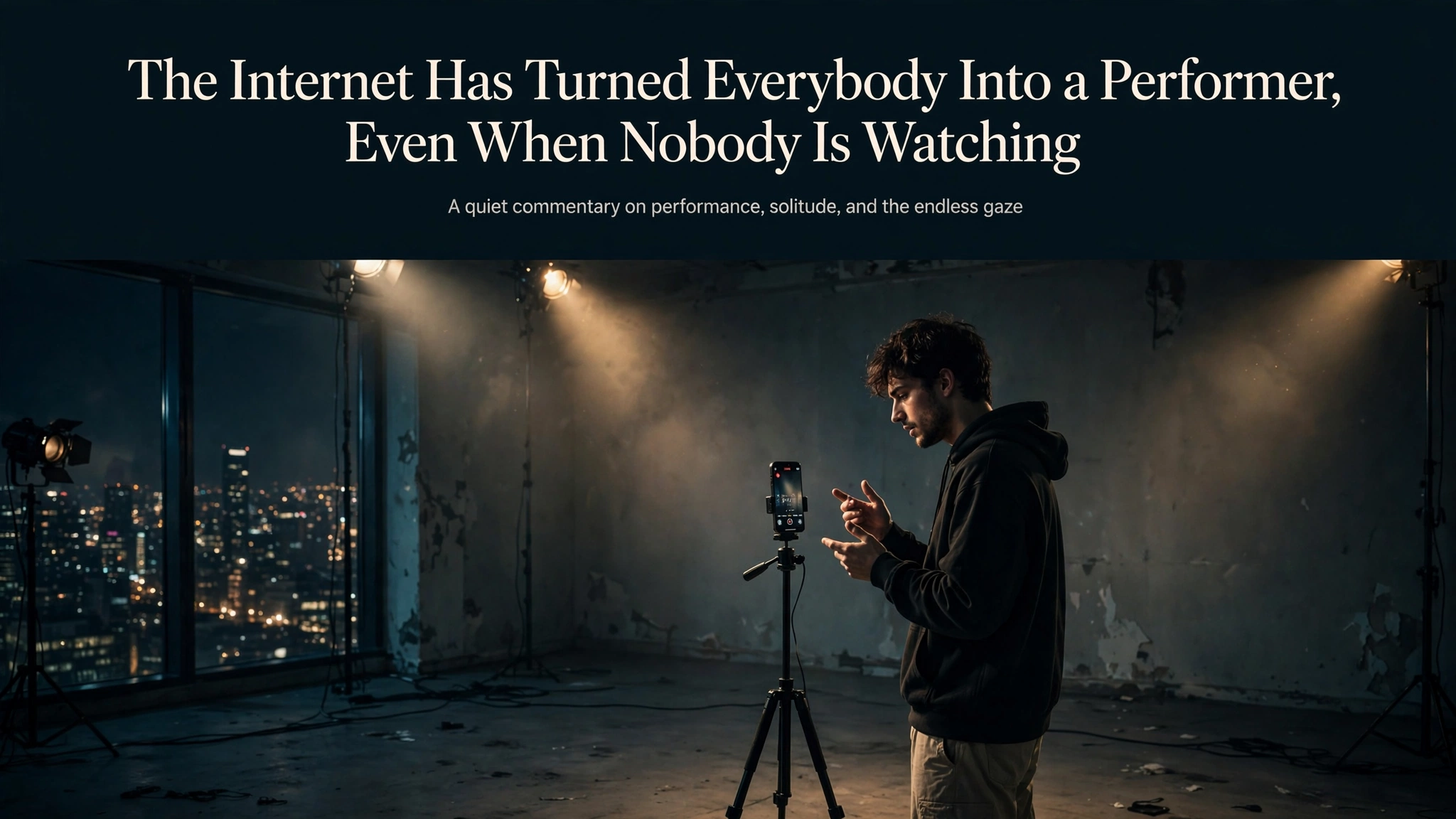
Remember when people used to do things because they enjoyed doing them? Now people can't even eat dinner without wondering whether the lighting is good enough to post it. Somewhere along the way, we stopped experiencing life and started producing evidence that we experienced it.
Let's talk about how the internet has quietly turned ordinary life into a performance.
You go on vacation, but part of your brain is already thinking about the pictures. You go to a restaurant, and before you even taste the food, somebody is arranging the plate for a photograph. You buy something new, and suddenly the purchase isn't complete until the internet knows about it.
People aren't just living anymore. They're documenting, packaging, editing, and distributing their existence like they're running a media company.
And the funniest part? Most of us aren't even getting paid.
We've become unpaid publicists for our own lives.
When did enjoyment become dependent on an audience?
Think about how strange this behavior actually is. Something good happens to you, and instead of simply enjoying the moment, you immediately think about how to communicate it to people who weren't there.
Sometimes the first instinct isn't to appreciate the experience. It's to capture it before it disappears.
We photograph the meal, record the concert, film the birthday party, and post the family gathering. Meanwhile, the actual experience is happening somewhere behind the phone screen.
Imagine paying hundreds of dollars to attend a concert just to spend half the show watching the performance through a six-inch rectangle. Congratulations, you bought a ticket to film somebody else's job.
Your audience has started influencing your experiences.
Social media has created an environment where people can begin evaluating their own lives through imaginary reactions.
Would people like this? Is this impressive? Does this make me look successful? Will anybody comment? Why didn't that post get the same attention as the last one?
Even silence starts feeling like rejection.
And that's an interesting psychological trap because the people viewing your content aren't necessarily thinking about you nearly as much as you think they are.
Somebody might scroll past your biggest announcement while waiting for their food. Somebody else might like your vacation picture and forget it existed ten seconds later.
But you've spent an hour checking the engagement.
You're emotionally investing in reactions from people who may not even remember what they saw.
Everybody is building a personal brand, but who's building a personal life?
We hear so much about branding, visibility, networking, influence, and maintaining an online presence. There's nothing inherently wrong with those things. Creators, musicians, business owners, and entrepreneurs have legitimate reasons to promote themselves.
But there's a difference between using the internet as a tool and allowing the internet to become your identity.
You can have a business without turning every private moment into marketing material. You can build an audience without needing strangers to approve of your decisions. You can be successful without constantly announcing that you're successful.
Not everything needs a caption. Not every accomplishment needs an announcement. Not every relationship needs an audience.
Some experiences are allowed to belong exclusively to the people who experienced them.
The algorithm doesn't know whether you're happy. It only knows whether people are interacting with your content.
That's an important distinction. A platform can reward controversy, arguments, exaggerated lifestyles, emotional reactions, and constant posting. But engagement isn't a measurement of personal fulfillment.
You could have thousands of people watching your life and still feel completely disconnected from the people around you.
You could have a quiet weekend with no pictures, no updates, and no notifications and genuinely enjoy yourself more than somebody receiving thousands of likes.
The internet doesn't necessarily reward the healthiest version of your life. It rewards content that gets attention.
And attention is not the same thing as affection, friendship, respect, or happiness.
Maybe we need to bring back experiences that don't require witnesses.
Go somewhere and don't post it. Buy something and don't announce it. Accomplish something and allow yourself to enjoy the accomplishment before explaining it to everybody else.
Have conversations without turning them into screenshots. Spend time with people without checking whether the moment is content-worthy.
And if you genuinely enjoy creating content, keep creating. There's nothing wrong with sharing your world. The problem begins when you can no longer enjoy that world without sharing it.
Because at some point, we have to ask ourselves whether we're making memories or just collecting material for our next post.
The greatest flex might be having a life so fulfilling that you don't feel obligated to prove it to the internet.
Let the algorithm wonder where you've been. Let the notifications sit there. Let people assume whatever they want.
You don't owe the internet a live broadcast of your existence.
Sometimes the best thing you can post is absolutely nothing—because you're too busy actually living.






Comments
No comments yet, be the first submit yours below.