The Emergency You Keep Saying Won't Happen Is the One You Should Prepare For

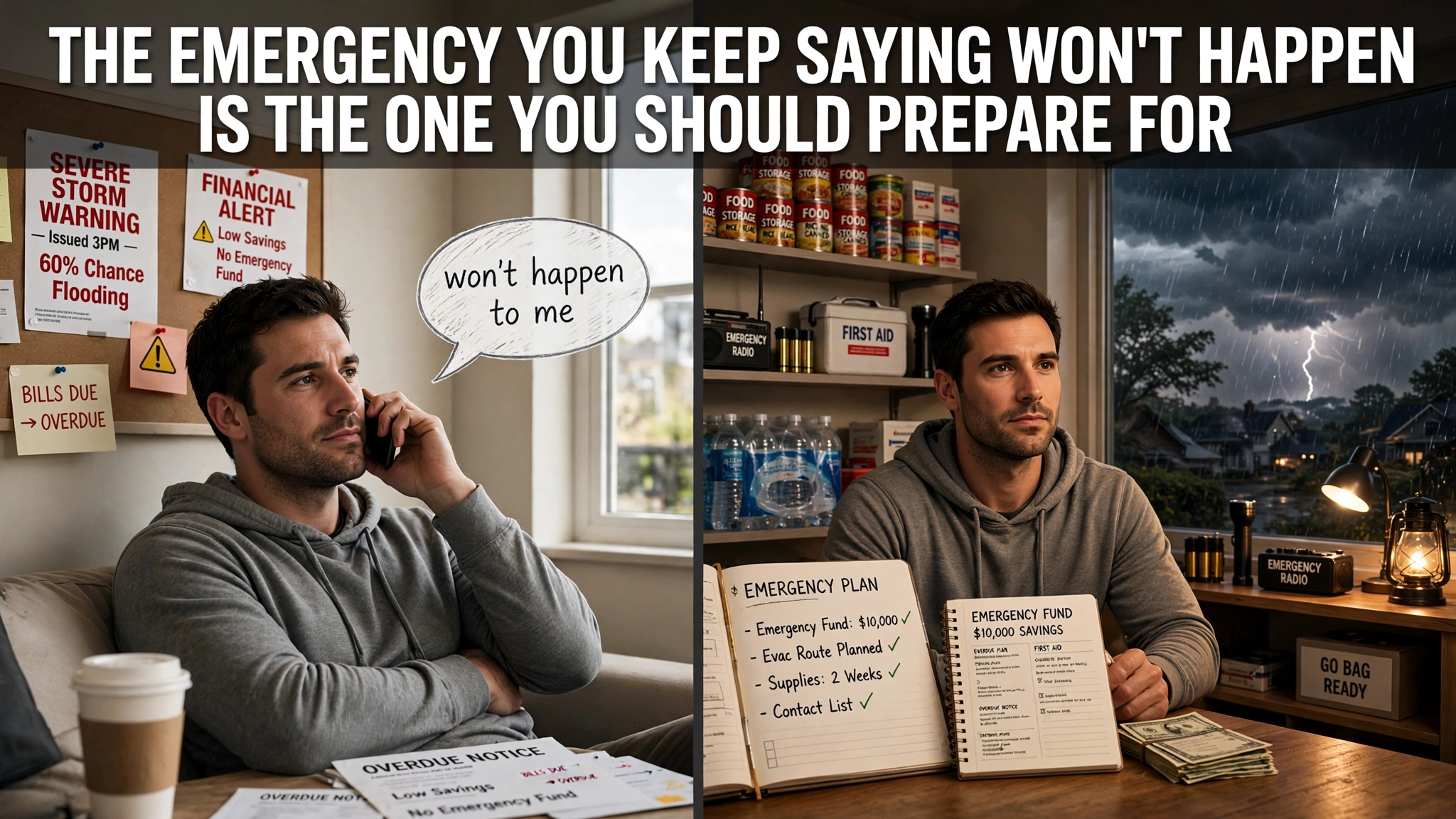
Most people don't ignore emergencies because they're irresponsible. They ignore them because normal life makes tomorrow feel guaranteed.
The rent is due next month.
The car works today.
The refrigerator is full.
The paycheck is coming.
The lights are on.
Everything is normal.
So why worry?
Because normal can change extremely fast.
A car breaks down.
A job disappears.
A major appliance dies.
A family member needs help.
A phone gets destroyed.
An unexpected bill arrives.
A temporary problem suddenly requires money you weren't planning to spend.
And that's when people discover that the real emergency isn't always the expense.
Sometimes it's having no room to absorb the expense.
If every dollar already has somewhere to go, even a $300 problem can become a crisis.
Not because $300 is an enormous amount of money.
Because there was nowhere for the $300 to come from.
That is what an emergency fund is really buying you: time.
Not luxury.
Not status.
Time.
Time to think.
Time to compare options.
Time to make a decision without immediately reaching for a high-interest credit card or another loan.
Time to repair the problem instead of allowing the problem to create three more problems.
Preparation doesn't mean expecting disaster every day.
It means accepting that uncertainty is part of life.
You don't wear a seat belt because you expect to crash.
You carry an umbrella because rain is possible.
You keep a first-aid kit because injuries happen.
You lock your door because you understand that security matters.
Financial preparation works the same way.
The goal isn't to predict the emergency.
The goal is to make sure one emergency doesn't become a complete collapse.
That might mean keeping some cash available.
Keeping important documents organized.
Maintaining your vehicle.
Backing up important files.
Learning basic skills.
Having more than one way to earn money.
Knowing who you can call when something goes wrong.
Preparedness is not paranoia when it is practical.
And preparation doesn't have to begin with thousands of dollars.
Start with what you can.
Ten dollars.
Twenty dollars.
Fifty dollars.
A little money saved repeatedly can eventually become the difference between an inconvenience and a crisis.
The first goal isn't becoming wealthy. It's becoming harder to knock over.
Because life doesn't send a calendar invitation before something goes wrong.
It doesn't say, “Your transmission will fail next Tuesday.”
It doesn't say, “Your income will change next month.”
It doesn't say, “You'll need $600 unexpectedly in three weeks.”
That's why preparation matters.
You don't prepare because you know something bad is coming.
You prepare because you know something eventually will.
And when that day arrives, the goal isn't to panic.
The goal is to be able to say:
“I didn't expect this—but I'm ready enough to handle it.”









Comments
No comments yet, be the first submit yours below.