You Can Work Your Whole Life and Still Never Own the Place You Live In

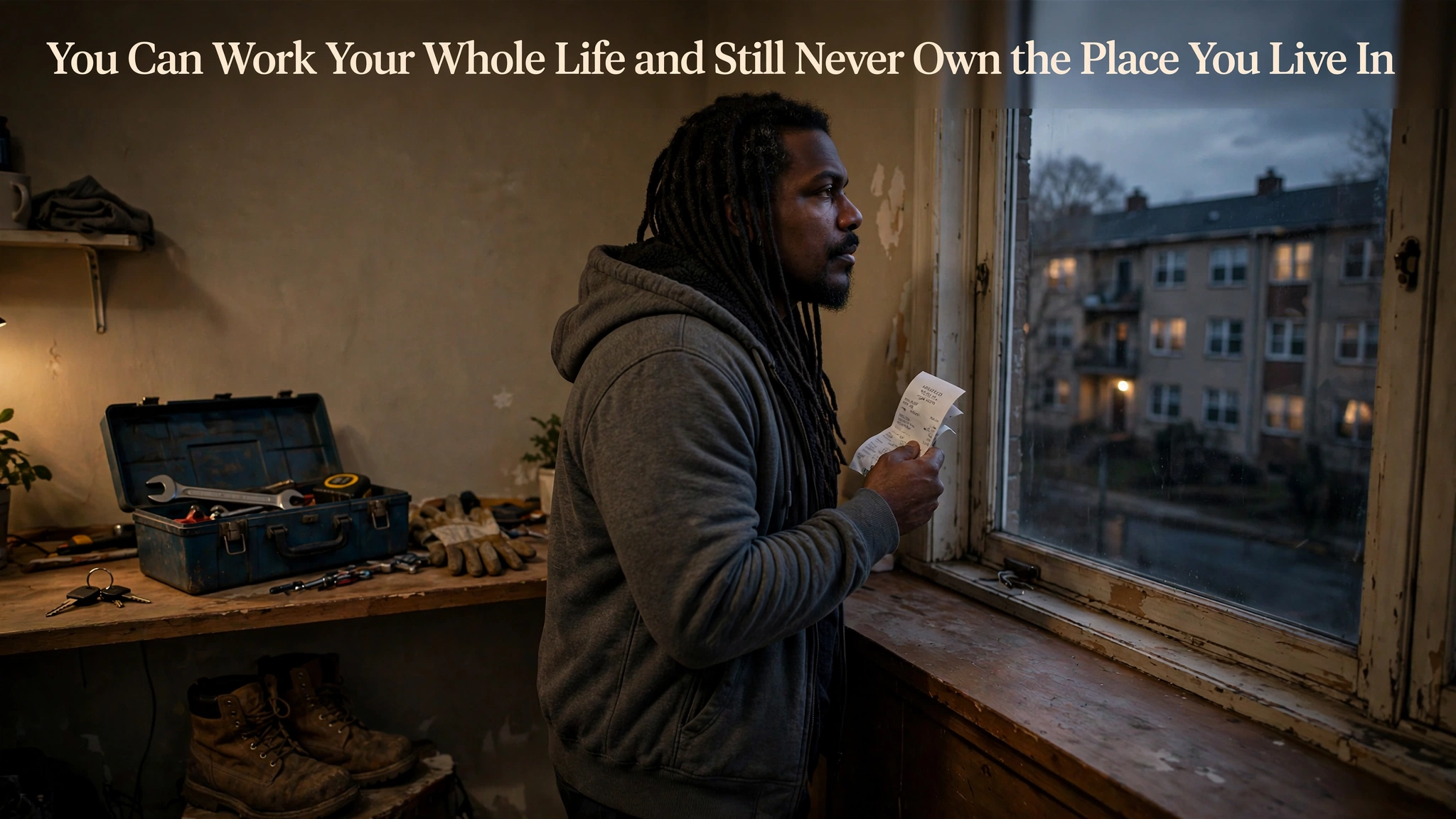
IMAGINE WORKING 40 YEARS OF YOUR LIFE, PAYING YOUR BILLS ON TIME, AND STILL HAVING TO ASK SOMEBODY ELSE FOR PERMISSION TO KEEP LIVING IN YOUR OWN HOME.
Think about that for a minute.
You wake up every morning, go to work, earn your paycheck, and use that money to pay for a place to live. Month after month. Year after year. You pay rent, utilities, insurance, and everything else that comes with keeping a roof over your head.
And after all those years of making payments, you can still end up with absolutely no ownership in the place you've been paying to live in.
Miss a payment, and you could face eviction. Your landlord decides to raise the rent, and suddenly your budget has to change. Your lease ends, and you might have to pack up your entire life and start over somewhere else.
Meanwhile, the money you've paid over the years has helped cover the cost of maintaining somebody else's property and potentially contributed to their long-term wealth.
And people wonder why so many adults feel like they're running in place.
THE PROBLEM ISN'T THAT RENTING IS ALWAYS A BAD DECISION. THE PROBLEM IS THAT PAYING FOR HOUSING DOESN'T AUTOMATICALLY GET YOU CLOSER TO OWNING IT.
Let's be realistic. Renting makes sense for plenty of people. It can offer flexibility, reduce certain maintenance responsibilities, and make it possible to live somewhere you couldn't afford to purchase.
Homeownership also comes with property taxes, repairs, insurance, interest, and other costs that renters don't directly manage in the same way. Buying a house isn't automatically the right financial move for everybody.
But here's the bigger question: why does the path from working for a living to owning something feel so difficult for so many people?
Housing prices can be high relative to wages. Saving for a down payment can take years. Credit requirements, closing costs, existing debt, and the need to maintain an emergency fund can all make buying a home harder to achieve.
And while you're trying to save, your rent still has to be paid.
That's the trap people often overlook. You need savings to get into a home, but you need somewhere to live while you're trying to build those savings. The cost of surviving today can make it harder to afford the stability you're trying to create for tomorrow.
YOU CAN'T BUILD A FINANCIAL FOUNDATION VERY EASILY WHEN SO MUCH OF YOUR INCOME IS ALREADY COMMITTED TO KEEPING A ROOF OVER YOUR HEAD.
Now imagine being a young adult trying to get started today.
You hear that you're supposed to work hard, save money, establish good credit, avoid unnecessary debt, and eventually buy a home.
Those are reasonable goals. But what happens when the rent takes a large share of your income, groceries cost more than you expected, your car needs repairs, and your employer isn't increasing your pay at the same pace as your expenses?
You can make responsible decisions and still find yourself struggling to get ahead.
That doesn't mean personal financial habits don't matter. They absolutely do. But personal responsibility cannot erase every economic barrier, and pretending otherwise doesn't help anybody understand the problem.
Some people have family members who can help with a down payment. Some inherit property. Others can live with relatives while saving money. Those advantages can make a tremendous difference.
Other people have to build everything from scratch while paying every expense themselves.
WE OFTEN COMPARE PEOPLE BY WHAT THEY OWN WITHOUT ASKING HOW THEY GOT THE OPPORTUNITY TO OWN IT.
And there's another part of this conversation worth having: the difference between paying for a place to live and building an asset.
When you own a home and pay down your mortgage, you may gradually build equity. That equity can become part of your financial foundation, although property values can fall and ownership comes with real costs and risks.
When you rent, you receive housing in exchange for your payments, but you generally don't build ownership in the property itself.
Neither arrangement makes somebody a better person. But the long-term financial outcomes can be very different.
One household may spend decades paying for housing while another household eventually owns a property that can be passed down to children. That difference can influence what the next generation has access to, from financial security to educational opportunities and the ability to handle emergencies.
That's why housing affordability isn't just about having somewhere to sleep tonight. It's also about whether people have a realistic opportunity to build stability over time.
A HOME CAN BE MORE THAN A PLACE TO LIVE. IT CAN BE A FOUNDATION FOR THE NEXT GENERATION—IF PEOPLE HAVE A FAIR SHOT AT OWNING ONE.
So what should we be talking about?
We should be talking about whether wages allow people to afford housing without sacrificing everything else. We should be talking about building more housing where people need it, making homeownership costs more transparent, expanding realistic paths to purchase, and helping people understand the trade-offs between renting and owning.
We should also be honest about the fact that homeownership isn't the only route to financial stability. Renting while building savings, investing, or paying down high-interest debt can make sense depending on someone's circumstances.
The goal should be giving people viable choices instead of making them feel as though they're failing because they haven't reached a particular milestone by a particular age.
Because the person renting an apartment at 40 isn't automatically irresponsible. The person living with family at 30 isn't automatically unsuccessful. And the person who owns a house isn't automatically wealthy just because their name is on the property.
We need to stop confusing someone's current living arrangement with the entire story of their financial life.
THE REAL QUESTION ISN'T WHY EVERYBODY HASN'T BOUGHT A HOUSE. IT'S WHETHER WORKING PEOPLE HAVE A REALISTIC PATH TOWARD THE KIND OF STABILITY THEY WANT.
Imagine a future where people can rent without feeling permanently trapped, save without constantly starting over, and purchase a home when it makes sense for their lives.
Imagine young families being able to plan for the future without feeling as though one rent increase or unexpected bill could destroy years of progress.
That's a conversation worth having.
Because working your entire life should mean more than getting just enough money to make it to the next month.
YOU DESERVE THE OPPORTUNITY TO BUILD SOMETHING FOR YOURSELF, WHETHER THAT MEANS OWNING A HOME, BUILDING INVESTMENTS, OR CREATING ANOTHER FORM OF FINANCIAL SECURITY.
So let's talk about it: Do you think homeownership is still a realistic goal for working-class Americans, or has the cost of living made it harder for people to move from paying for survival to building something they actually own?
I'd like to hear different perspectives, especially from people who have rented for years, recently purchased a home, or are still trying to figure out their next move.









Comments
No comments yet, be the first submit yours below.