You Can Make $100,000 a Year and Still Be One Paycheck Away From Humiliation

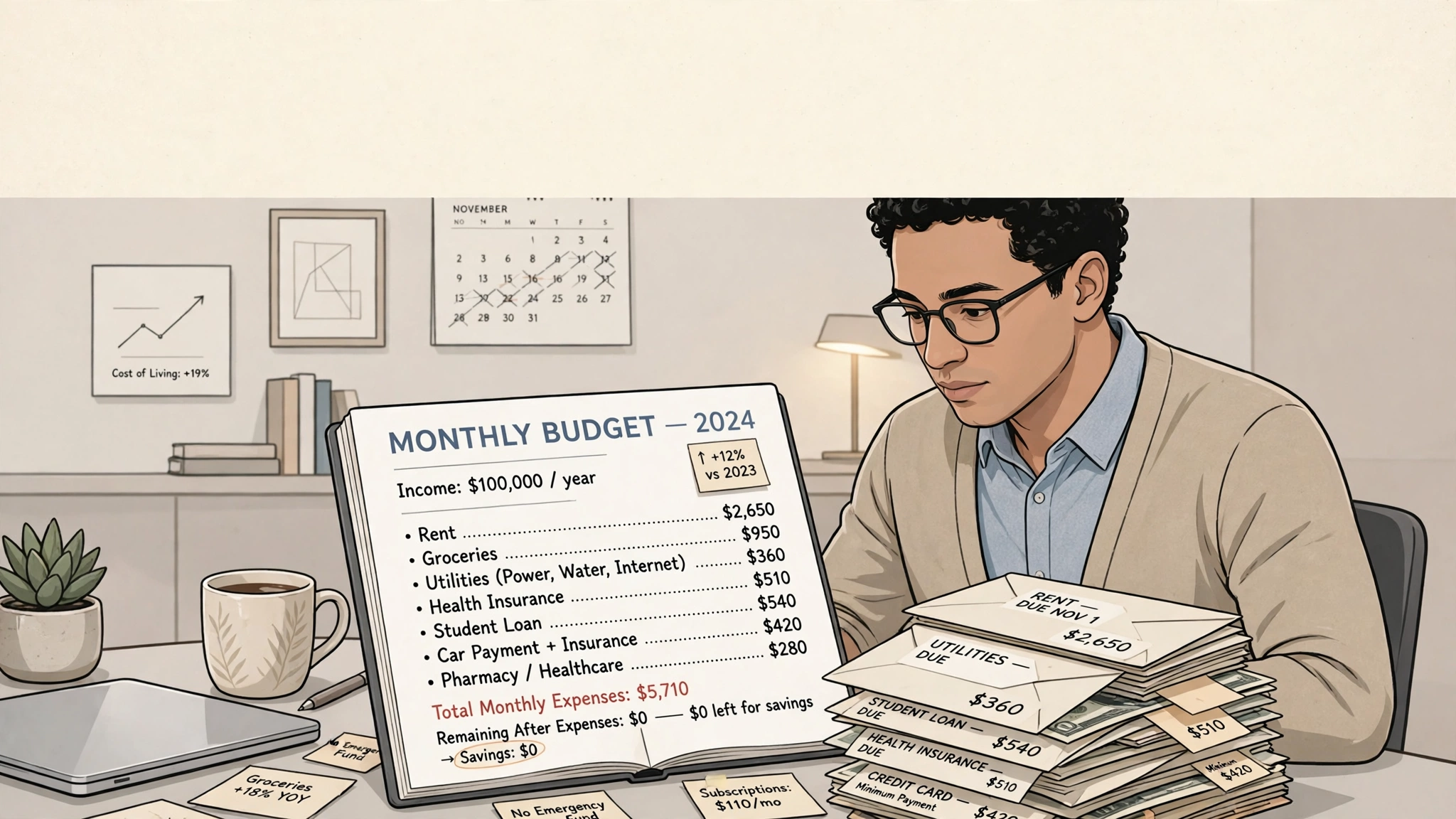
Let's talk about something people don't like admitting: You can make six figures, drive a nice car, live in a decent house, and still be financially drowning. Because apparently, in America, making good money doesn't necessarily mean you can afford to live good. Sometimes it just means you qualify for more expensive problems.
We've been conditioned to believe that if somebody makes $100,000 a year, they've officially made it. People hear that salary and immediately imagine vacations, nice cars, a beautiful home, and a bank account that doesn't get nervous every time the phone rings.
But let's look at the reality. You've got rent or a mortgage, car payments, insurance, groceries, utilities, childcare, credit cards, student loans, and taxes waiting to collect their share. By the time everything gets paid, that impressive salary can start looking like a part-time job with an expensive uniform.
And the funny part? People making less money sometimes assume you're rich simply because your income sounds impressive. They don't see the bills sitting on your kitchen table. They don't see the money leaving your account before you even have a chance to enjoy it. They just hear the number and assume you're living like a celebrity.
Six figures used to sound like financial freedom. Now, for some households, it sounds like six figures worth of obligations.
Here's another problem: As people's incomes increase, their expenses can increase right alongside them. You get a raise, so you upgrade the car. You get a better job, so you move into a more expensive neighborhood. You start earning more, so suddenly everybody expects you to spend more.
Before you know it, you're earning twice what you used to make, but somehow you still can't take a month off without worrying about money. Congratulations! You got a promotion from struggling to struggling with upgraded furniture.
And let's not pretend lifestyle inflation is the only issue. Housing costs, healthcare, childcare, transportation, and everyday necessities can consume a large share of household income. In expensive areas, even a strong salary may not stretch as far as people expect. The amount you earn matters, but so does where you live, who depends on you, and how much of your income is already committed.
Then there's the pressure to look successful. Social media has people believing that financial success means designer clothes, luxury vacations, expensive restaurants, and a vehicle with a payment that could fund somebody else's entire grocery budget.
Meanwhile, the person driving an older car, cooking at home, and quietly building savings might actually be in a stronger financial position than the person posting vacation pictures every weekend.
One person owns fewer things but has more financial breathing room. The other owns more things but needs every paycheck to keep the performance going. One has money left over after the bills. The other has a luxury lifestyle and a financial emergency waiting to happen.
Which person is really winning?
We also need to talk about how easily a high income can create a false sense of security. A person might earn $100,000 a year but have very little savings. If the job disappears, the mortgage doesn't disappear with it. The car lender doesn't suddenly become understanding. The grocery store doesn't offer a discount because your company laid you off.
Your income can look strong on paper while your financial foundation remains fragile. That's why an emergency fund, manageable debt, and consistent saving matter. A high salary is an opportunity to build security, but it doesn't automatically create security.
And here's the uncomfortable truth: Some people aren't chasing wealth anymore. They're chasing the ability to maintain the lifestyle they've already committed themselves to. They can't leave a job they hate because too many bills depend on it. They can't take a risk because their expenses leave no room for failure. They aren't financially free; they're financially obligated.
That's why financial freedom shouldn't be measured only by how much money you make. It should also be measured by how much control you have over your time, how prepared you are for unexpected expenses, how much debt you carry, and whether you can make decisions without every choice threatening your financial stability.
You don't necessarily need a million-dollar house to feel successful. You might need a reasonably priced home, a reliable vehicle, savings, and the ability to tell your boss that you need a day off without calculating whether you'll still be able to pay the electric bill.
Imagine making less money but having your expenses under control, your debts manageable, and enough savings to handle an emergency. Now imagine earning significantly more but being trapped under payments, obligations, and expectations. The second person has a higher income, but the first person may have more freedom.
The goal shouldn't be to look rich enough to impress people. The goal should be to become financially stable enough that you don't have to impress anybody.
Because nobody on social media is going to pay your mortgage when your income stops. Nobody admiring your car is going to make your insurance payment. And the people who praise your lifestyle won't necessarily be there when maintaining it becomes a burden.
So stop measuring your progress against somebody else's paycheck. Look at what you own, what you owe, what you save, and how much freedom your money actually gives you.
Making $100,000 a year can absolutely provide a strong foundation, but the number alone doesn't tell the whole story. What matters is what remains after the bills, what you've built for the future, and whether your money is working for you—or whether you're working your entire life just to keep your money from running out.
Let's debate this: Would you rather make $100,000 a year with expensive bills and little savings, or make $50,000 with manageable expenses, no consumer debt, and money left over every month? Which person would you consider more financially successful?










Comments
No comments yet, be the first submit yours below.