People Say They Want a Real One Until They Meet Somebody Who Refuses to Play Games 😂

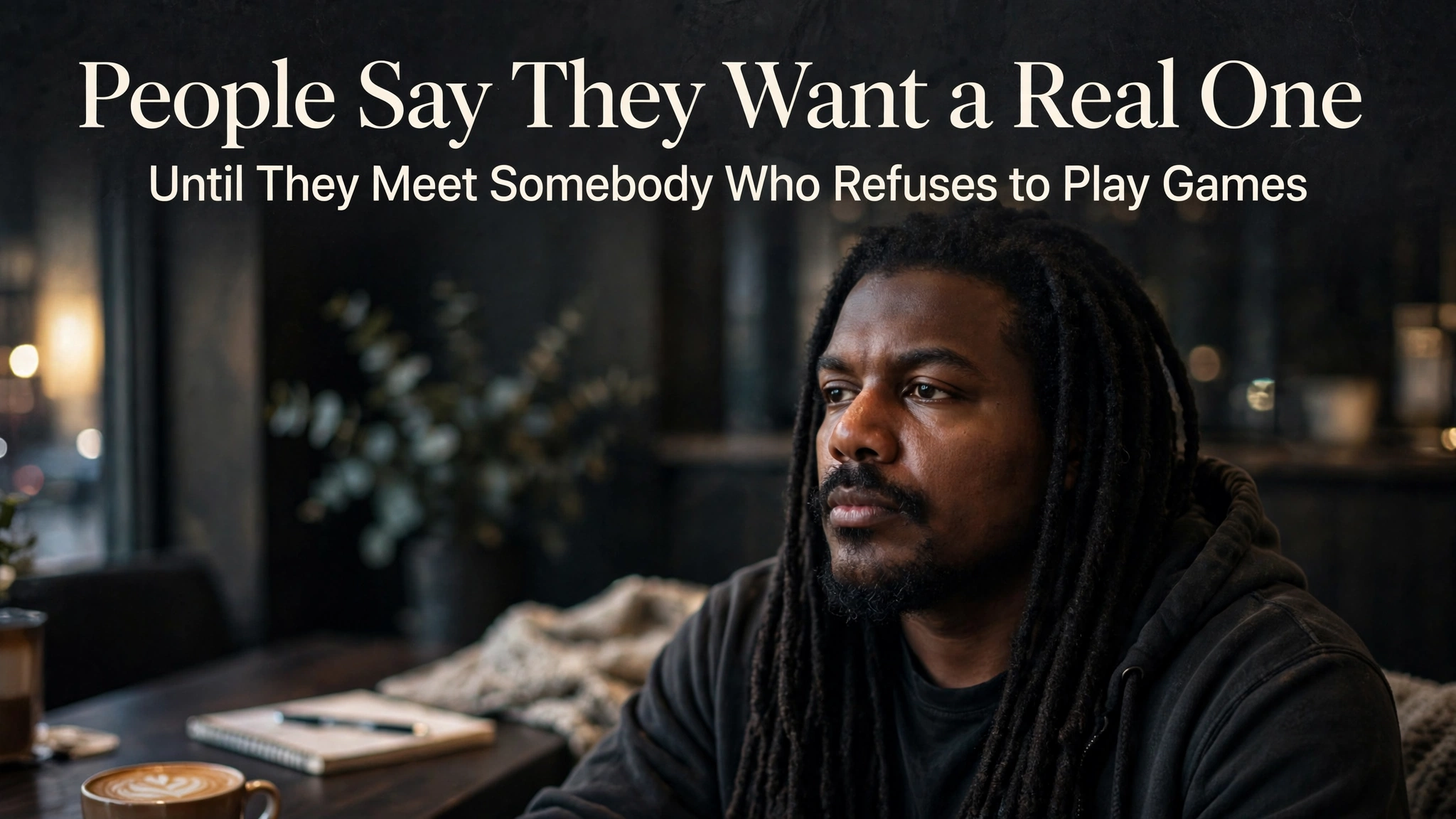
Everybody wants somebody who's loyal, honest, consistent, emotionally mature, and serious about building something real. But the moment that person stops playing games, sets boundaries, and refuses to entertain nonsense, suddenly they're "boring," "too serious," or "doing too much." 😂 Make up your mind!
Modern relationships are funny because people will write an entire shopping list of qualities they want in a partner, then act confused when somebody actually shows up with those qualities.
"I want somebody who communicates." Okay, let's communicate. "Why are you asking so many questions?"
"I want somebody who's consistent." Here I am, being consistent. "You don't have to text me every day!"
"I'm tired of people playing games." Great, let's be honest about our intentions. "Whoa, why are you moving so fast?"
At this point, dating feels like applying for a job where the employer keeps changing the qualifications after the interview. 😂
Some people don't actually want a healthy relationship. They want the excitement of uncertainty without the consequences of instability.
They want you to chase them, but not too much. They want your attention, but they don't want to feel obligated to return it. They want to know you care, but they still want the freedom to keep you guessing. They want loyalty from you while maintaining a backup plan in case somebody more exciting comes along.
And somehow, if you refuse to participate in that circus, you're the problem.
Here's the thing: when somebody has spent years confusing anxiety with attraction, peace can feel unfamiliar. A person who communicates clearly might not create the same emotional roller coaster as somebody who disappears for three days and returns with a "Hey stranger" text at 11:47 p.m.
But let's be serious. Is that romance, or are you waiting for a notification like you're tracking a delayed Amazon package? 😂
Uncertainty can create excitement, but excitement isn't proof of compatibility.
Sometimes the person who keeps you guessing feels more interesting because you're constantly trying to figure them out. You analyze their messages, replay conversations, and wonder why their energy changed. Meanwhile, the person who tells you exactly where they stand gets labeled predictable.
Predictable is supposed to be a good thing when we're talking about honesty, respect, and reliability. You want your paycheck to be predictable. You want your car's brakes to be predictable. You want your electricity to work without making you negotiate with the light switch.
Yet when it comes to love, some people suddenly want a little mystery. 😂
Of course, healthy relationships still need chemistry, attraction, humor, independence, and room to grow. Nobody wants a relationship that feels like a weekly performance review. But there's a difference between keeping romance alive and keeping somebody emotionally confused.
One builds connection. The other makes people compete for reassurance.
And social media doesn't make this any easier. We're constantly seeing advice about never double-texting, waiting a certain number of hours to reply, acting less interested than we really are, and never letting somebody know how much we care.
Imagine needing a strategy meeting before sending somebody a good morning text. We aren't building a relationship anymore; we're managing a public relations crisis. 😂
People are so afraid of looking vulnerable that they sometimes sabotage the very connection they're hoping to find. They pretend not to care because caring gives the other person the ability to hurt them. They withhold affection to avoid looking desperate. They keep their options open because committing to one person feels like surrendering leverage.
But you can't build genuine intimacy while treating every interaction like a chess match where showing emotion means losing a piece.
And here's where personal responsibility comes in: being a "real one" doesn't mean expecting somebody to tolerate everything you do.
You can be loyal and still be controlling. You can be honest and still be cruel. You can have boundaries and still use those boundaries as an excuse to avoid accountability. Saying "I'm just keeping it real" doesn't give anybody permission to treat people badly.
A healthy relationship requires two people who can be honest about what they want, respect each other's independence, apologize when they're wrong, and recognize that love doesn't eliminate the need for effort.
It also requires accepting that not everybody who rejects you is afraid of real love. Sometimes the connection simply isn't right. Sometimes the attraction isn't mutual. Sometimes two good people want different things. Rejection doesn't automatically mean somebody is emotionally damaged or incapable of appreciating you.
But when two people claim they want the same things, their actions should eventually reflect their words.
If you say you want commitment, you have to make room for commitment. If you say you want honesty, you have to be willing to hear the truth. If you want somebody to communicate, you can't punish them every time they bring up an uncomfortable subject.
And if you want loyalty, you have to understand that loyalty isn't a one-way subscription service where one person pays full price while the other enjoys a free trial.
The right relationship shouldn't require you to become less honest, less confident, or less yourself just to keep somebody interested.
You shouldn't have to manufacture jealousy to prove you're desirable. You shouldn't have to disappear to find out whether somebody misses you. You shouldn't have to pretend you're talking to five other people just to convince one person that you're worth taking seriously.
If somebody needs constant uncertainty to remain interested, you have to ask yourself whether they're attracted to you or simply attracted to the challenge of winning your attention.
Because once the chase ends, a relationship still has to exist. There are bills, bad days, family responsibilities, misunderstandings, personal goals, and all the ordinary moments that don't come with dramatic music playing in the background.
That's where the real work begins.
Anybody can enjoy the excitement of a new connection. Building something lasting requires people who understand that consistency isn't a lack of passion, communication isn't weakness, and commitment isn't supposed to feel like losing a competition.
So stop asking for a real one if what you actually want is somebody who will keep proving themselves while you keep your own intentions hidden.
Stop asking for peace if you keep mistaking drama for chemistry.
And stop calling people boring simply because they refuse to make you question your worth every other day.
Let's debate it: Do people genuinely want healthy relationships, or have dating games become so normal that honesty and consistency now seem less exciting than mixed signals?
And be honest: Have you ever overlooked somebody who treated you right because you were more attracted to the person who kept you guessing? 😂









Comments
No comments yet, be the first submit yours below.