You Can Work 40 Hours a Week, Pay Your Bills, and Still Be Considered Poor—So Who Exactly Is the System Working For?

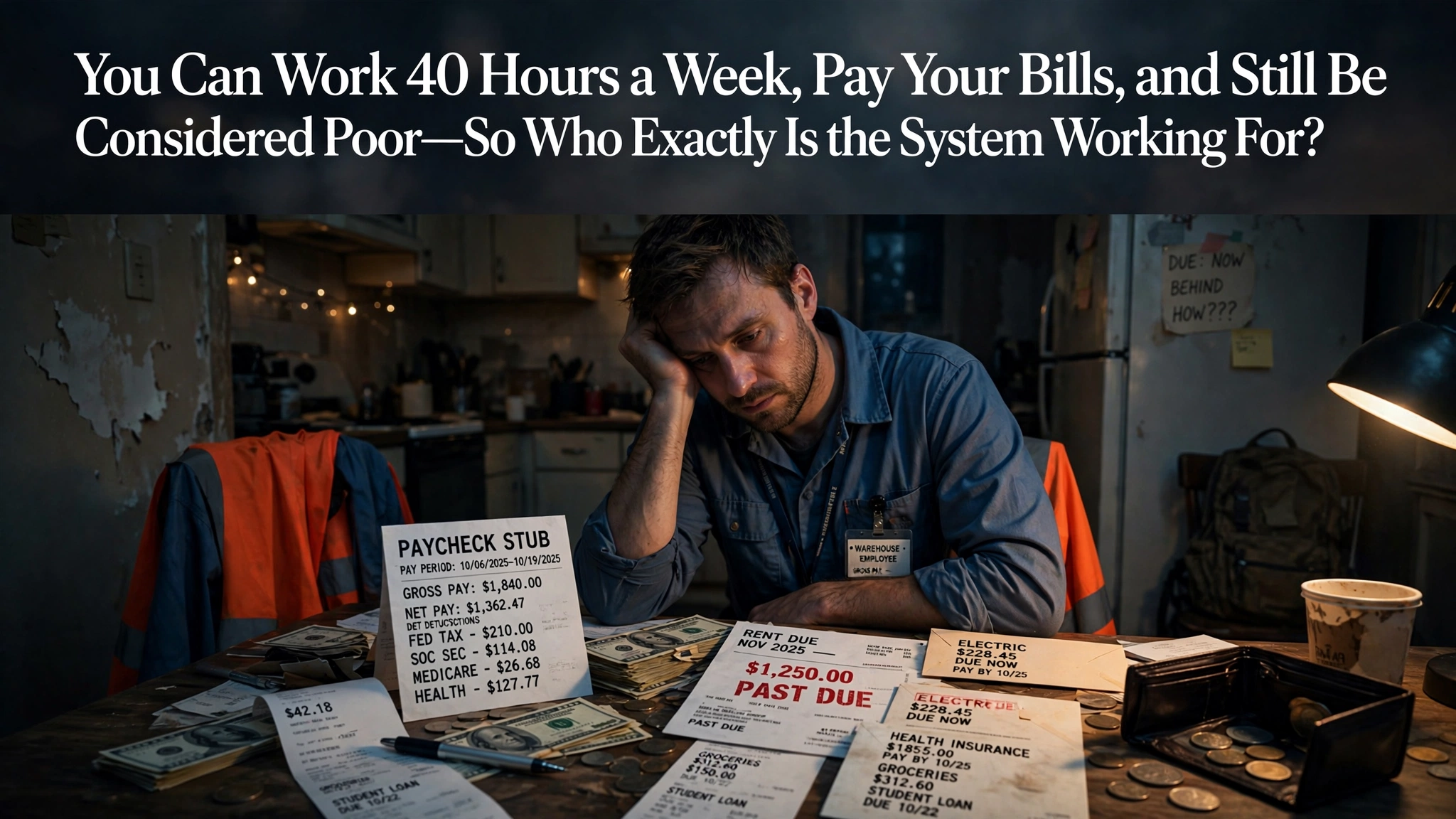
Imagine waking up five days a week, working 40 hours, paying your taxes, following the rules, and still having to check your bank account before buying groceries. At what point do we stop calling that financial responsibility and start questioning the entire arrangement?
We're constantly told that the solution to financial problems is simple: get a job, work hard, stop buying things you don't need, and learn how to budget.
Okay. But what happens when somebody already does all of that?
They wake up early, go to work, put in their hours, pay rent, cover utilities, buy groceries, maintain transportation, and handle their responsibilities. They aren't out partying every weekend. They aren't financing a luxury lifestyle. They're just trying to live.
And somehow, one unexpected car repair can turn their entire month into a financial emergency.
That's the part nobody wants to discuss. You can be employed, responsible, and hardworking while still being one broken appliance away from financial disaster.
We've normalized the idea that people should work their entire lives just to maintain access to the basic necessities of living. Housing takes a paycheck. Transportation takes another piece. Groceries keep getting more expensive. Insurance wants its monthly payment. Then every subscription, fee, and automatic withdrawal starts lining up like it has an appointment with your checking account.
And when somebody says they're struggling, the first response is often, "You need to manage your money better."
Maybe. But let's not pretend budgeting can magically turn a paycheck that doesn't cover the cost of living into financial freedom. You can cancel every streaming service, stop buying coffee, pack your lunch, and still have a housing problem. Eventually, there aren't enough little luxuries left to cut.
Here's another uncomfortable question: why is a full-time job still treated like proof that somebody should be financially secure when the actual paycheck may not provide enough room to save, invest, or handle emergencies?
We're told to build an emergency fund while the cost of surviving consumes the money that would go into it. We're told to invest for retirement while trying to make sure the electric bill doesn't arrive before payday. We're told to think about the future while the present keeps sending invoices.
And then we wonder why people are burned out.
This isn't an argument that everybody should earn the same amount or that personal financial decisions don't matter. They do. But personal responsibility and economic reality can exist in the same conversation. A person can make mistakes with money, and the cost of living can still be unreasonable.
Maybe the real problem isn't that people don't want to work. Maybe it's that we've made working full-time the minimum requirement for survival without making financial stability the realistic outcome.
So here's the question: If working 40 hours a week doesn't guarantee that someone can afford housing, transportation, food, healthcare, and a little savings, what exactly are we telling people to work toward?
Because if the reward for working hard is simply being able to afford another month of working hard, that's not much of a finish line. That's a treadmill with direct deposit. 😂











Comments
No comments yet, be the first submit yours below.