Being Poor Is Expensive—Being Rich Comes With Discounts. Explain That One. 😂

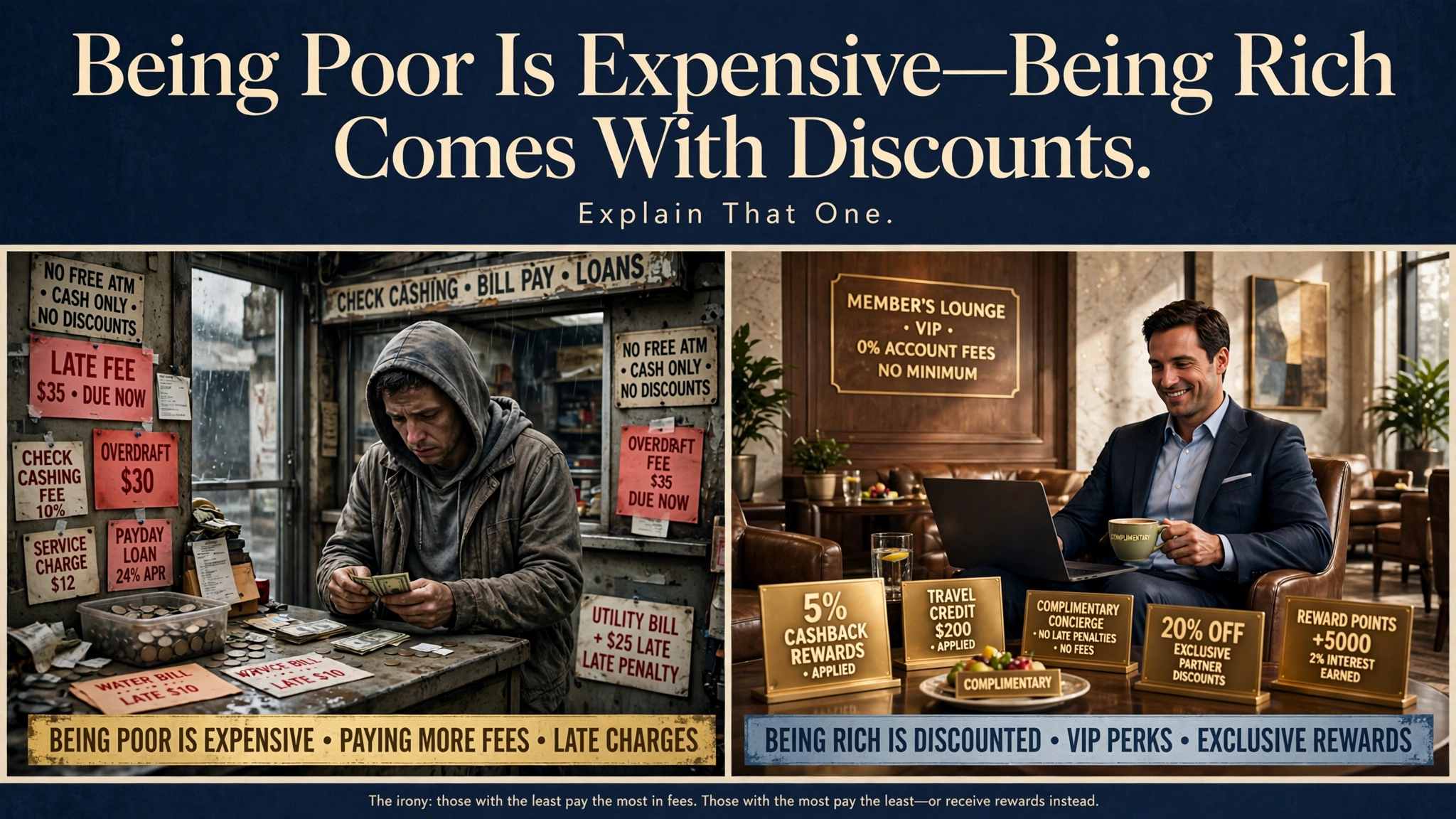
Here's one of the biggest financial jokes in America: the less money you have, the more expensive everything seems to become. The wealthy get favorable financing, investment opportunities, tax strategies, and professional advice. Meanwhile, somebody with $37 in their checking account gets charged $35 for being broke.
Let's talk about the financial punishment that comes with not having money.
If you have excellent credit, lenders compete for your business. You get better interest rates, better credit card offers, and access to financing that can help you acquire assets.
If your credit is damaged, suddenly everybody wants a security deposit, a higher interest rate, additional fees, or three months of payments upfront.
Need a car to get to work? Bad credit could mean paying thousands more over the life of the loan.
Need an apartment? You might have to prove you make three times the rent, pay an application fee, put down a larger deposit, and somehow save enough money to move in while already struggling to pay where you currently live.
Don't have enough money to buy groceries in bulk? You'll often pay more per unit buying smaller quantities. Can't afford to repair your car immediately? The problem gets worse while you wait. Can't afford to pay a bill on time? Now there's a late fee added to the amount you already couldn't afford.
Being broke doesn't just limit your options. It can make the options you do have more expensive.
And then people wonder why some households struggle to get ahead.
Meanwhile, people with substantial assets can sometimes borrow against investments, negotiate favorable financing, and use professional tax planning. That's not automatically illegal or immoral. But it does highlight how access to money can create even more access to money.
Here's the uncomfortable reality: financial stability often makes it easier to become more financially stable, while financial hardship can create a cycle that's difficult to escape.
And before somebody jumps into the comments with "just budget better," let's be realistic. Budgeting is important, but it doesn't eliminate every structural disadvantage. You can't coupon your way out of an unaffordable rent payment. You can't save your way out of a paycheck that barely covers necessities.
People should absolutely learn financial literacy, build credit, save when possible, and avoid unnecessary debt. But we should also be able to question a system where financial mistakes can follow someone for years while having money opens doors that remain closed to everybody else.
Here's the question: Is America really a land of equal financial opportunity when having money makes it cheaper to borrow, easier to invest, and simpler to build wealth—but being broke comes with additional fees?
Because apparently being poor isn't expensive enough. They have to charge you extra for the experience. 😂






Comments
No comments yet, be the first submit yours below.