People Will Call You Selfish the Moment You Stop Making Their Problems Your Responsibility

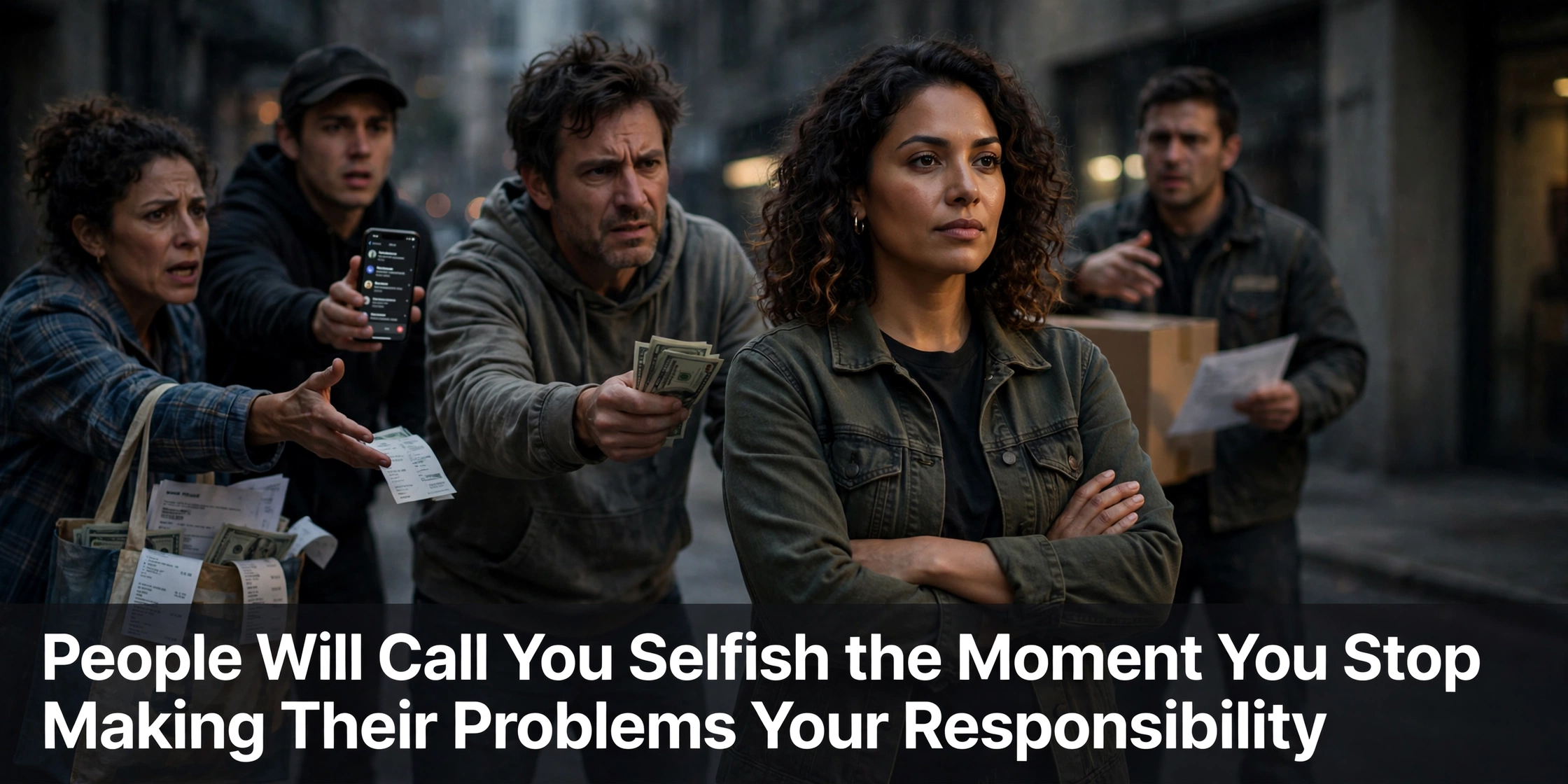
It's funny how you're a good person when you're helping everybody, but the moment you decide to help yourself, suddenly you've changed. Apparently, your character was never being measured by who you are. It was being measured by how much people could get out of you.
Some people don't actually appreciate everything you do for them. They appreciate the convenience of having somebody who keeps doing things for them.
You're the person they call when they need money, a favor, a ride, advice, emotional support, or somebody to clean up a mess they created. And because you've always been available, they've started treating your availability like an obligation.
Then one day, you say no.
Suddenly, you're selfish. You're acting different. You've forgotten where you came from. You think you're better than everybody.
No. You just stopped volunteering to be everybody's emergency department.
Your Kindness Can Accidentally Become Somebody Else's Business Plan
When people learn that you'll consistently sacrifice your own time, money, and energy to make their lives easier, some will begin building their expectations around it.
They don't necessarily ask whether you can afford to help. They just assume you'll figure it out.
They don't consider what you have going on. They only consider what they need from you.
And the more you give without establishing boundaries, the more difficult it can become to change the arrangement.
You've basically trained somebody to expect a service you never agreed to provide permanently.
The First Time You Say No Reveals the Relationship
Pay attention to how people respond when you are no longer useful to them.
Some people will understand. They'll respect your circumstances and continue treating you the same way.
Others will become distant, angry, or suddenly develop a list of everything you've ever done wrong.
That's when you discover whether the relationship was built on mutual respect or on your willingness to keep giving.
A genuine relationship can survive a boundary. A relationship based on unlimited access often struggles with one.
You Don't Have to Go Broke Proving You're a Good Person
There is a difference between being generous and financially sabotaging yourself.
You can love your family and still protect your savings. You can care about your friends and still refuse to lend money. You can support somebody emotionally without becoming responsible for solving every problem they encounter.
And you can have money in your bank account without that automatically making it available to everybody who knows you have it.
Your financial stability should not be the emergency fund for people who refuse to build their own.
Some People Only Like the Version of You That Never Disagrees
There are people who love your generosity but dislike your independence. They appreciate your patience but don't appreciate your boundaries. They want your understanding but rarely offer you the same courtesy.
They want you to be available, agreeable, forgiving, and endlessly accommodating.
But the moment you start making decisions based on your own priorities, they interpret it as disrespect.
That's not necessarily because you've become a different person. Sometimes you've simply stopped playing the role they preferred.
Protecting Your Peace Doesn't Require an Announcement
You don't have to explain every decision. You don't have to publish a statement about why you're no longer helping certain people. And you don't need everybody to agree with your boundaries before you're allowed to have them.
Sometimes the healthiest response is simply to stop overextending yourself.
Let people manage their own responsibilities. Let adults experience the consequences of their own decisions. Give when you genuinely want to give, not because somebody has made you feel guilty for having limits.
Being a Good Person Shouldn't Require Being Available for Exploitation
You can be generous without being gullible. You can be compassionate without being financially irresponsible. You can love people without allowing them to consume every resource you have.
The people who genuinely care about you won't need you to destroy your own stability to prove that you care about them.
And if somebody only respects you when you're doing something for them, maybe their respect was never really about you in the first place.
Don't let people convince you that having boundaries makes you selfish. You spent enough time making sure everybody else was okay. It's perfectly reasonable to make sure you are okay, too.









Comments
No comments yet, be the first submit yours below.