Voting Is Sold as the Power to Choose, but What If You're Only Choosing Who Gets to Make the Decisions for You?

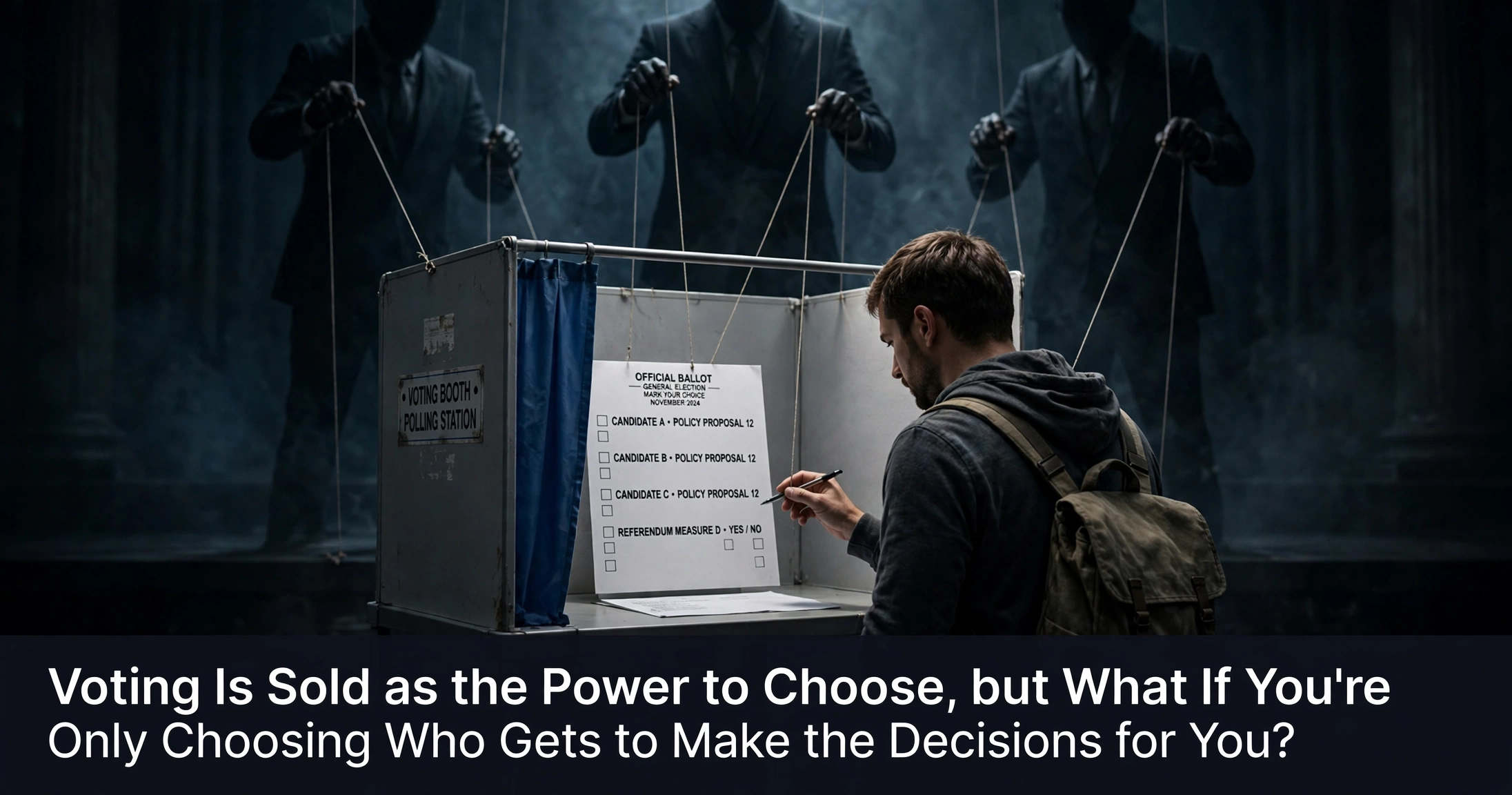
Every few years, the same message comes around: Get out and vote. Your voice matters. Your vote is your power. But after the election is over, how much power does the average person actually have over the decisions being made? That's a question worth asking long after the campaign signs come down.
You're given a ballot with names on it. You select one. You stand in line, submit your vote, and participate in a process that has been presented as the foundation of democracy.
But here's where the frustration begins: once that person gets elected, you don't get to sit in the room and approve every decision. You don't get to veto legislation you disagree with. You don't get to personally control how public money is spent.
You chose a representative. You didn't purchase a remote control for the government.
The Illusion Isn't Necessarily the Ballot. It's What People Think the Ballot Gives Them.
Voting is a mechanism for selecting representatives and deciding certain public questions. It is not a guarantee that elected officials will deliver everything they promised.
Campaigns are built around promises. Candidates talk about lower costs, better opportunities, public safety, healthcare, education, taxes, and protecting your future.
Then the election ends, and the average voter goes back to work, pays bills, raises a family, and tries to survive the same economic realities they were dealing with before the campaign started.
Meanwhile, political decisions continue happening whether voters are paying attention or not.
You're Choosing Representatives, Not Personally Making the Rules
One of the biggest misunderstandings about representative democracy is confusing participation with direct control.
You can help elect someone, but that doesn't mean you control their decisions. Representatives operate within political parties, legislative institutions, committees, court systems, budgets, and competing interests.
Some decisions require cooperation. Others involve compromises. Some campaign promises never become law.
That distance between the voter and the actual decision-making process is where frustration grows.
Two Choices Don't Always Feel Like Real Choice
Imagine being unhappy with the direction of the country but feeling like neither major candidate represents your priorities.
You still have choices. Third-party candidates, write-in options where permitted, and leaving a race blank may be available depending on the ballot and election rules.
But the structure of the electoral system can make voters feel as if they're choosing between two political organizations rather than selecting from the full range of ideas and people they would actually prefer.
And when voters feel forced to choose the option they dislike less, the conversation becomes less about what they want and more about what they're afraid will happen if the other side wins.
Politicians Need Your Vote More Often Than They Need Your Attention
Election season brings an extraordinary amount of communication. Suddenly, politicians want to hear from you. They want your support, your donations, your attention, and your participation.
But civic participation shouldn't be limited to election season.
Public meetings, legislative hearings, local government decisions, public records, and constituent communication are all ways people can follow what their representatives are doing.
If you only pay attention when somebody is asking for your vote, you're missing much of the process that happens between elections.
Not Voting Doesn't Automatically Give You More Power
There's another side to this conversation. Rejecting the political system doesn't automatically change it. Abstaining from an election doesn't guarantee that the outcome will better represent your interests.
Voting can influence who holds office, even when it doesn't guarantee the policies you want. Local elections can also have direct consequences for schools, housing, transportation, policing, and other parts of everyday life.
You can criticize the system and still understand the value of participating in it.
The Real Question Is What Happens After Election Day
Maybe the bigger problem isn't that people have no choices. It's that many people have been taught to treat voting as the beginning and end of their civic responsibility.
You vote, celebrate or complain about the result, and then disappear from the conversation until the next campaign.
But accountability requires attention. It requires knowing what your representatives actually voted for, understanding how decisions are made, and questioning policies regardless of which political party benefits.
Don't confuse a campaign speech with a record. Don't confuse a party label with accountability. And don't assume somebody represents your interests simply because you helped put them in office.
Your vote can help decide who gets the seat. It doesn't guarantee that person will listen once they get there. The real power of an informed citizen doesn't end at the ballot box.







Comments
No comments yet, be the first submit yours below.