You Bought a House, Paid It Off, and They Still Send You a Bill to Keep Your Own Property

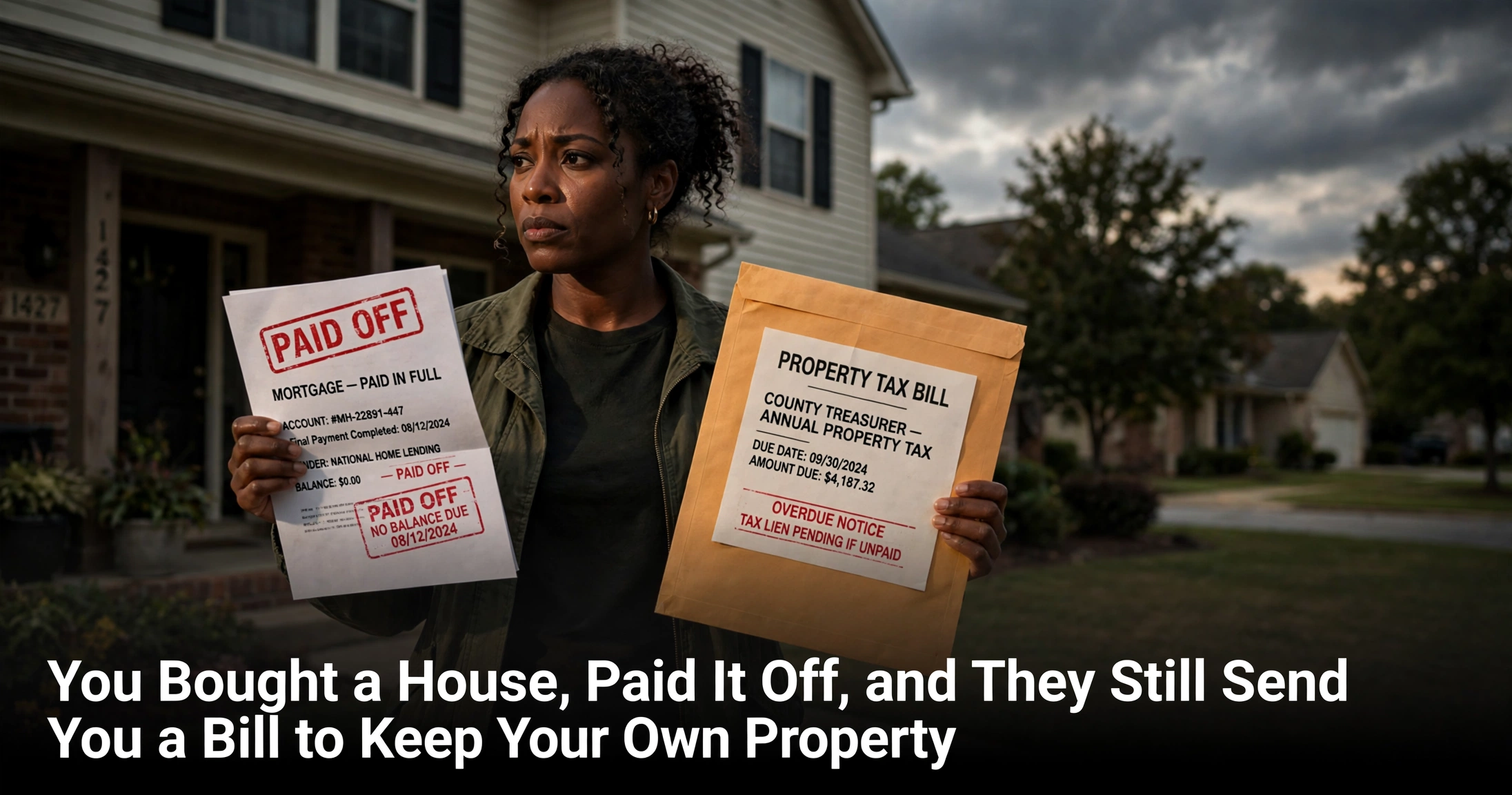
Imagine working for 30 years to pay off your house, finally getting that mortgage balance down to zero, and then discovering you still have to keep paying the government every year just to remain the owner of the property. You can pay off the bank, but you can't pay off the property tax bill. Welcome to permanent homeownership with a subscription fee.
People spend decades chasing the American dream of owning a home. They save for a down payment, sign a mortgage, make monthly payments, pay interest, cover insurance, and handle maintenance.
And eventually, if everything goes according to plan, they pay off the mortgage.
You would think that means the house is finally yours without a monthly housing payment hanging over your head. But property taxes are still there, waiting for their annual appearance like a landlord who never moves out.
You Can Pay Off the House, but You Can't Pay Off the Tax
Property taxes are generally imposed by state and local governments to help fund things like public schools, roads, emergency services, and local government operations.
They aren't technically rent. The government isn't your landlord, and paying property taxes doesn't mean you are leasing your house from the government.
But let's look at how it feels from the homeowner's perspective.
You purchase the property. You pay the mortgage. You maintain the building. You pay for repairs. You insure it. And even after the mortgage is gone, you still have an ongoing tax obligation tied to owning that property.
Stop paying property taxes long enough, and depending on your state's laws and the circumstances, you can face penalties, a tax lien, and potentially foreclosure or a tax sale.
That's a pretty uncomfortable definition of ownership.
The Government Never Has to Sell You the Property Again
Think about the difference between buying something outright and owning real estate.
If you buy a television, you generally don't receive an annual bill from the government calculated using the television's estimated value. If you buy a couch, nobody sends you a yearly invoice for continuing to own it.
But real estate is different. Property taxes are recurring obligations, and the amount can change as assessed values, tax rates, exemptions, and local budgets change.
Your house can become more valuable without you receiving an extra dollar in your bank account. Yet that increased assessed value may contribute to a higher property tax bill.
You're sitting in the same house, living the same life, and suddenly the cost of keeping it has increased.
What Happens When Your Income Doesn't Increase With Your Property Value?
This is where the system becomes especially difficult for retirees and people living on fixed incomes.
Imagine purchasing a modest home, paying it off over decades, and retiring with a limited monthly income. Meanwhile, the neighborhood becomes more desirable, property values rise, and your tax bill increases.
You might be considered wealthier on paper because your property is worth more. But that doesn't mean you have more cash available to pay the bill.
Some states offer homestead exemptions, assessment limits, or property tax relief programs for qualifying homeowners. But the availability and requirements vary depending on where you live.
The larger question remains: should somebody's ability to remain in a paid-off home become increasingly expensive simply because the surrounding real estate market changed?
Property Taxes Make Homeownership a Perpetual Expense
The real estate industry sells homeownership as a path toward stability. And compared with renting, owning can provide important benefits: equity, control over the property, and protection from a landlord deciding not to renew your lease.
But ownership doesn't mean the property becomes free to maintain.
You still have property taxes, insurance, repairs, utilities, and maintenance. A paid-off mortgage removes one major expense, but it doesn't eliminate the ongoing cost of owning real estate.
And unlike a mortgage, which has a defined payoff schedule, property taxes generally don't have a finish line.
Why Is Eliminating Property Taxes Such a Difficult Conversation?
Because local governments rely on property tax revenue to fund essential services. Eliminating that revenue would require governments to replace it, reduce spending, or redesign how those services are funded.
That means the debate isn't simply about whether homeowners should pay taxes. It's also about who should fund schools, roads, fire departments, police services, and local infrastructure if property taxes disappear.
Some people argue for eliminating property taxes on primary residences. Others argue that doing so could shift more of the tax burden onto renters, businesses, sales taxes, or other taxpayers.
Those are legitimate questions. But homeowners are also justified in asking why paying off a mortgage doesn't end the recurring financial obligation attached to their homes.
Did You Buy a Home or Just a Lifetime Payment Plan?
That's the uncomfortable question behind this entire conversation.
You can spend decades working to own a piece of land, but ownership still comes with obligations that can follow you for as long as you hold the property.
And if you ever sell, move, or pass the property down to your children, those tax obligations don't simply disappear from the real estate system.
Homeownership is still ownership. But it's not the same thing as being completely free from recurring costs or government taxation.
You can pay off the bank, own the building, maintain the land, and still receive an annual bill for keeping what you worked your entire life to buy. They call it homeownership. Sometimes it feels like a lease with no expiration date.


Comments
No comments yet, be the first submit yours below.