The Political Agenda Wasn't Built for the People Starting From Zero

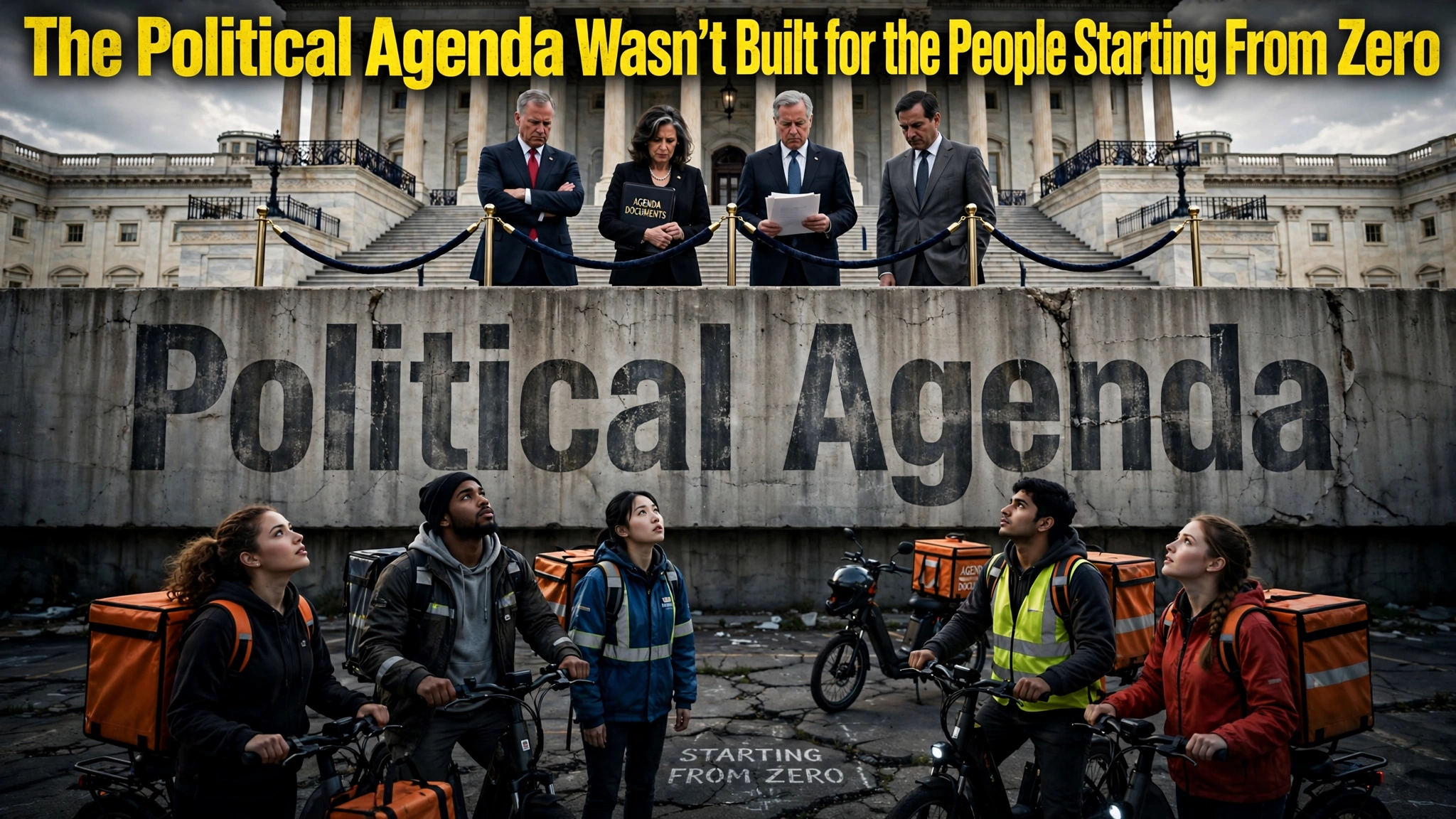
Let's stop pretending every political agenda is designed equally for everybody.
Because when you actually look at what politicians are promising, a lot of these “solutions” seem suspiciously helpful to people who already own the house, already have the assets, already have the retirement account, already built the equity, and already got a seat at the table.
Meanwhile, younger people are standing outside the damn building trying to figure out how they're supposed to get in.
“We're Going to Cut Property Taxes!”
Okay.
That's great for homeowners.
Seriously. Nobody likes paying more taxes than they have to.
But let me ask the question nobody seems interested in asking:
What about the people who don't own property?
What exactly does a property-tax cut do for somebody who's renting because they can't afford a house?
Does their rent automatically drop?
Does their landlord hand them the savings?
Does their credit score magically increase?
Does a $350,000 house suddenly become affordable?
Does the bank suddenly say, “You know what? Forget that down payment. You seem like a good person.”?
No.
They get absolutely nothing from that particular tax break except another campaign commercial telling them how much politicians are “helping working families.”
The House You Can't Afford Doesn't Become Affordable Because Its Taxes Are Lower
This is where the conversation gets ridiculous.
Home prices have climbed. Mortgage payments are expensive. Insurance costs are getting hammered. Maintenance isn't cheap. Property values keep moving. And rent can consume a massive portion of someone's paycheck.
Then politicians come along and say, “We're going to make housing more affordable!”
And the big solution is cutting the property tax on a house you already needed hundreds of thousands of dollars to purchase.
That's like putting a discount sticker on a Lamborghini and telling somebody making minimum wage that you're helping them buy a car.
“Look! It's 5% cheaper!”
Brother, I couldn't afford the damn Lamborghini before the discount.
And Somehow Younger People Are Supposed to Just “Work Harder”
This is the part that really gets me.
For decades, people have told younger generations to work hard, save money, buy a house, invest, build equity, and prepare for retirement.
Okay.
We're trying.
But you can't tell somebody to save for a house while simultaneously watching housing prices outrun their ability to save.
You can't tell someone to build wealth when the biggest wealth-building asset in the country is becoming increasingly difficult for them to purchase.
You can't tell people to stop wasting money on rent when rent is what they're paying because they can't qualify for the mortgage.
And you definitely can't keep pointing at people who bought houses decades ago and saying, “See? They did it.”
Yeah.
They bought it in a completely different economic environment.
The Starting Line Isn't the Same Anymore
That's what needs to be acknowledged.
People aren't starting the race from the same starting line.
Someone who bought a house decades ago may have spent a fraction of today's purchase price and then watched that property appreciate dramatically.
Now someone younger is looking at the same market and thinking:
“How the hell am I supposed to catch up?”
And the answer can't always be “work harder.”
Because eventually you have to admit that arithmetic is arithmetic.
If housing prices rise faster than wages, saving becomes harder.
If rent rises faster than wages, saving becomes harder.
If insurance rises faster than wages, saving becomes harder.
If everything from groceries to utilities to transportation costs more, saving becomes harder.
At some point, telling people to simply “budget better” starts sounding insulting.
Protecting Existing Wealth Isn't the Same as Creating New Wealth
This is where politicians need to be challenged.
There is nothing wrong with protecting homeowners from unreasonable taxes.
There is nothing wrong with wanting lower taxes.
There is nothing wrong with wanting government to spend less.
But let's not confuse protecting the people who already have assets with creating opportunities for people who don't.
Those are two completely different conversations.
If you already own a home, reducing your property tax can save you money.
If you don't own a home, you are still trying to figure out how to get one.
That's the difference.
And Then We Wonder Why Young People Are Frustrated
Imagine watching your parents' generation build wealth through homeownership while you're being told that the same path is available to you—except the house costs dramatically more, interest rates are higher, insurance is more expensive, and the down payment is enormous.
Then every election comes around and politicians spend half their time talking about protecting the people who already made it.
Eventually you're going to start asking:
“What about us?”
Not because younger people expect free houses.
Not because everybody wants a handout.
Not because people don't want to work.
But because people want the opportunity to actually see a reasonable return on the work they're doing.
Stop Selling the Top Rung as the Whole Ladder
If you're running for mayor, city council, governor, or any other office, don't just tell me how you're going to make life easier for people who already own property.
Tell me how you're going to make it possible for the next generation to actually acquire property.
Tell me how you're going to increase housing supply.
Tell me how you're going to reduce unnecessary construction costs.
Tell me how you're going to encourage starter homes instead of turning every new development into another collection of expensive houses nobody making an ordinary salary can afford.
Tell me how you're going to deal with ridiculous fees.
Tell me how you're going to address insurance costs.
Tell me how you're going to make cities attractive for people who are trying to build something instead of just protecting what already exists.
Because Here's the Savage Part
You can keep cutting taxes on assets people already own.
You can keep protecting existing property values.
You can keep creating policies that make existing homeowners feel comfortable.
But eventually you're going to have a serious generational problem.
Because if younger people can't afford houses, can't afford to build equity, can't afford to invest as much, and can't afford to accumulate assets at the same rate previous generations did, you're not just creating a housing problem.
You're creating a wealth problem.
And eventually that becomes an economic problem.
The same people who keep telling younger generations that they need to “get ahead” need to start asking whether the system they're defending actually gives those people a realistic path to get ahead.
Don't Give Me a Campaign Slogan. Give Me a Path Forward.
“Cut property taxes” sounds great.
“Protect homeowners” sounds great.
“Preserve neighborhoods” sounds great.
But if your entire agenda is built around making life more comfortable for people who already own the house, while doing almost nothing for the people who are desperately trying to buy one, then you're not solving the generational problem.
You're putting a nicer roof on the house while leaving an entire generation standing outside.
And that's the conversation politicians need to have.
Because the goal shouldn't simply be making it cheaper to own the house you already have.
The goal should be making sure the person who doesn't have one still has a realistic chance of getting one.









Comments
No comments yet, be the first submit yours below.