The Most Dangerous Investment Mistake Is Thinking You Need a Lot of Money to Start

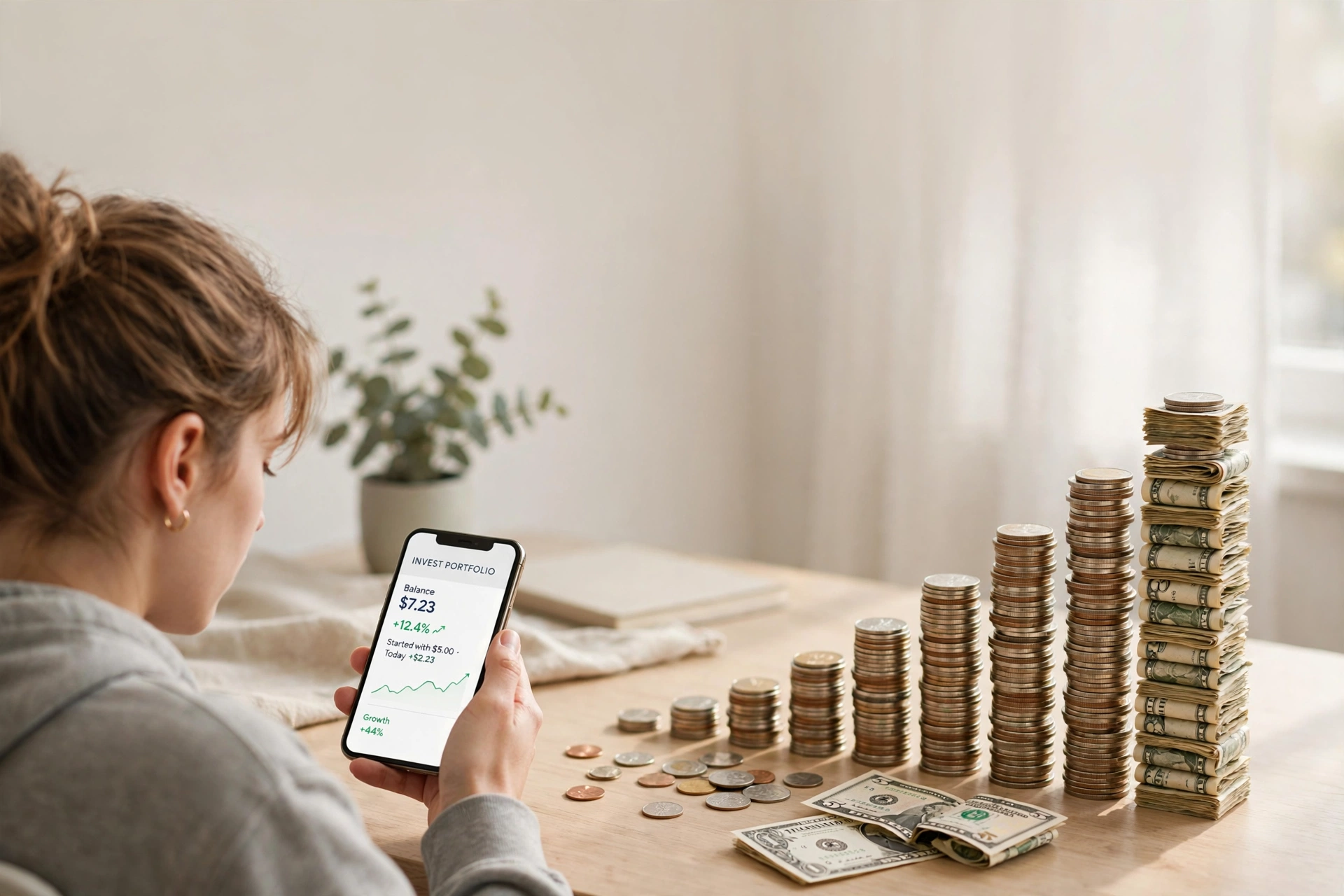
A lot of people don't avoid investing because they don't understand the stock market. They avoid it because they think their money isn't big enough to matter.
$10 doesn't feel like investing.
$25 doesn't feel like investing.
$50 barely feels like investing.
Even $100 can look insignificant when you see screenshots of people with six-figure portfolios.
That's where the psychological trap begins.
People compare their first dollar to somebody else's millionth dollar.
Then they decide they are too far behind.
So instead of starting small, they wait.
They wait for the better job.
They wait for the raise.
They wait until the bills are lower.
They wait until they have “real money.”
And sometimes years disappear while they're waiting for the perfect starting point.
The market doesn't require you to start rich. Time simply gives small amounts more opportunities to compound.
That's the part people underestimate.
Investing isn't only about the amount you put in today.
It's about what happens when you repeatedly put money to work.
$10 once isn't transformative.
But $10 repeatedly is a habit.
$25 once isn't transformative.
But $25 repeatedly is a system.
$50 once isn't transformative.
But $50 repeatedly begins building a position.
The amount matters.
But the behavior matters too.
The first goal of investing isn't becoming rich. It's becoming someone who consistently owns assets.
That's a completely different mindset.
You stop asking, “How much money can I make this week?”
And start asking:
“What am I accumulating?”
Stocks.
Index funds.
REITs.
Bonds.
Cash reserves.
Business ownership.
Different assets have different risks and purposes, but the underlying idea is the same:
Stop making every dollar depend entirely on your labor.
There is a difference between earning money and owning something that can potentially produce value without requiring you to work another hour for every dollar.
That's why investing can feel strange when you're starting with very little.
Your paycheck feels real.
Your cash feels real.
Your portfolio may look almost meaningless.
But ownership is measured differently.
If you own one share, you own one share.
If you own a fraction of a share, you still have an investment position.
If you receive a dividend, you've received a return from an asset you own.
If the asset appreciates, your ownership participates in that change.
None of that guarantees a profit.
Markets fall.
Companies fail.
Dividends can be reduced or eliminated.
Some investments lose money.
That's why investing isn't the same thing as putting money somewhere and assuming it will grow.
Ownership creates opportunity, not certainty.
And that's where another mistake happens.
People hear about someone making 50%, 100%, or 500% on an investment and start looking for the next explosion.
Now investing becomes gambling.
The goal changes from accumulating assets to finding the fastest possible win.
That's when patience gets replaced by excitement.
And excitement can become expensive.
The boring investor can sometimes be doing something the exciting investor forgot: surviving long enough to compound.
There is nothing glamorous about putting $20 into an investment every week.
Nobody is making a documentary about it.
There probably isn't a viral screenshot.
But years later, those small decisions can add up to something much larger than the original deposits.
That's the part social media doesn't show very well.
It shows the portfolio after the growth.
It doesn't show the person who kept contributing when the balance looked ridiculous.
It doesn't show the boring months.
It doesn't show the market declines.
It doesn't show the temptation to sell.
It doesn't show the years when nothing exciting happened.
Wealth often looks impressive at the end because the boring part happened when nobody was watching.
There's also a bigger lesson here.
If you're always waiting until you have enough money to invest, you'll always have another reason to wait.
Life has a way of consuming available money.
The car needs something.
The kids need something.
The rent goes up.
The grocery bill changes.
An unexpected expense appears.
That's why investing often has to become a deliberate behavior rather than something you do with whatever happens to be left over.
If investing only happens when life is perfect, investing may never happen consistently.
That doesn't mean someone should invest money they need for food, rent, emergency expenses or essential bills.
It means that once the basics are covered, even a modest recurring contribution can change the way you think about money.
You stop seeing every dollar as something to consume.
Some dollars become workers.
Some dollars become protection.
Some dollars become ownership.
Some dollars remain available for life.
The goal isn't to make every dollar grow. The goal is to stop making every dollar disappear.
That's a powerful distinction.
Because eventually the question isn't:
“Can I afford to invest?”
It becomes:
“How much of my income can I consistently convert into ownership without damaging my ability to live?”
That question forces you to think differently.
And maybe that's what investing is really teaching.
Not how to get rich overnight.
Not how to predict tomorrow's stock price.
Not how to find the next hot ticker.
But how to take a portion of today's money and give it a chance to become tomorrow's asset.
You don't need to start with a fortune. You need to stop believing that small beginnings don't count.
Because every large portfolio began with a first investment.
And every investor who owns something today once owned nothing.
The amount you start with determines the scale of the beginning.
It doesn't determine whether the beginning matters.





Comments
No comments yet, be the first submit yours below.