Why Are We Expected to Have a 20-Year Career Plan When Companies Don't Even Have a 20-Year Loyalty Plan? 😂

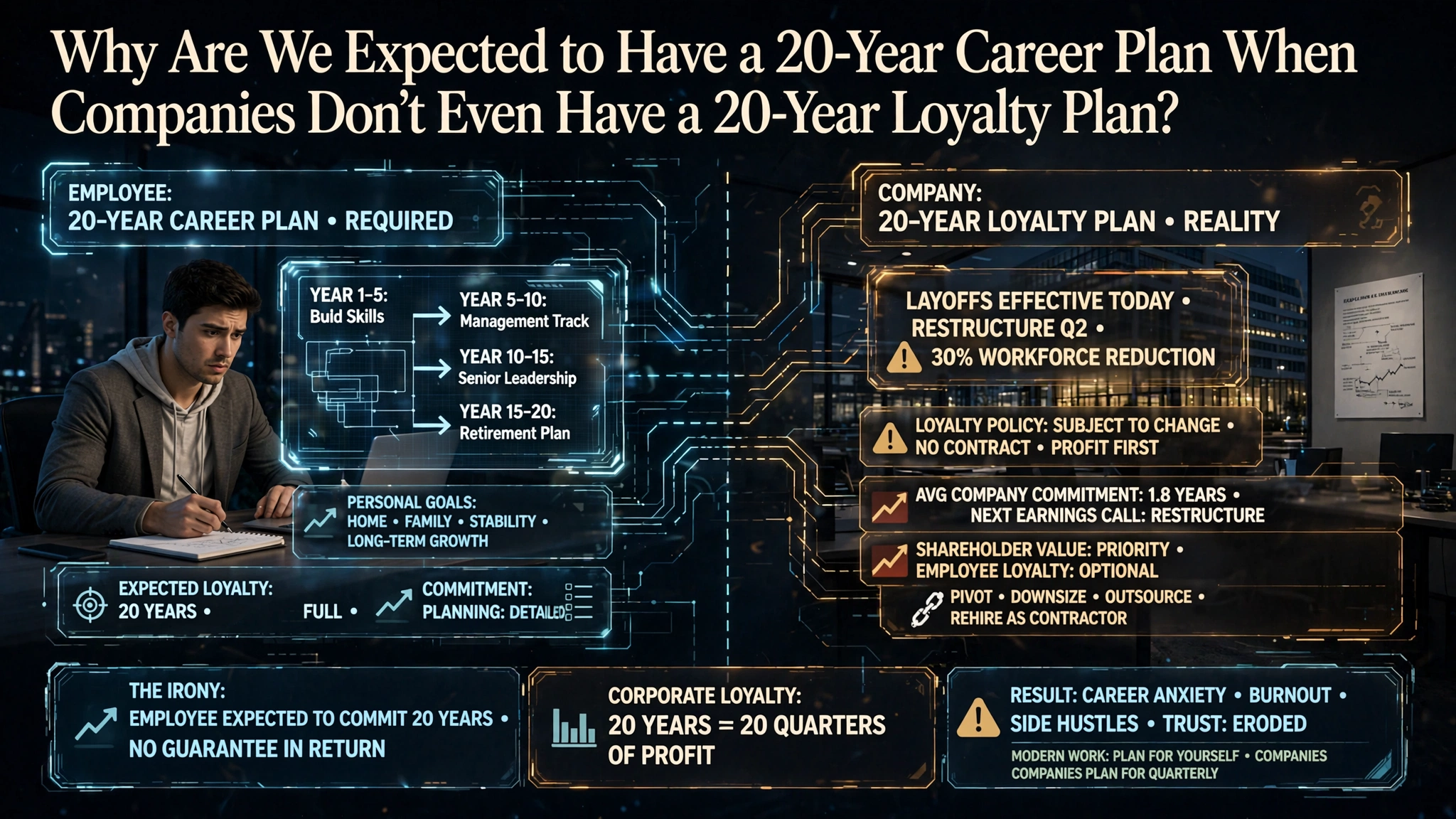
At 18, you're expected to choose a career, invest thousands in education, build experience, and dedicate decades to becoming valuable. Meanwhile, the company can eliminate your position on a random Tuesday and send you home with a cardboard box. What exactly are we planning for? 😂
Society puts enormous pressure on young people to figure out their entire professional future before they've even experienced adulthood. Pick a career. Choose a major. Get the degree. Build your résumé. Climb the ladder. Make good decisions because your future depends on them.
But here's the part nobody puts in the career counseling presentation: the employer isn't making the same lifelong commitment to you.
You can spend 15 years mastering a company's internal systems, learning its processes, training new employees, and becoming one of the most experienced people in the building. Then management announces a restructuring, and suddenly your position is considered unnecessary.
Your loyalty doesn't guarantee job security. Your experience doesn't guarantee a promotion. And being the person who knows how everything works doesn't mean they'll keep you when the spreadsheet says your department costs too much.
We're told to build careers, but companies increasingly organize work around quarterly results, changing budgets, acquisitions, automation, and shareholder expectations. The employee is expected to think long-term while the employer can change direction overnight.
And let's talk about education. Young adults are encouraged to take on enormous student debt because a degree is supposedly an investment in their future. But the job market can change before those loans are paid off. Entire industries evolve, qualifications lose value, and graduates sometimes discover that the positions they prepared for don't pay enough to support the lifestyle they were promised.
That doesn't mean education is worthless or that planning ahead is foolish. It means we should stop pretending that a traditional career path comes with guarantees.
Maybe the smarter approach is to build skills that travel with you instead of building your entire identity around one employer. Learn how to solve problems, understand technology, manage money, communicate, and adapt. Build something outside your job if you can. Keep your professional options open.
Because a company may appreciate your 20 years of service, but appreciation doesn't always show up in your bank account when the position disappears.
We need to teach young people how to build careers without teaching them to surrender their entire future to one organization. Employment should be an arrangement that benefits both sides, not a lifelong loyalty test where only one side is expected to honor the commitment.
So here's the question: Why do we still teach people to dedicate their lives to building careers inside companies that openly reserve the right to replace them whenever it's financially convenient?








Comments
No comments yet, be the first submit yours below.