Bitcoin Mining Farms: They're Turning Electricity Into Digital Money—But Who Gets Stuck With the Bill? 😂

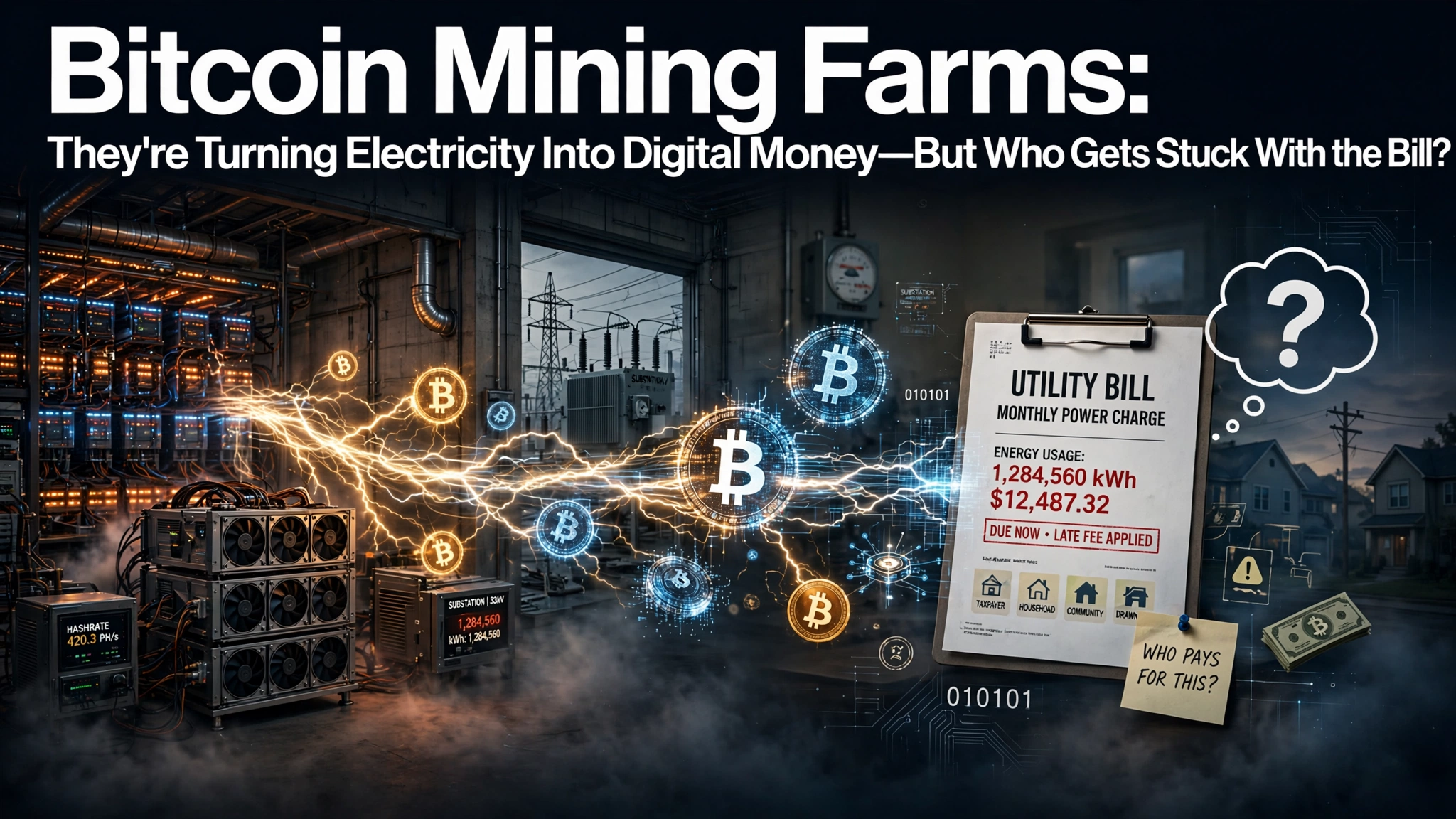
Imagine a company setting up shop in your town, using a resource every household needs to generate digital money—and then keeping the profits while the community is left asking what it actually got out of the deal. Welcome to cryptocurrency mining, where the money can be digital, but the electricity bill is very real. 😂
Cryptocurrency mining farms are basically warehouses packed with specialized computers running around the clock. These machines compete to process transactions and secure certain blockchain networks. In Bitcoin's case, miners use computing power to compete for the opportunity to add a block to the blockchain and earn rewards.
That reward can include newly issued Bitcoin and transaction fees. The business model is simple in theory: invest in hardware, secure access to electricity, run the machines, and hope the value of the Bitcoin earned exceeds the cost of operating the facility.
But there's one little detail that makes this business different from selling lemonade: these computers can consume enormous amounts of electricity. And when a mining operation moves into a community, residents may start asking whether the benefits are worth the strain.
THE COMPUTERS ARE MAKING MONEY. THE ELECTRICITY IS MAKING THE NOISE.
Mining companies need dependable power, and electricity is one of their biggest operating expenses. Some facilities look for locations with inexpensive power, available grid capacity, or favorable business conditions. That can bring investment into a region—but it can also raise questions about how much electricity is being consumed and whether the local grid can handle the demand.
Electricity markets are complicated. A mining operation does not automatically mean every resident's bill will go up. The impact depends on the utility's rates, contracts, grid conditions, infrastructure investments, and how the additional demand is managed.
Still, residents have a reasonable question: if a large company is using a tremendous amount of electricity to generate private revenue, who pays for the infrastructure needed to support that demand?
Because the power grid isn't a magic extension cord. It takes equipment, maintenance, planning, and investment. And when a facility's demand creates a need for upgrades, people want to know whether those costs are being paid by the company creating the demand—or passed along to everyone else.
AND HERE'S THE BIG QUESTION: WHY DOESN'T THE MONEY COME BACK TO THE COMMUNITY?
A cryptocurrency mining company can move into a town, consume a massive amount of electricity, earn revenue from digital assets, and send that money wherever the company decides. The people living nearby don't automatically receive a cut of the profits. They aren't shareholders just because the facility is in their backyard.
That's the uncomfortable part of the arrangement. The community may help provide the location, infrastructure, workforce, and access to power—but the financial upside is generally owned by the company and its investors.
Now, to be fair, some communities can benefit through property taxes, utility payments, construction jobs, permanent employment, or negotiated agreements. The operator may also pay for its electricity under a contract. But those benefits are not the same thing as sharing the company's profits with the residents who live there.
There is no automatic rule that says: “You made millions mining Bitcoin in our town, so every household gets a dividend.” Unless a community negotiates that kind of arrangement or establishes it through policy, the money can leave town while the local costs remain.
And that's where the real debate begins. If a company is receiving tax incentives, relying on local infrastructure, and consuming a resource that everyone depends on, shouldn't the community have a meaningful seat at the table?
Why not negotiate a community-benefit agreement? Why not require transparent reporting on energy use and local jobs? Why not establish contributions to local infrastructure, lower-income energy assistance, or a community fund—where legally and financially appropriate?
Because “economic development” shouldn't just mean a company gets richer while residents are told to be grateful that a building exists.
If the profits are private, but some of the costs are public, then the community deserves to ask what it's actually getting in return.
JOBS ARE GOOD. BUT HOW MANY JOBS ARE WE TALKING ABOUT?
Mining facilities can create construction work and ongoing jobs in areas such as equipment maintenance, security, and operations. Those jobs can matter, especially in places looking for new investment.
But a large building doesn't necessarily mean a large permanent workforce. A facility filled with machines may require fewer employees than a traditional factory of similar size. So communities should look beyond the announcement and ask how many long-term jobs will actually exist, what they pay, and how much public support the company is receiving.
It's worth comparing the promised benefits with the real ones. “We're bringing investment” sounds impressive. “We're creating a limited number of permanent jobs while consuming substantial electricity” is a more complete sentence.
THE COMMUNITY SHOULDN'T HAVE TO GUESS.
Residents deserve clear answers about energy use, water use where relevant, tax arrangements, grid upgrades, noise, and the number of permanent jobs. Local officials should be able to explain what the company is contributing and what obligations it has agreed to meet.
And companies should be expected to explain how they will operate during periods of high electricity demand. Some mining operations can reduce or pause consumption when the grid is under stress, but whether that happens depends on the facility's contracts and operating choices.
That kind of transparency matters. A town shouldn't have to discover the details after the machines are humming, the building is finished, and the deal has already been signed.
SO IS CRYPTO MINING GOOD OR BAD FOR A COMMUNITY?
It depends on the details. A mining facility could bring investment, tax revenue, and jobs. It could also create substantial electricity demand, raise infrastructure questions, and provide relatively few permanent jobs. The outcome depends on the location, the power arrangement, the company's commitments, and how local officials negotiate the deal.
The point isn't that every mining company is exploiting a town. The point is that a company generating private revenue from a community's resources should be expected to answer questions about its local impact.
Bitcoin may be digital. The machines may be sophisticated. The financial system may be decentralized. But the electricity still comes from somewhere, the infrastructure still has to be maintained, and the community still has to live with the consequences.
So if a mining farm moves into your town, don't just ask how much Bitcoin it's making.
Ask how much electricity it's using. Ask how many permanent jobs it's creating. Ask who pays for the grid upgrades. Ask what tax breaks it receives. And most importantly, ask what meaningful benefit comes back to the people who live there.
Because if the company gets the profits, the community gets the consequences, and nobody can explain the deal, that's not a success story.
That's just a very expensive computer room with excellent marketing. 😂










Comments
No comments yet, be the first submit yours below.