Some Men Are Giving AI Women More Compliments Than Their Own Families Get—The Internet Has Turned Thirst Into a Full-Time Job

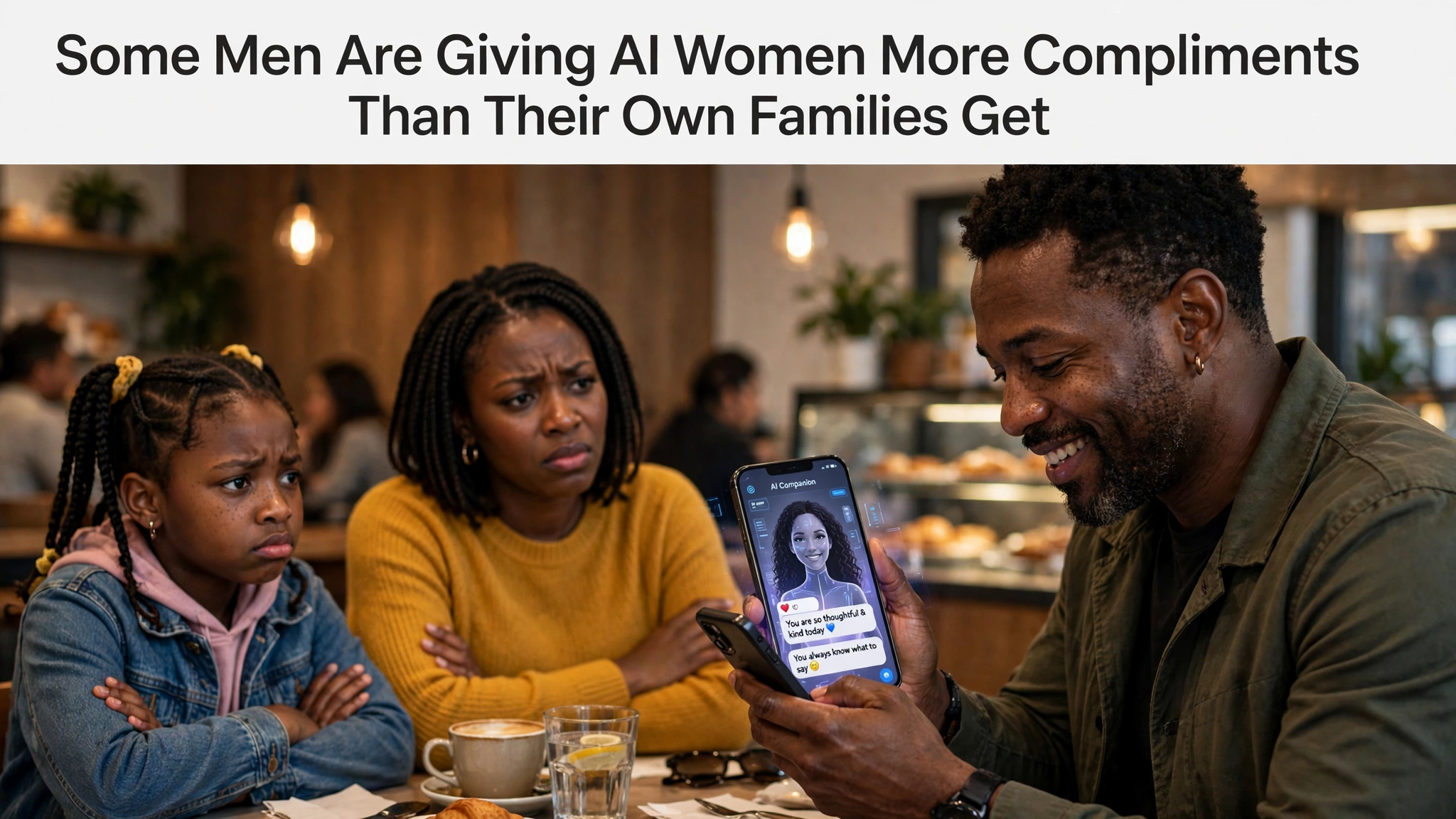
Some men will see an AI-generated woman with an impossible waist, digitally enhanced curves, a face that doesn't exist, and a profile picture made by artificial intelligence, then rush into the comments like they've just discovered the love of their life. "You're absolutely gorgeous, queen!" BROTHER, THAT WOMAN IS A GRAPHIC CARD! 😂
Something interesting is happening on social media. Men are handing out compliments like they're getting paid per comment. And I'm not just talking about attractive women posting pictures. I'm talking about fake profiles, AI-generated models, suspicious accounts, and pages that may not even belong to a real person.
Somebody uploads a picture of an AI-generated woman, and within minutes the comments are filled with men telling her how beautiful she is, how perfect she looks, how they'd treat her like a queen, and how she's everything they've been looking for.
Meanwhile, the account might be operated by somebody sitting behind a computer generating images and collecting engagement.
When Did Complimenting Become an Automatic Response?
There's nothing wrong with complimenting somebody. If you find someone attractive, there's nothing inherently wrong with expressing that respectfully.
But look at the behavior. Some guys don't even seem to care whether the person behind the profile is real. They see an attractive image and immediately start performing admiration in the comments.
Every picture gets the same routine:
"Absolutely stunning."
"You're perfect."
"Beautiful as always."
"A real queen."
"How can somebody be this gorgeous?"
At this point, the comment section looks less like a conversation and more like a customer appreciation department.
AI Has Turned Attention Into a Business Model
Here's where it gets interesting. AI makes it easier than ever to create realistic-looking people who don't exist. A page can generate endless attractive images, build a fictional personality, publish content, and attract an audience.
Some accounts openly identify themselves as AI creations. Others may be misleading about who or what is behind the profile. And some fake accounts use attractive images to drive followers toward paid subscriptions, affiliate links, private messages, or outright scams.
Attention has economic value. Every comment, follow, share, and message can help an account grow.
So while somebody thinks they're complimenting a beautiful woman, they might actually be helping an anonymous account build an audience around a fictional identity.
Are Some Men Looking for Connection or Just Looking for Validation?
This is the psychological part worth examining.
Why do some people feel compelled to publicly shower strangers with compliments, even when there's no meaningful interaction happening?
Maybe they're hoping for a response. Maybe they're trying to get noticed. Maybe they're lonely. Maybe they enjoy the attention economy just like everybody else.
And let's be fair: there's nothing automatically wrong with leaving a nice comment. The issue is when admiration becomes an endless performance, especially when the person receiving it may not even exist.
Some men are essentially competing with thousands of other men for the attention of an algorithm-generated character.
Meanwhile, Real Relationships Require More Than Compliments
It's easy to tell somebody they're beautiful underneath a picture. It's easy to leave a heart emoji, type a paragraph about how perfect they look, and move on to the next profile.
But real relationships require communication, patience, honesty, consistency, and emotional maturity.
You can compliment somebody's appearance in two seconds. Showing up for somebody when life gets difficult takes considerably more effort.
And perhaps that's part of the attraction of social media. You can participate in the appearance of connection without having to take on the responsibilities of an actual relationship.
The Internet Is Becoming a Marketplace for Manufactured Attraction
Between filters, face editing, AI-generated models, fake profiles, and engagement farms, people are increasingly interacting with images that may have little connection to reality.
That doesn't mean every attractive profile is fake, and it doesn't mean every man leaving a compliment has some hidden motive. But people should understand that not every account is what it appears to be.
Before giving a stranger your money, personal information, or emotional investment, take a moment to verify who you're interacting with.
And maybe stop treating every attractive profile like an opportunity to audition for somebody's attention.
Imagine spending your entire evening writing love letters in the comments to a woman who was generated by artificial intelligence, operated by somebody you've never met, and possibly doesn't even have a real name. Somewhere, a computer is rendering your future wife at 4K resolution while you fight 800 other men for a heart emoji. 😂
Technology is getting better at manufacturing attraction. The question is whether people are getting better at recognizing the difference between genuine human connection and an image designed to capture their attention.








Comments
No comments yet, be the first submit yours below.